
After a pedestrian accident in Queens, get out of immediate danger if you can, call 911 for an injury or emergency, and obtain medical attention. Preserve the driver’s details, the precise crossing location, witness contacts, and original photos. Then identify the correct insurance claim and its deadlines promptly. A police report, an insurance application, and a personal injury lawsuit serve different purposes; completing one does not automatically complete the others.
Whether a collision happens along Queens Boulevard, near Roosevelt Avenue in Jackson Heights, or at a smaller neighborhood intersection, the useful questions are concrete: Which vehicle moved where? What did the signals show? Who saw the impact? Which records might disappear? This guide explains how to organize those answers and prepare for a discussion about a Queens pedestrian accident claim.
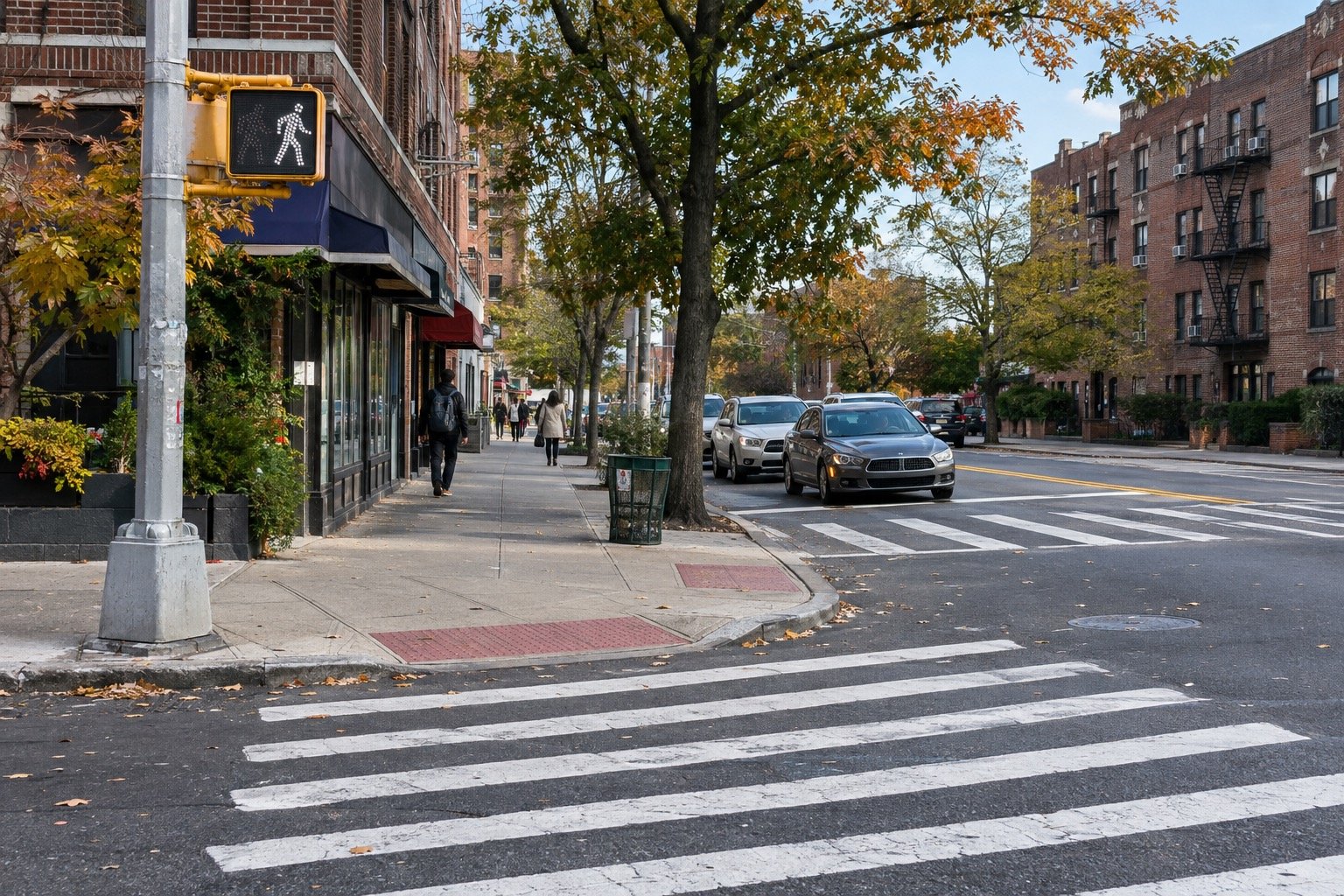
First steps after being hit by a car in Queens
Your immediate safety comes first. Do not remain in a live traffic lane to photograph a vehicle, retrieve a dropped item, or argue about fault. Ask someone nearby to call for help if you cannot. Tell emergency responders where you are using both street names, the nearest address, and a recognizable landmark. On a divided road, identify the direction of travel and whether you are near the main roadway, a service road, or a pedestrian island.
Describe symptoms and the mechanism of the collision accurately to medical professionals. Do not minimize a head strike, loss of consciousness, or difficulty moving, and do not attempt to diagnose yourself. Follow the treatment instructions you receive. Save discharge papers and appointment information in one place so later providers can see the sequence of care without relying on memory.
If circumstances allow, obtain the driver’s name, license plate, insurance information, and contact details. Record the vehicle’s make, color, and any company markings. For a taxi, delivery vehicle, truck, or rideshare, note the visible business identifiers without assuming that branding alone establishes who employed the driver or which insurer covers the event. Those questions need records.
Preserve evidence before the scene changes
A useful pedestrian accident evidence file combines wide photographs with close views. From a safe location, photograph the whole crossing, traffic signs, pedestrian signals, curb ramps, pavement markings, parked vehicles that obstructed visibility, and the positions of involved vehicles if still observable. Keep original image files. Cropped screenshots and social-media copies can lose useful context and metadata.
Write a short account while the details are fresh. Separate what you personally observed from what someone else told you. Record your walking direction, where you entered the road, the vehicle’s approach, whether it turned, and what signal you actually saw. If you cannot remember a detail, mark it unknown. A careful account is more useful than an apparently complete account built on guesses.
Ask witnesses for a name and a way to reach them. Identify nearby storefronts, apartment entrances, parking facilities, buses, or other vehicles that may have recorded the scene. Camera footage can be overwritten, and retention periods differ. Record possible camera locations promptly so an appropriate preservation request can be considered. Do not enter private premises or pressure an owner to give you access to a security system.
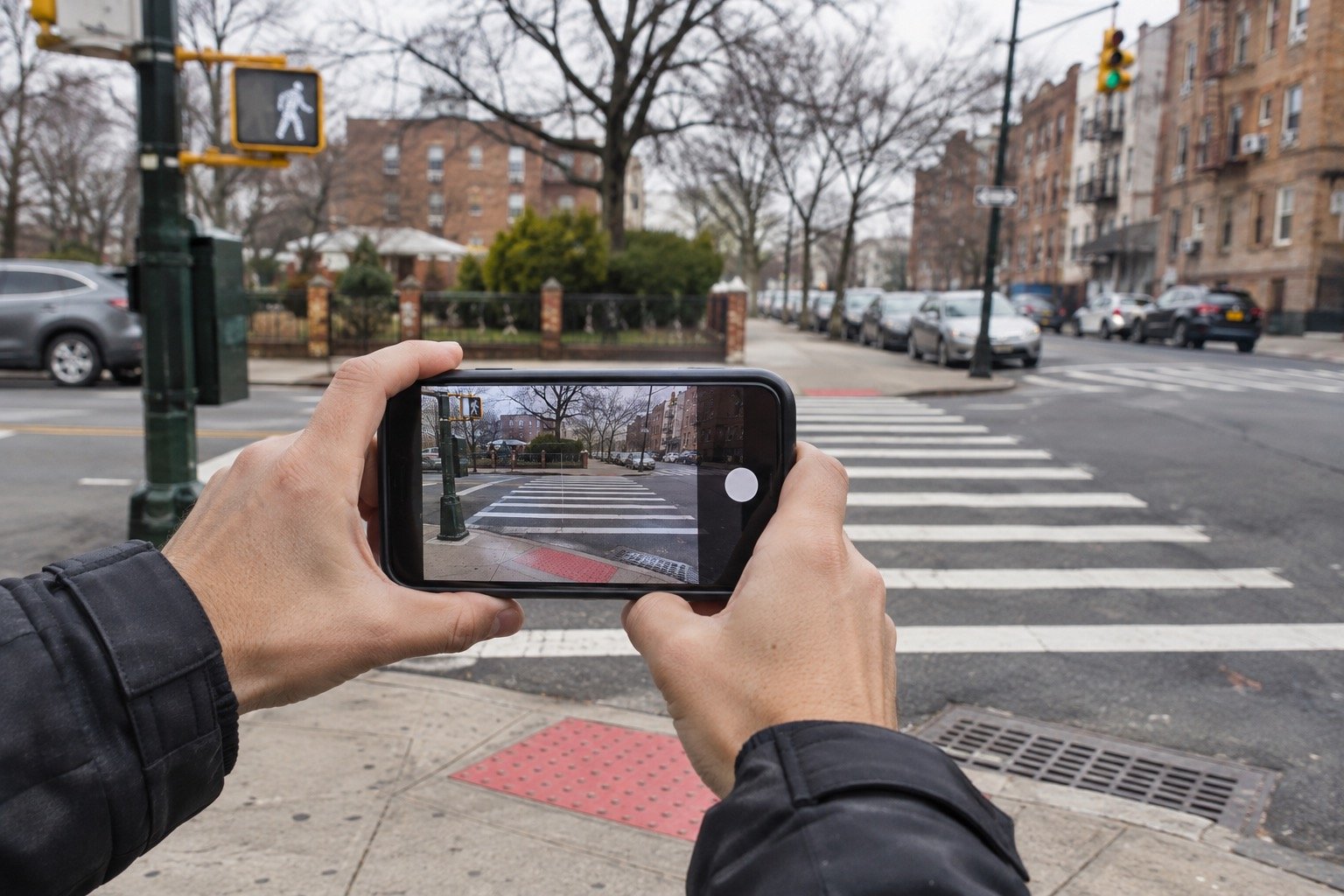
Queens locations: the exact crossing matters
Queens Boulevard requires more detail than a street name alone. Identify the intersecting street, crossing segment, service road, and refuge island involved. NYC DOT’s November 2024 Queens Boulevard redesign report describes pedestrian islands and signal-timing changes. It reported a 45% reduction in pedestrian injuries in its before-and-after analysis of previously redesigned sections from Skillman Avenue to Jamaica Avenue. That historical corridor result does not establish the cause of an individual collision or describe every intersection’s present condition.
Along Roosevelt Avenue in Jackson Heights and Corona, note whether the collision occurred beneath elevated tracks, beside a bus stop, or near a station entrance. Photograph lighting and sightlines rather than assuming the general streetscape explains what happened. Around Main Street and Roosevelt Avenue in Flushing, identify the particular corner, turning movement, and curb you used; opposite corners can produce very different accounts of visibility and vehicle movement.
Local landmarks can make a record more precise. NYC DOT’s pedestrian plaza directory identifies Diversity Plaza near 73rd and 74th Streets, Corona Plaza along Roosevelt Avenue, and Bliss Plaza at Queens Boulevard and 46th Street. If a collision occurred near one of these places, record whether it happened within the pedestrian space or on an adjacent roadway. These are location references, not claims that those plazas have elevated crash rates.
For broader context, the NYPD traffic-fatality resources and Vision Zero map provide official reporting tools. Use the relevant date range and geography. A borough-wide total cannot prove that a specific driver was negligent, and a recent streetscape photograph may not show the layout that existed on the accident date.
Request and check the police crash report
Ask for the report reference and the responding agency. A report can help identify vehicles, witnesses, and the officer’s recorded observations, but it may also contain omissions or errors. Check names, location, travel directions, vehicle details, and the narrative against the underlying evidence. Do not assume that an insurance company’s summary accurately reproduces the full report.
The NYC311 vehicle-accident report page explains available request routes, including state requests for older reports. Our New York car accident report guide walks through the practical distinctions. Save the downloaded report and your request confirmation. A report request does not preserve every camera recording or notify every insurance carrier.
Who pays a pedestrian’s medical bills?
A pedestrian may have access to New York no-fault benefits even without owning a car. The Department of Financial Services no-fault FAQs direct pedestrians generally to the insurer of the vehicle that struck them. Coverage can depend on the vehicle, policies, and circumstances. Identify the carrier and claim number rather than sending paperwork to a guessed insurer.
DFS explains that written no-fault notice generally must be submitted as soon as reasonably practicable and within 30 days, subject to the stated written-justification exception. Medical-bill and lost-earnings submissions have separate requirements. Obtain the actual forms and instructions, preserve proof of submission, and track requests for additional information. Giving a hospital an insurance card does not necessarily complete your own notice obligation. Our New York no-fault insurance overview provides additional background.
Under Insurance Law §5102, basic economic loss includes specified medical expenses and earnings losses, subject to statutory limits and conditions. The basic combined amount is up to $50,000 per person; it is not an automatic payment of that amount. Keep treatment bills, wage verification, and receipts, and ask how other coverage or benefits affect the claim.
What if the driver leaves or has no insurance?
Report a hit-and-run promptly and preserve every identifying detail you actually observed. Partial plates, vehicle damage, direction of travel, and nearby footage may matter. Do not chase a vehicle or publish an unverified accusation identifying a driver. Ask the investigating agency how to supplement your report if additional evidence becomes available.
DFS identifies possible household auto-insurance coverage and, for eligible people without applicable household coverage, the Motor Vehicle Accident Indemnification Corporation. The DFS auto-insurance consumer resource center emphasizes prompt reporting and stringent time limits. Eligibility and notice rules require individual review. Our Queens hit-and-run page explains related evidence and coverage issues.

Right of way, shared fault, and an injury claim
Crossing location and signals matter, but a single label does not decide responsibility. Vehicle and Traffic Law §1151 addresses yielding at crosswalks when traffic-control signals are absent or not operating and also addresses sudden entry into a vehicle’s path. Section 1146 requires drivers to exercise due care to avoid colliding with pedestrians. The relevant rules must be applied to the actual crossing and evidence.
Shared fault can affect whether and how much someone recovers. Do not rely on an old statement that New York always permits recovery regardless of a pedestrian’s percentage of fault. The current text of CPLR §1411 includes a specific rule for personal injury actions subject to Insurance Law Article 51. Have the accident date, applicable version, and case facts reviewed before accepting an insurer’s fault allocation.
No-fault benefits and compensation for pain and suffering are different questions. Insurance Law §5104 restricts non-economic recovery in covered motor-vehicle cases to serious injuries. Medical findings and the statutory definition matter; the amount of a bill or a personal description of pain does not, by itself, resolve that legal threshold. Preserve the actual records supporting diagnosis, limitations, and treatment.
Keep insurance deadlines separate from lawsuit deadlines
Many New York personal injury actions are governed by the three-year period in CPLR §214, but that is not a safe universal calendar. Public entities, particular defendants, a claimant’s age, and other circumstances can change the analysis. An insurance negotiation does not automatically extend a filing deadline.
If a public corporation may be involved, General Municipal Law §50-e generally requires a notice of claim within 90 days where that statute applies, with specific rules and exceptions. A city vehicle or another public-entity connection calls for early identification of the correct entity and procedure. A 311 complaint, police report, or insurance telephone call should not be assumed to satisfy formal service requirements.
Prepare an organized first consultation
Bring the report, original photos, witness details, treatment documents, insurance letters, claim numbers, and evidence of missed work. Make a simple timeline of the collision, first treatment, later appointments, and each notice you submitted. Flag approaching response dates. Keep communications intact instead of forwarding only selected screenshots.
The type of vehicle may lead to additional questions. The Queens truck accident guide discusses commercial-vehicle evidence, while the Queens Uber and Lyft accident page addresses rideshare-related coverage issues. The broader New York pedestrian accident guide connects these topics. Explain what you know about the vehicle’s activity, and let records resolve what you do not know.
Keep a separate communications log listing the date, sender, claim number, and requested action for each insurance letter or call. Photograph envelopes when a mailing date may matter. If you submit a form electronically, save the confirmation page and the version actually sent. For mailed materials, retain the mailing receipt. A folder of bills is useful, but a folder showing what was submitted, when, and to whom is much easier to review.
If a family member helps, agree on one shared filing system rather than keeping different versions on several phones. Keep original evidence unchanged and make working copies for annotations. Record transportation expenses and missed appointments accurately, including why an appointment was missed. Do not create receipts, backdate notes, or describe activities you cannot verify. Clear documentation helps identify missing records and reduces the chance that an important request is overlooked while you are recovering.
Common questions after a Queens pedestrian accident
Can I make a claim if I do not own a car?
Potentially. Pedestrian no-fault claims generally begin with the striking vehicle’s insurer. An uninsured or unidentified vehicle raises different coverage questions. Identify household policies and obtain help reviewing eligibility promptly.
Does a crosswalk guarantee that the driver is responsible?
No. Signals, vehicle movement, visibility, and the timing of entry all matter. Preserve the evidence rather than assuming either a crosswalk or an insurer’s allegation settles fault.
Should I accept a quick settlement?
Understand what the document releases, which claims it covers, and whether your injuries and future treatment needs have been evaluated. Keep the offer and deadline in writing. A release can have consequences beyond the immediate payment.
What should I do if the report has an error?
Save the original and identify the exact incorrect statement with supporting material. Ask the responsible agency about its correction process and keep a record of the request; do not alter the official document yourself.
To discuss the records you have collected and the questions that remain, use Tokov Law’s contact page. A focused first conversation starts with the location, accident date, vehicle information, injuries, and insurance notices already received.