
Long Island School Bus Accident Lawyer
A school bus injury in Nassau or Suffolk County can involve a school district, a private transportation company, another driver, and several insurers. The child may have been inside the bus, boarding, leaving, or crossing near a stop. Identifying the actual transportation arrangement and sequence of events is essential before deciding who may be responsible.
This guide uses Long Island to mean Nassau and Suffolk counties. It explains what families can gather for a Long Island school bus accident lawyer, how local records may help, and why insurance and public-entity deadlines require early review. The purpose is to make the process understandable while keeping the child's medical needs and privacy central.

Suffolk's camera-program data: a defined local measure
Suffolk County's 2024 Bus Camera Safety Annual Report states that 5,498 school buses were equipped with safety cameras as of December 31, 2024, compared with 5,201 on January 31. The report identifies BusPatrol America LLC as the provider of its program data. These are equipment counts, not numbers of crashes or injured children. Suffolk County 2024 Bus Camera Safety Report
The figure supports a practical question after an incident: what recording systems were present on the particular bus, and who controls the relevant records? It does not prove that every event was recorded, that footage still exists, or that a camera violation establishes a complete injury claim.
Do not generalize Suffolk program data to Nassau County or to an individual school district. Different transportation and enforcement arrangements can involve different record holders. The investigation should identify the actual bus and location rather than assume a single Long Island system.
Medical care comes before the investigation
Seek emergency help when needed and provide responders with an accurate description of the incident. The appropriate medical assessment depends on the child's condition and circumstances, not simply how damaged the vehicles appear.
Tell clinicians about preexisting conditions, disabilities, communication needs, or relevant medications. Explain the child's usual baseline and any changes observed after the event. Medical professionals should assess symptoms and determine follow-up.
Keep instructions, referrals, appointment information, and receipts. If symptoms develop or change, report them to the treating team. Do not rely on a legal article to diagnose a concussion, determine whether a child can return to sports, or predict recovery.
The family can begin preserving information while care continues. A brief factual note about the date, route, bus number, location, and people contacted can be useful without requiring a parent to complete the entire investigation immediately.
Identify the district, operator, and trip
Record the school district, school, bus company, vehicle number, route identifier, and whether the trip was routine transportation, a field trip, or another activity. A yellow bus may be owned and operated by a contractor rather than the district itself.
If a substitute driver or vehicle was used, note that information. Preserve trip notices, route communications, pickup instructions, and any incident report. The relevant records may be held by more than one organization.
The potential responsible parties depend on duties, control, conduct, and causation. Another motorist may have caused a collision; an operator may have failed in a particular task; equipment or maintenance may require investigation. A district's involvement does not automatically establish liability, and a private contractor's presence does not automatically eliminate every public-entity question.
Ask counsel to identify the legal entities rather than relying only on a trade name or school nickname. Correct identification affects preservation requests, insurance, notices, and any eventual lawsuit.
Nassau County locations: reconstruct the exact stop
On Hempstead Turnpike, Sunrise Highway, Merrick Road, Jericho Turnpike, or another substantial roadway, record direction of travel, lane, nearest intersection, and the bus's stopping position. The child's path and the movement of another vehicle should be described separately.
Within neighborhoods such as East Meadow, Levittown, Freeport, Massapequa, or Garden City, driveway access, parked vehicles, intersections, and the designated stop may matter. A photograph should show the surrounding context as well as a particular mark or object.
If the incident occurred on school grounds, identify whether it happened in a loading area, driveway, parking lot, or pedestrian route. Preserve who was supervising and where the child was expected to go. Those details can affect the investigation of duties and causation.
These examples identify useful evidence questions, not a list of proven school-bus crash hotspots. A street name alone cannot establish risk or fault. The claim must be grounded in the specific event.
Suffolk County routes and longer trips
For an incident near Route 110, Route 347, Sunrise Highway, or a Long Island Expressway access point, preserve the exact location, travel direction, and vehicle sequence. A broad reference to a highway may be insufficient to find the relevant camera, witness, or police record.
In communities such as Huntington, Smithtown, Bay Shore, Patchogue, or Riverhead, a route may include both larger roads and residential stops. Identify where the injury occurred rather than treating the whole route as one location.
If the child was traveling to a program outside the home district, keep the placement and transportation information relevant to the trip. Multiple organizations may have records, but their involvement should be documented rather than assumed.
For a longer ride, timing and dispatch information may help reconstruct the event. GPS or route records can be useful if available, though they do not automatically explain why a driver acted or whether a child was injured. Electronic data should be interpreted alongside other evidence.
Passing violations and evidence from cameras
New York's school-bus stopping law addresses motorists meeting or overtaking a qualifying stopped bus from either direction when the required red signal is operating. The precise statutory conditions matter. Vehicle and Traffic Law 1174
For an injury near a stopped bus, investigate the signals, stop arm, vehicle positions, child's path, and timing. A camera may show some of those details but not all of them. Interior footage, exterior footage, and a stop-arm enforcement recording may have different fields of view and custodians.
An enforcement notice is not the same as a civil injury judgment. It may be relevant evidence, but liability, causation, damages, and available defenses still require analysis. Likewise, an absence of camera enforcement does not by itself establish that the conduct was safe.
Ask promptly about preservation. Do not assume a public-record request alone will suspend deletion or that a school district can immediately provide every recording. Counsel can identify the appropriate requests and legal process while respecting student privacy.
Boarding, securement, and supervision
Some injuries happen without a crash. A fall on steps, a door-related incident, a lift problem, or an issue involving a mobility aid may require a different investigation from a roadway collision. Record the precise mechanism and the child's location.
Preserve relevant transportation accommodations and instructions, including communications about assistance. If equipment is involved, identify it and retain available records without altering or testing it unsafely. An appropriate expert may be needed to evaluate technical issues.
A supervision concern should be tied to specific conduct. Who was present? What assistance was expected? What happened before the injury? General dissatisfaction with a route does not substitute for evidence connecting a failure to harm.
The child's account should be gathered carefully. Avoid repeated leading questions or pressure to adopt an adult's explanation. Record spontaneous statements accurately and seek professional guidance about appropriate follow-up, particularly when the child has communication needs.
Organize the evidence by event and source
Create a file containing the incident date, reports, photographs, messages, medical records, expenses, and insurance correspondence. Keep originals when possible. Label the source and date rather than combining different accounts into a single unsupported narrative.
Potential records include dispatch communications, route assignments, GPS data, video, inspections, maintenance, driver information, and school reports. Not every record will exist or be immediately available. The request should be tailored to the facts rather than assume every bus uses the same systems.
Witness information can also help. Record how to contact someone and what they personally observed. Distinguish firsthand knowledge from information repeated by others. Do not publicly identify other students or distribute footage involving children to crowdsource conclusions.
Preservation is time-sensitive even when a lawsuit deadline seems distant. A routine retention schedule can affect recordings or electronic data. Prompt legal review can help identify what should be preserved and by whom.
The bus-passenger no-fault rule
For many bus passengers, New York law places applicable household motor-vehicle no-fault coverage first; if there is no such policy, the bus insurer provides benefits. Exceptions and the injured person's role must be considered. Insurance Law 5103(a)(1)
Provide household auto-insurance information even if the family vehicle was nowhere near the incident. A passenger's claim should not automatically be sent only to the bus company without reviewing the statutory priority.
Written no-fault notice is generally required within 30 days, with a limited provision for justified delay. Check the requirement promptly while other records are still being collected. New York Department of Financial Services no-fault FAQs
Keep the first-party benefits process distinct from the liability claim. Medical-expense payments do not necessarily decide fault or settle all claims. Retain claim numbers and copies of forms so that bills and requests can be tracked accurately.
School-district and other public-entity procedures
A claim involving a school district or another public entity may require formal notice before suit. Identifying the proper entity and claim type early is important. A call to the school office or an operator's incident report may not satisfy the legal requirement.
Where applicable, municipal tort notice is generally required within 90 days; school-related claims also require review under the Education Law. General Municipal Law 50-e, Education Law 3813
Do not assume a child's age eliminates urgency. Infancy tolling can affect certain lawsuit periods, but it does not justify assuming every notice deadline is automatically extended. CPLR 208
If the family has already sent communications, give counsel complete copies and dates. If a deadline may have passed, obtain an assessment of the available options. Neither a guaranteed exception nor an automatic loss should be assumed without reviewing the circumstances.
Documenting injury and disruption accurately
Medical evidence should explain the injury, treatment, and supported future needs. Keep attendance records and relevant school communications when the condition affects learning, transportation, or activities. Distinguish new limitations from preexisting needs.
A simple factual journal can record appointments, assistance, and changes observed. Avoid speculation about permanent disability or exaggerated descriptions. The record should help professionals understand the course of recovery, not replace their assessment.
Preserve expenses and explain their connection to the incident. Additional transportation, equipment, or care costs may require documentation and legal evaluation. Not every family inconvenience is automatically a recoverable loss.
For motor-vehicle pain-and-suffering claims, New York's serious-injury requirements may apply. The medical and legal analysis depends on the specific circumstances. Insurance Law 5104
Resolving a child's claim
New York provides court procedures for approving settlement of an infant's claim. A parent should not treat the proposed payment as an ordinary agreement that can be completed without understanding those requirements. CPLR 1207
Ask how the proposed settlement addresses fees, expenses, liens, the child's needs, and the handling of proceeds. Review the scope of any release and the parties it covers. An early offer should be considered with appropriate information about recovery and future consequences.
No reliable value can be promised from the bus type, district, or location. Liability, causation, medical proof, insurance, and applicable law all matter. A careful explanation of those factors is more useful than a settlement calculator or an unsupported comparison with another case.
If several claims or insurers are involved, coordinate the resolution so one agreement does not unintentionally affect another. Counsel should explain the proposed sequence and any continuing obligations in plain language.
A hypothetical Suffolk stop-arm incident
Imagine a child injured near a bus stop while another vehicle passes. The family hears that a camera captured the event, but does not know whether the recording belongs to the operator, an enforcement program, or a nearby property owner.
The investigation should identify the bus, route, stop, time, signals, witnesses, and possible record holders. Medical care and insurance notices should proceed without waiting for a perfect video record. The legal conclusion follows the evidence, not the assumption that a camera must settle every issue.
This example is hypothetical, not a reported local crash. It illustrates why a focused preservation plan and accurate entity identification can matter as much as the initial description of the event.

Related legal guides
These guides address issues that may overlap with school bus accident matters on Long Island. Review the guide that fits the facts of your situation.
- Long Island Personal Injury Lawyer — evidence, responsibility, and injury claims.
- Long Island Pedestrian Accident Lawyer — injuries involving people on foot.
- Long Island Truck Accident Lawyer — commercial vehicle evidence and liability.
- Long Island Motorcycle Accident Lawyer — motorcycle crashes and rider injuries.
Official resources and further reading
Use these resources to review the underlying rules, locate records, or understand the relevant agency process. Check the requirements and current instructions for the particular document or process you need.
Identifying a substitute bus on a Long Island school route
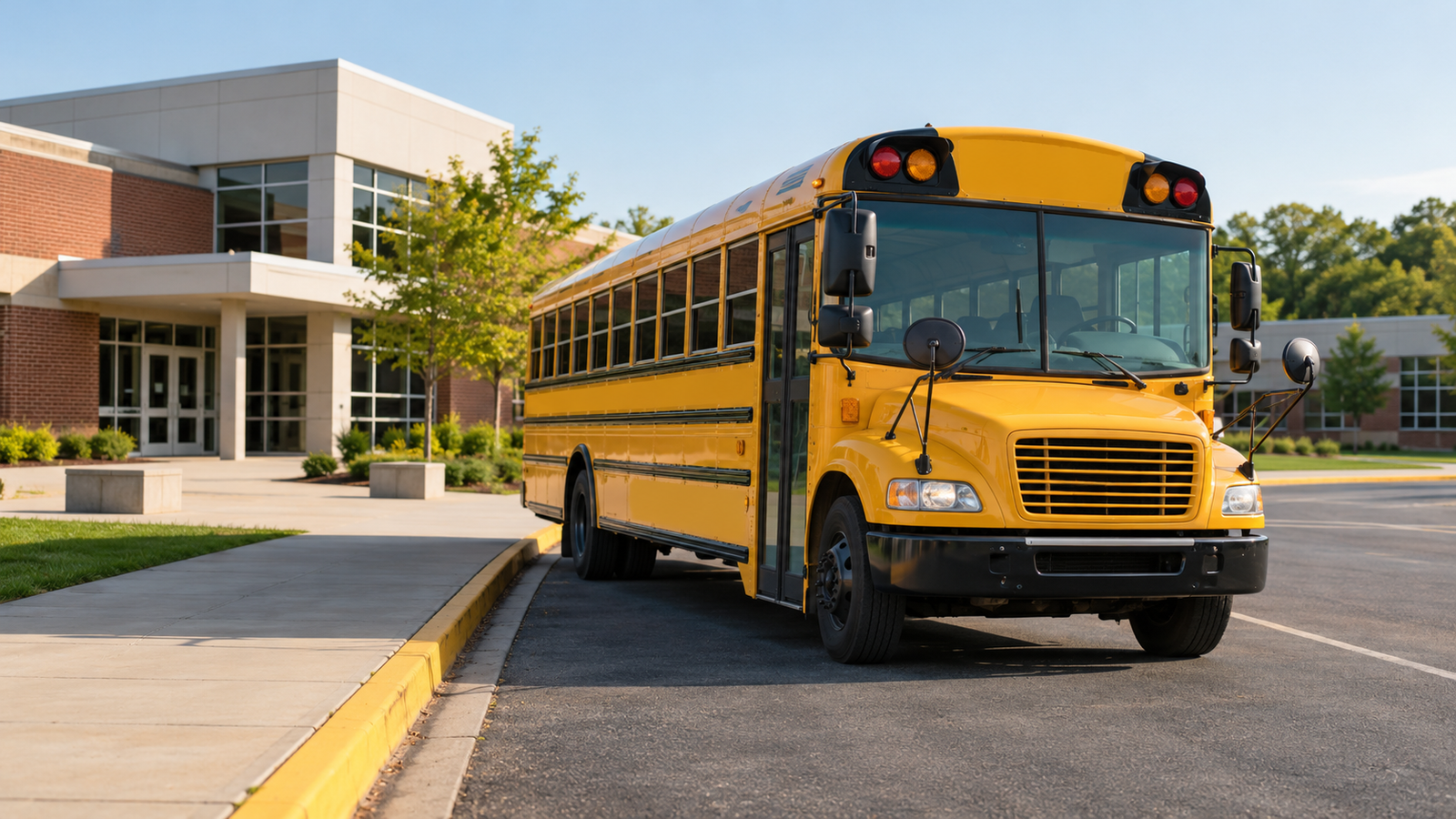
A familiar route number does not guarantee that the usual vehicle operated that day. A school bus accident lawyer reviewing a Long Island incident should ask whether a substitute bus, driver, or attendant was assigned. A parent’s saved photograph of the regular bus may help explain expectations but should not be presented as a photograph of the vehicle involved. Keep notices about substitutions and identify who observed the actual pickup.
The school bus accident details may be clarified by the daily assignment record, a contemporaneous message, or a vehicle number visible in an original image. For a route serving Nassau or Suffolk schools, distinguish the district’s route designation from the contractor’s fleet number. If a family learned of a substitution only afterward, record the source and date of that information. The change itself does not establish unsafe operation. Its importance is that evidence requests, equipment questions, and witness inquiries should concern the vehicle and people actually present, rather than the routine arrangement everyone assumed was in place.
Long Island school bus accident FAQs
Is the district liable whenever its students use the bus?
No automatic conclusion follows from the destination or student status. The duties, contractual relationships, conduct, and cause of injury require review. Identify the operator and relevant entities before deciding who may be responsible.
Does Suffolk camera data prove that my stop is dangerous?
No. Program totals and equipment counts do not establish a crash rate for an individual stop. A particular claim requires evidence about the event, and any statistical comparison needs a defined location, period, and denominator.
Can there be a claim for a boarding or lift injury?
Possibly. Preserve the mechanism, equipment, expected assistance, and relevant instructions. A collision with another vehicle is not required for every transportation-related injury claim.
Should I wait until the child is fully recovered to seek advice?
Do not postpone deadline and evidence review. The medical course can continue while counsel evaluates notices, coverage, and preservation. Early advice does not require predicting the final outcome immediately.
What is useful at the first meeting?
Bring the district and operator information, route and bus identifiers, incident date, reports, messages, photographs, medical records, expenses, and household auto-policy details. Explain the child's baseline and any transportation accommodations.
Keep school-service requests separate from claim paperwork
A family may need a revised pickup arrangement, assistance boarding, or another practical response while an injury claim is investigated. Document those requests and the reasons for them, but do not assume that ordinary school correspondence satisfies an insurer's notice requirement or a formal legal notice.
Maintain a simple calendar showing the incident date, medical appointments, requests sent, responses received, and deadlines identified by counsel. Separate folders for school communications, insurance, and legal records can prevent a useful document from being overlooked.
If an organization asks the family to sign a statement or authorization, read its scope before responding. Ask whether it merely acknowledges receipt, requests records, or affects legal rights. Clear communication allows the practical transportation issue to move forward without confusing it with the resolution of the injury claim.
## Related resources
Read the New York school bus accident guide, Long Island car accident guide, and car accident FAQs. The school-bus context requires its own review of passenger coverage, public entities, and child-specific procedures.