
Queens School Bus Accident Lawyer
After a school bus injury in Queens, the first account a parent receives may be incomplete. A child may describe a sudden stop, a fall while boarding, an equipment problem, or a collision without knowing the route or another vehicle’s identity. A Queens school bus accident lawyer should help turn that incomplete account into a careful investigation while keeping the child’s treatment and immediate needs first.
This guide explains how to preserve route and vehicle information, document a child’s account appropriately, identify the relevant organizations, and review insurance and legal deadlines. It also addresses specialized transportation, where an individual plan, equipment, and assistance arrangements may be especially important. No bus company, school, or public entity is automatically responsible simply because an injury happened during a school trip.

Documented transportation context for Queens families
A December 2025 NYC Comptroller report described 62,000 students with disabilities receiving mandated school bus transportation citywide. That is a service population, not a Queens crash count.
NHTSA’s 2015–2024 national report found that 70% of people killed in school-transportation-related crashes were occupants of other vehicles. The category is broader than school bus passengers and is not a local fault measure.
These figures show why a transportation injury review must identify the injured person’s role and the actual service. A student on a specialized route, a pedestrian near a stop, and a driver in another vehicle may face different factual and insurance questions. Statistics cannot answer those questions for an individual event.
Protecting the child’s health and the accuracy of the history
Obtain emergency assistance when needed and confirm the child’s location. Follow medical advice about evaluation and follow-up. Do not delay care while trying to obtain a report number or determine which insurer will ultimately handle a bill.
Explain to the provider what is known and what is secondhand. A parent who was not present should identify the source of the account. If the child later adds information, report it accurately without rewriting the original chronology. A developing account can be understood when its timing is clear.
Keep medical instructions and school communications together. If the event affects mobility, concentration, attendance, or transportation needs, discuss those issues with the appropriate professionals. Avoid diagnosing the child or assuming that every later difficulty was caused by the incident without evaluation.
Preserve the child’s own words without repeated leading questions. A simple dated note of a spontaneous account can be useful. Do not ask the child to rehearse a legal narrative or compare stories with other children. Appropriate information gathering should protect both the child and the reliability of the record.
Identify the route, vehicle, and service category
Record the route number, bus company, vehicle number, school, pickup point, and approximate time. Save notices about substitute vehicles, route changes, or delays. The bus normally assigned to the child may not have been the vehicle used on the incident date.
Clarify whether the event involved a regular school-age route, specialized transportation, preschool service, a field trip, or another arrangement. Different documents may describe different responsibilities. Do not assume a rule applicable to one service automatically applies to another.
The NYCPS Transportation Guide directs accident and bus-safety reports to OPT, while schools assist with route and student-service issues. Keep the reference and copies of communications.
Administrative reporting is important but separate from insurance and legal procedures. A school incident form should not be assumed to notify every insurer or satisfy a formal notice-of-claim requirement. Counsel can identify the separate steps after reviewing the actual entities and event.
Specialized transportation: use the actual plan
NYCPS’s Transportation Rights describes specialized riders’ rights concerning secured equipment, appropriate occupant securement, and trained staff. The child’s actual service documents remain important to an individual review.
Preserve the relevant IEP or other transportation plan, equipment instructions, and communications about assistance. Identify what was supposed to happen and what the family actually observed. A difference between the plan and the event may warrant investigation, but causation and legal responsibility still require proof.
If a mobility device or restraint was involved, record its identity and condition without altering it unnecessarily. Medical or safety needs may require repair or replacement; document the change and tell counsel. The family should not perform a hazardous demonstration to show how the device moved.
For a handoff concern, preserve authorized-contact information and the instructions in effect at the time. Do not rely on a general assumption that every child must be released in the same manner. Service categories and individual arrangements may differ, so the actual documents matter.
Queens geography and the facts to record
Long Island City and Astoria
Near Queens Plaza, Broadway, and the approaches to major bridges, an incident may involve a turn, curbside stop, or another vehicle’s movement. Record the exact street, side, direction, and nearby entrance. A school address may not identify the actual pickup location.
If the bus changed lanes or stopped away from the curb, describe what is known about the sequence. Do not infer that a maneuver was negligent from its appearance alone. Video, traffic conditions, instructions, and other evidence may be needed to understand it.
Jackson Heights, Corona, and Flushing
Around Roosevelt Avenue, Northern Boulevard, and Main Street, a stop may be near shops, deliveries, and pedestrian activity. Identify the child’s position relative to the bus and curb. A witness at a storefront may have a different view from someone inside the bus.
Preserve original-language messages and identify any translation. A statement that a witness “saw the accident” should be clarified: did they see the impact, hear it, or arrive afterward? Accurate distinctions help prevent misunderstandings as information moves between family, school, and investigators.
Jamaica and southeast Queens
For routes near Jamaica Avenue, Sutphin Boulevard, or airport-related road networks, keep route and timing details. The injury may occur far from the school or home. A general reference to “the morning bus” may not be enough to identify the relevant segment.
If another commercial vehicle was involved, preserve company and vehicle identifiers. A truck or shuttle operating near an airport is not necessarily connected to the school transportation provider. Each participant’s role should be investigated separately.
Bayside, Fresh Meadows, and eastern Queens
Residential stops can raise questions about crossings, sightlines, parked vehicles, and the assigned location. Record the physical layout safely and label later photographs with their actual date. A later image can explain the setting without proving the exact conditions at the incident time.
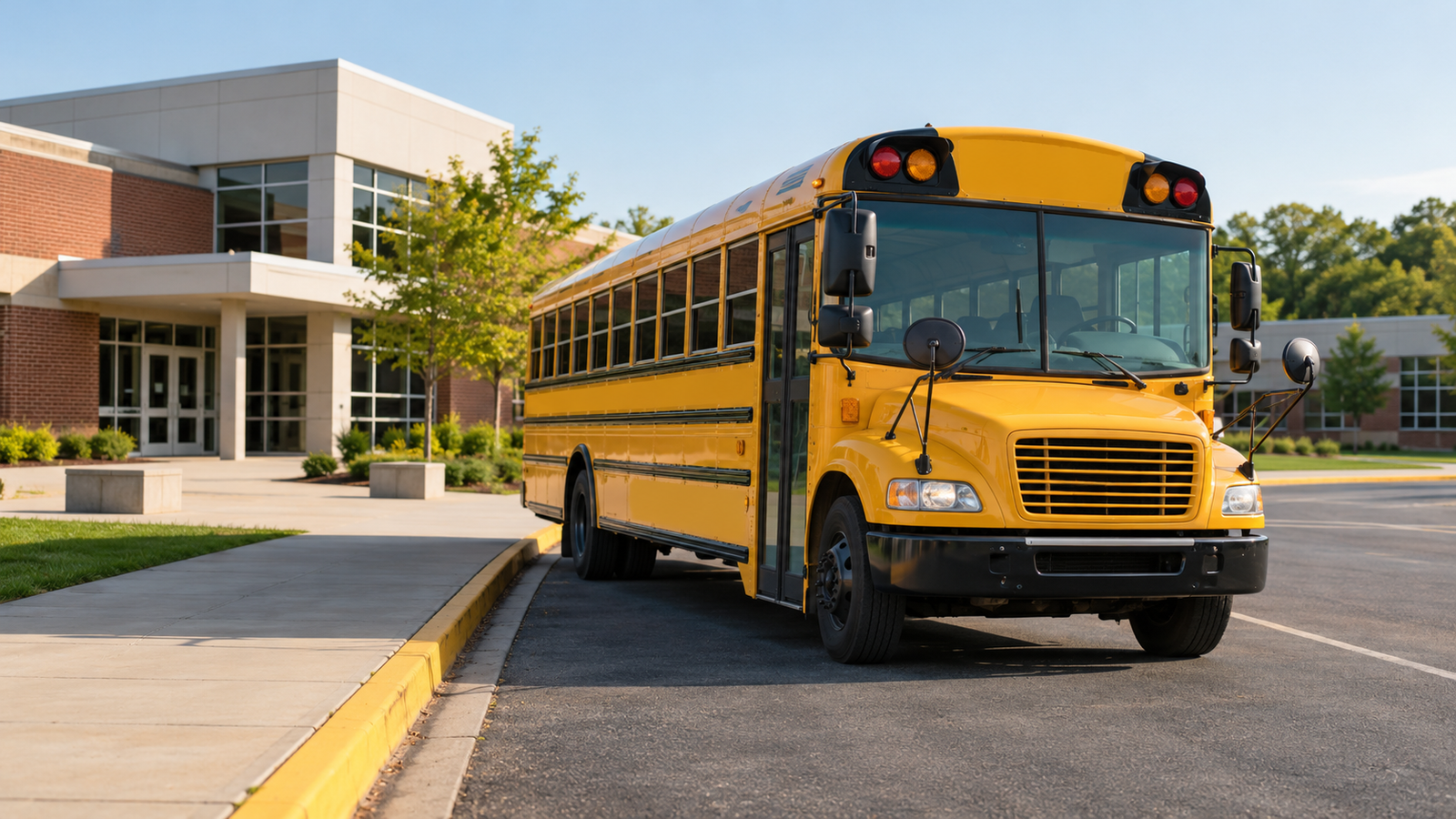
Stopped buses and passing vehicles
Vehicle and Traffic Law §1174 requires stopping for a properly equipped school bus receiving or discharging passengers with red signals operating. New York’s DMV manual confirms divided highways are included.
The legal review must establish the signal and movement sequence rather than assume it. Was the bus stopped? Were passengers boarding or leaving? Where was the approaching vehicle? What did each witness actually see? Those details connect the rule to the event.
A camera ticket or enforcement record may be relevant but should be reviewed for its actual scope. It is not a complete damages case by itself. Similarly, the absence of a ticket should not end an investigation without considering the available evidence.
Responsibility may involve several different organizations
A driver’s conduct, another motorist’s conduct, vehicle maintenance, a property condition, or an assistance arrangement may require review. The bus company and school can have different roles. Liability depends on the applicable duty, facts, and causal connection, not merely the existence of a transportation contract.
Create a participant list with confirmed names and unresolved identities. Include the operator, school, relevant public entity, other vehicles, and any equipment provider known to the family. This list is an investigative aid, not an accusation against every participant.
For an injury on bus steps, the important evidence may concern the surface, movement, handrail, and boarding sequence. For an on-board collision injury, vehicle motion and seating may be more important. For an equipment event, the device and assistance records may be central. The investigation should fit the mechanism.
Ask counsel to explain which theory is supported and which remains uncertain. A responsible review tests competing explanations and does not promise compensation simply because the injured person is a child.
Preserving recordings and operational records
Potential sources include bus video, GPS information, dispatch communications, route documents, incident reports, and maintenance records. Availability varies. Prompt preservation may matter because routine retention periods can be short, but no one should assume a particular system exists without checking.
Keep original files and complete relevant conversations. A screenshot can be convenient, but it may omit timing or context. Do not delete an early message because a detail later changed; preserve the correction and explain why it was made.
Identify witnesses without pressuring them. Parents may know who met the bus, while children may know what happened inside. Counsel can consider an appropriate approach to obtaining accounts while respecting privacy and avoiding suggestive questioning.
If a nearby business may have footage, record its location and contact information. Do not seek unauthorized access or enter restricted premises. A lawyer can assess a preservation request or other lawful process.
Insurance questions should be addressed early
Insurance Law §5103 contains bus-passenger benefit priority rules involving applicable household policies and, when absent, bus coverage. The correct insurer should be identified rather than assumed.
Bring household auto policy information, the child’s passenger status, and details of other vehicles. A pedestrian, passenger, operator, or employee can raise different coverage questions. An injury without a collision may also require careful review of how the event relates to vehicle use.
The Department of Financial Services generally requires no-fault notice within 30 days, with a documented reasonable-justification exception. Seek advice promptly instead of waiting for a complete medical prognosis.
Insurance Law §5104 imposes a serious-injury threshold for certain motor-vehicle non-economic claims. Its application depends on the incident and parties, and should not be assumed for every school-related injury.
Minors, public entities, and current fault rules
CPLR §208 extends some lawsuit periods for minors. It does not justify assuming every insurance, notice, or parental deadline is postponed.
Where applicable, General Municipal Law §50-e generally requires public-entity tort notice within 90 days. Whether late relief is available requires legal analysis.
Ask for a separate deadline assessment covering the child, any parent-related claim, insurers, and relevant public entities. An administrative complaint is not automatically a substitute for legal notice. The correct organization and method of service can matter.
Current CPLR §1411 includes a special bar in certain Article 51 injury actions when claimant fault exceeds defendants’ combined fault. Outdated blanket descriptions of New York fault law should be avoided.

Recovery records and decisions about settlement
Maintain treatment instructions, attendance information, and communications about accommodations. Describe the child’s actual needs and changes over time. The treating professional should guide medical decisions; legal documentation should not dictate a recovery narrative.
Record expenses and assistance accurately. If a parent misses work or arranges alternative transportation, keep the supporting records without assuming every item is legally recoverable. Counsel can explain which process or claim may address each category.
CPLR §1207 provides a court approval process for a child’s settlement. Ask about the proposed allocation, expenses, protection of funds, and required approvals before agreeing to terms.
Related reading includes the school bus accident overview, car accident FAQs, and Queens car accident guide. Use them to prepare questions for independent counsel.
A specialized-route example: identifying the actual event
Consider a hypothetical Queens student who uses a mobility device and reports pain after a bus ride. The family knows there was abrupt braking, but does not yet know whether the device moved, whether another vehicle was involved, or where on the route the event occurred. A useful investigation would preserve the device information, transportation plan, route timing, and the child’s own account before reaching a conclusion.
The existence of specialized transportation does not itself prove a failure. Counsel would need to understand the equipment, assistance, vehicle movement, and relationship to the injury. Medical evaluation would address the child’s condition, while operational records might address what happened during the ride.
A parent should not recreate the movement to demonstrate the problem. If equipment needs repair for safe daily use, document the condition and work performed, and obtain advice about preservation when possible. Safety and the child’s access to necessary equipment remain immediate priorities.
This example is illustrative, not a reported case. It shows how a careful review can identify several plausible questions without converting an incomplete account into an unsupported allegation against the driver, attendant, or school.
Communicating across languages and several caregivers
A child may be met by different authorized adults on different days. Preserve the contact and handoff information in effect at the time of the incident, including any written changes. An old contact list may not explain the actual arrangement.
If the account was translated, keep the original wording where available and identify who translated it. A phrase describing discomfort, movement, or timing can lose precision when repeated through several people. Do not make an uncertain statement sound definite merely to simplify a report.
Designate a practical point of contact for document organization while keeping legal authority clear. The person helping with translation or appointments may not be the parent or guardian authorized to make every decision. Counsel and the school should receive accurate information about those roles.
A clear communication plan also reduces repeated questioning of the child. Adults can compare documents and identify gaps without asking the student to retell the event each time a new person becomes involved. That approach supports both privacy and a more reliable factual record.
Related legal guides
These guides address issues that may overlap with school bus accident matters in Queens. Review the guide that fits the facts of your situation.
- Queens Personal Injury Lawyer — evidence, responsibility, and injury claims.
- Queens Pedestrian Accident Lawyer — injuries involving people on foot.
- Queens Truck Accident Lawyer — commercial vehicle evidence and liability.
- Queens Motorcycle Accident Lawyer — motorcycle crashes and rider injuries.
Separating assigned seating from actual seating on a Queens bus
A seat plan may show where a child was expected to sit, while the incident involved a different seat or a movement through the aisle. A school bus accident lawyer reviewing a Queens route should establish actual positions without treating the plan as a photograph of the trip. Ask whether the child moved, whether staff directed a change, and when the relevant observation was made. Different recollections may concern different moments.
The school bus accident facts should identify the source of any seating description: the child, an attendant, another passenger, or a recording. For a route with individualized support arrangements, keep the applicable transportation plan and daily account separate. The plan can explain what assistance was intended; the daily record addresses what happened. A deviation does not by itself establish why an injury occurred, but it may identify a question worth investigating. If equipment or a mobility device affected seating, describe its position without conducting a reenactment. This careful distinction helps focus review on the actual movement and supervision at the relevant time.
Queens school bus accident FAQs
Is a specialized transportation plan relevant to an injury?
It may help identify the service and assistance arrangements, but it does not alone prove liability. Preserve the actual plan and communications, and explain what happened. Counsel should evaluate the applicable duties and causal connection.
What if a substitute bus was used?
Save notices, vehicle identifiers, and timing. The regular route assignment may not identify the vehicle or personnel involved that day. Accurate identification helps direct preservation requests and insurance inquiries.
Can a school complaint protect all legal rights?
No automatic assumption should be made. Administrative reports, insurance notices, and legal filings serve different purposes. Obtain a prompt review of the required steps and dates.
Should we wait until the child is fully recovered?
Medical development may affect valuation, but evidence and deadlines can require action earlier. A consultation can address preservation and procedure while treatment continues, without forcing an immediate settlement decision.
Where can we ask about this guide?
Use the contact page for content questions. A specific injury or deadline requires advice from an independent licensed attorney with the relevant facts.