
Bronx Product Liability Lawyer
An appliance injury in a rented home can involve questions that extend beyond the brand on the machine. Who purchased it, who installed it, who repaired it, and what condition caused the incident? A tenant may have reported a problem to building management without knowing the product's model or service history. A Bronx product liability review should connect those records before deciding which legal theory fits.
A Bronx product liability lawyer can investigate whether a defective product or related conduct caused injury and whether manufacturers, sellers, installers, property parties, or others have a relevant role. This guide focuses on installed household appliances, repair histories, and the distinction between a product defect and a premises problem. The examples are educational and do not accuse any local building, business, or neighborhood of unsafe conduct.

A current recall shows the value of model and serial records
On March 19, 2026, CPSC announced a recall of about 174,800 Frigidaire gas ranges in the United States because delayed ignition of the oven bake burner could create a burn hazard. The notice identifies particular models and serial numbers. Official CPSC gas-range recall
That national count does not show how many affected ranges were in the Bronx or how many local injuries occurred. It illustrates why the exact appliance must be identified. A similar appearance or shared brand name does not establish that a specific unit is covered.
Follow the current official safety instructions for an affected product. Do not operate a suspect appliance to reproduce delayed ignition or another dangerous condition. If an injury has occurred, a legal review can be coordinated with appropriate safety and repair procedures.
A tenant may need records held by several parties
An appliance in Fordham, Mott Haven, Morris Park, Riverdale, or another Bronx community may have been supplied by the building owner, a prior occupant, or the current tenant. These are examples of residential geography, not verified product-injury hotspots. Identify the actual source and ownership history.
Ask what purchase, installation, and service documents are available. A tenant may hold maintenance requests while the owner holds invoices and a contractor holds repair notes. Those records can answer different questions about the item's condition and history.
Preserve the lease or other documents that describe supplied appliances when relevant. They may help establish who provided or maintained the item, but they do not automatically decide whether a manufacturer defect caused the event.
If the appliance was replaced after the injury, record who removed it, the date, and its destination if known. A replacement can resolve an immediate household problem while also changing access to important evidence. Tell counsel promptly about planned or completed removal.
Begin with a safe response to the hazard
An active fire, suspected gas leak, dangerous heat, or electrical hazard requires appropriate emergency action. Move away and obtain professional assistance rather than staying near the appliance to collect evidence. Follow responders' directions about access and use.
Do not disconnect gas equipment, open electrical components, or conduct an improvised test for litigation purposes. Those actions can create serious risk and alter the product. Qualified professionals should address immediate safety and any technical examination.
Once the area is safe, preserve available photographs, reports, and communications. If emergency work changed the scene, record what was done and why. Safety-related changes should be explained accurately rather than concealed.
Tell the attorney whether the product remains in the apartment, is in storage, or has been taken by another party. A safe preservation plan depends on the actual condition and location. Keeping a hazardous appliance in use is not an acceptable way to retain evidence.
Trace the complaint and repair history
Collect messages reporting the specific problem before the incident. Include dates, descriptions, recipients, responses, and any appointment arranged. A vague maintenance request may need context, while a detailed message may identify a recurring condition.
Distinguish the problem reported from the work performed. A technician may have inspected one feature while the later incident involved another. The review should not assume that every service call addressed the alleged defect.
Keep repair invoices, work orders, replacement-part information, and photographs supplied by the technician. If a part was removed, identify whether it remains available. A component's source can be relevant when the appliance was modified after its original sale.
For a hypothetical oven incident, the investigation might examine the original product, installation, prior service, and the circumstances of ignition. The fact that a repair occurred shortly before the event is important chronology, not automatic proof that the technician caused the injury.
Distinguish product, installation, and building conditions
An installed appliance operates within a larger setting. Connections, ventilation, electrical supply, gas supply, and surrounding conditions may require examination depending on the event. The product itself should not be assumed to explain every failure.
At the same time, a building-related issue does not automatically eliminate a product claim. More than one factor can be investigated, and different parties may have different responsibilities. Technical evidence should guide the analysis.
Preserve relevant inspection and incident reports from emergency responders, utilities, insurers, or qualified contractors. Their findings may help identify what requires further examination. A preliminary observation should not be presented as a final cause determination if the report leaves the issue open.
Ask counsel how the proposed claim separates these possibilities. A precise explanation of the alleged failure and its connection to the injury is more useful than naming every entity associated with the apartment.
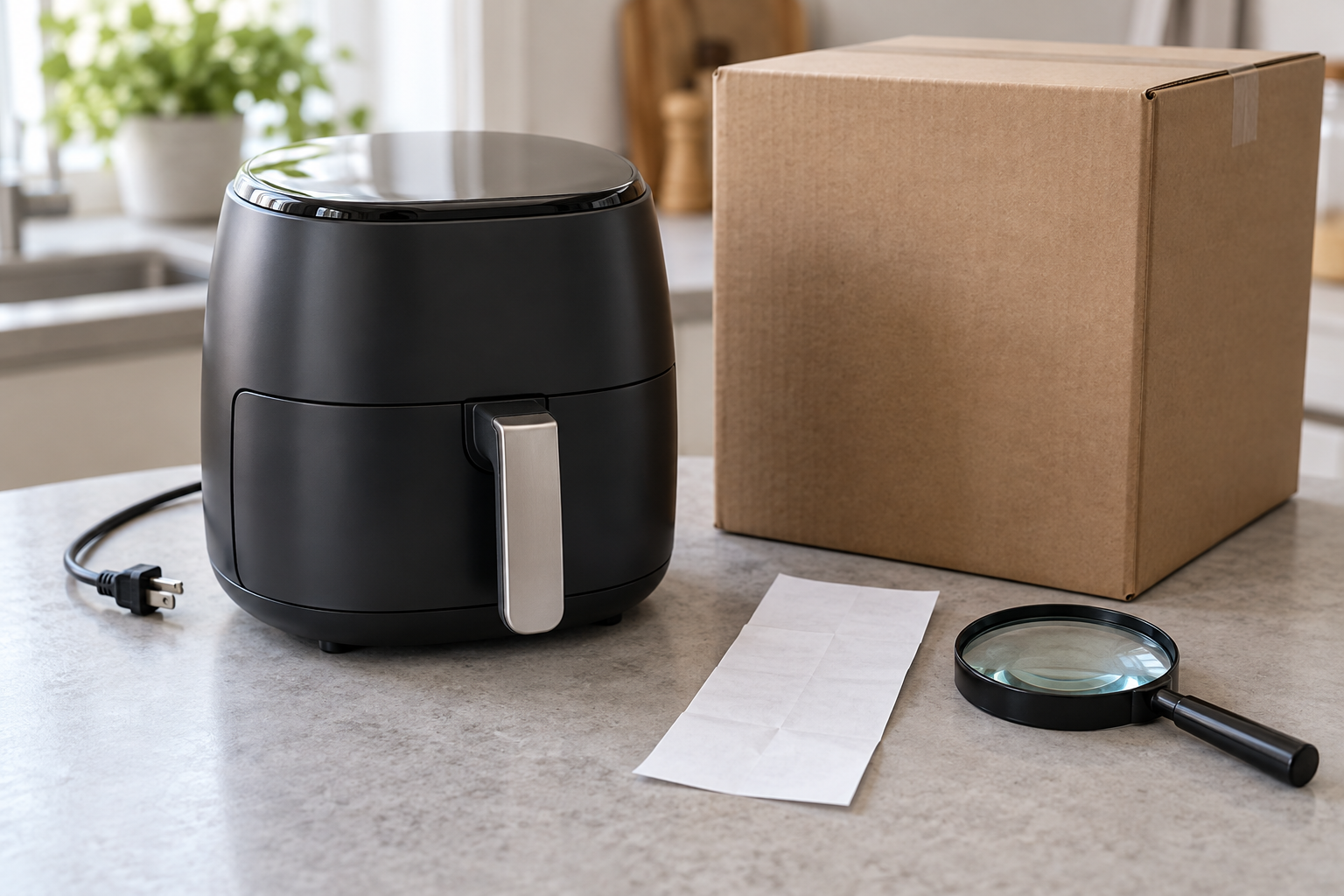
What a product liability theory must establish
New York product cases may involve manufacturing, design, or warning defects; the alleged defect must be causally connected to the injury. New York appellate product-liability discussion
A manufacturing issue concerns the particular product's condition relative to its intended manufacture. A design issue can concern a feature shared across units. A warning issue examines whether relevant information was adequate and how that affected the event. Each needs supporting evidence.
An expert may need to inspect the appliance and relevant components before drawing a conclusion. Damage after a fire or impact can make it difficult to distinguish cause from consequence. The most visibly damaged part is not necessarily the initiating source.
Ask what facts support the theory and what alternative explanations must be tested. A responsible investigation can change direction as information arrives. The objective is a defensible account of the mechanism, not confirmation of the first assumption made after the incident.
Preserve communications without changing their meaning
Keep the full maintenance conversation, including earlier and later messages. A single screenshot may omit a response, clarification, or different issue discussed in the same thread. Save originals where available and use separate notes to explain context.
If a conversation happened by telephone or in person, write a dated account identifying who participated and what was said. Mark it as a recollection. Do not create quotation marks around words you cannot reliably remember.
A tenant and a property manager may describe the same visit differently. Preserve both accounts and identify documents that could clarify the disagreement. A difference in recollection is a reason to investigate, not proof of dishonesty by itself.
Avoid public accusations unsupported by the technical evidence. Sharing complete records with appropriate professionals is more useful than circulating a short description that cannot address the appliance, installation, and repair history.
The product's supply chain may be older than the tenancy
The current occupant may not know when or where an appliance was purchased. Look for model labels, warranty documents, service records, and information from the owner or prior custodian. Do not move a dangerous appliance simply to photograph a hidden label.
A replacement part may have been purchased through a separate supplier. Preserve its packaging or identifying information if available. The item installed during a repair may be relevant even when the main appliance's manufacturer is known.
Counsel can investigate the manufacturer, seller, distributor, and service participants from the available records. Their legal roles are not interchangeable. The fact that a company answered a support call does not necessarily establish that it sold or manufactured the component involved.
If the history remains incomplete, state the gaps clearly. A reliable review can identify additional sources of information. Guessing an acquisition date or prior repair can create avoidable confusion and undermine later analysis.
Recall participation should be coordinated after an injury
A recall may call for a repair, replacement, refund, or disposal procedure. Follow immediate safety directions and keep the notice that applies to the actual model. The remedy addresses a product-safety issue, while an injury claim requires its own evaluation.
If the proposed remedy will alter or remove important evidence, inform counsel promptly. Qualified handling and documentation can be discussed with the relevant parties. Do not continue using an unsafe product while waiting for that coordination.
Retain appointment notices, technician reports, shipping records, and forms completed during the recall process. They can show what was changed and when. If a part was replaced, ask through appropriate channels whether its disposition is documented.
Read any release or settlement language carefully before signing. A service form and a release of injury claims are not necessarily the same, but the actual wording matters. Obtain individualized advice about documents that may affect legal rights.
Medical treatment and housing disruption are separate records
Seek appropriate care and provide clinicians with an accurate description of the event. Keep treatment records, follow-up information, and evidence of limitations. Technical proof about an appliance does not by itself establish the nature or duration of a medical injury.
If the home became temporarily unusable, retain relevant lodging, transportation, or replacement-item receipts. Explain the reason for each expense and any reimbursement received. These records should be organized separately from medical bills and income information.
A household member who helped after the incident can describe specific tasks and dates. Distinguish ordinary shared responsibilities from additional assistance caused by the injury. Accurate detail is more useful than broad estimates of constant care.
No general settlement range can reliably value a claim from the appliance type. The analysis depends on responsibility, causation, prognosis, losses, and proof. Ask how each claimed consequence would be supported rather than assuming all disruption is automatically recoverable.

Deadlines should be assessed before the repair dispute ends
New York generally uses a three-year personal-injury limitation, subject to the applicable exceptions and claim. CPLR 214
Certain latent substance-exposure injuries have a separate discovery framework; it is not a general rule for every product problem. CPLR 214-c
Warranty claims have distinct timing rules, generally including four years and specific accrual provisions. UCC 2-725
Provide all relevant dates, including installation, reported problems, repairs, injury, and later discovery. A landlord discussion, insurer investigation, or customer-service request should not be assumed to pause a lawsuit deadline. If a public entity or other special circumstance is involved, identify it early for separate procedural review.
Keep the incident sequence distinct from later opinions
A neighbor may have heard a sound, a technician may have inspected a component, and a responder may have documented the scene. Each source offers different information. List what each person actually observed instead of treating all comments as equivalent expert conclusions.
When someone offers an opinion about the cause, record their role and the basis they gave. A casual statement made before inspection may carry a different meaning from a written report after testing. Counsel can evaluate its significance in context.
Preserve photographs with original dates and files where possible. Do not edit an image to remove surrounding objects that may be relevant. A clear explanation of what the image shows can accompany it without altering the evidence.
This separation helps a reviewer identify what is established, what is inferred, and what remains unknown. It can prevent an understandable early theory from becoming an inaccurate account repeated throughout later records.
Questions to ask at the first consultation
Ask what immediate preservation steps are appropriate and who should communicate with the product's current custodian. If a repair or disposal is scheduled, provide the date. Timing can matter to the evidence even before a lawsuit decision is made.
Ask whether the issue appears to require a product engineer, fire investigator, installation specialist, or another type of expertise. The necessary review depends on the alleged mechanism, not simply the fact that an appliance was present.
Discuss costs, the scope of representation, and how updates will be provided. Confirm whether the attorney has agreed to handle the matter or is still conducting an initial evaluation. Clear responsibilities reduce confusion while records are being collected.
Bring difficult facts as well as favorable ones. Prior modifications, missed service appointments, or uncertain use history may need analysis. A candid account allows counsel to evaluate the actual case rather than a version that later evidence may contradict.
Bronx product liability FAQs
Can a tenant investigate a product supplied by the landlord?
Yes. Identify the appliance, its ownership and service history, and the circumstances of the injury. The legal roles of the owner, manufacturer, seller, and repair participants require individual analysis rather than assumptions based only on possession.
Does a maintenance complaint prove notice of a defect?
Its significance depends on what was reported, to whom, when, and how it relates to the incident. Preserve the full exchange. A complaint about a different problem should not be treated as proof of knowledge of the specific hazard.
Should I let someone repair the appliance immediately?
Immediate safety needs must be addressed by appropriate professionals. Tell counsel about planned work after an injury so evidence can be documented and preservation coordinated. Do not delay emergency action or continue unsafe use for litigation purposes.
What if the appliance has no readable label?
Other records may help identify it, including purchase invoices, service documents, photographs, or warranty information. Explain the missing identifier and what is available. Do not undertake unsafe movement or disassembly to search for a label.
Is a recall a finding that the product caused my injury?
No. The recall can be relevant, but the actual model, condition, incident, and causal connection need review. A nationwide notice does not establish a particular Bronx event or determine every party's responsibility.
Can property damage and personal injury be reviewed together?
They may arise from the same event, but their evidence, insurance issues, and legal treatment can differ. Organize records separately and identify payments or agreements already made so counsel can evaluate their interaction.
Related Bronx resources
The New York product liability overview provides statewide context. Read the Bronx personal injury guide for broader injury questions and the Bronx medical malpractice page for a separate concern involving clinical care or medical equipment use.