
Manhattan Pedestrian Accident Lawyer
Walking in Manhattan often involves several street environments within a short trip: a station exit, crowded avenue, loading entrance, and quieter side street. After a vehicle strikes someone on foot, a reliable investigation must identify the particular crossing and movement involved. The neighborhood's general busyness does not explain who caused the injury.
A Manhattan pedestrian accident lawyer should help clarify the driver's conduct, the pedestrian's route, medical evidence, insurance, and deadlines. This guide discusses those questions with attention to Midtown, Downtown, Upper Manhattan, and residential streets. It offers practical preparation for an independent legal consultation, without promising a recovery or treating every collision as the same kind of case.
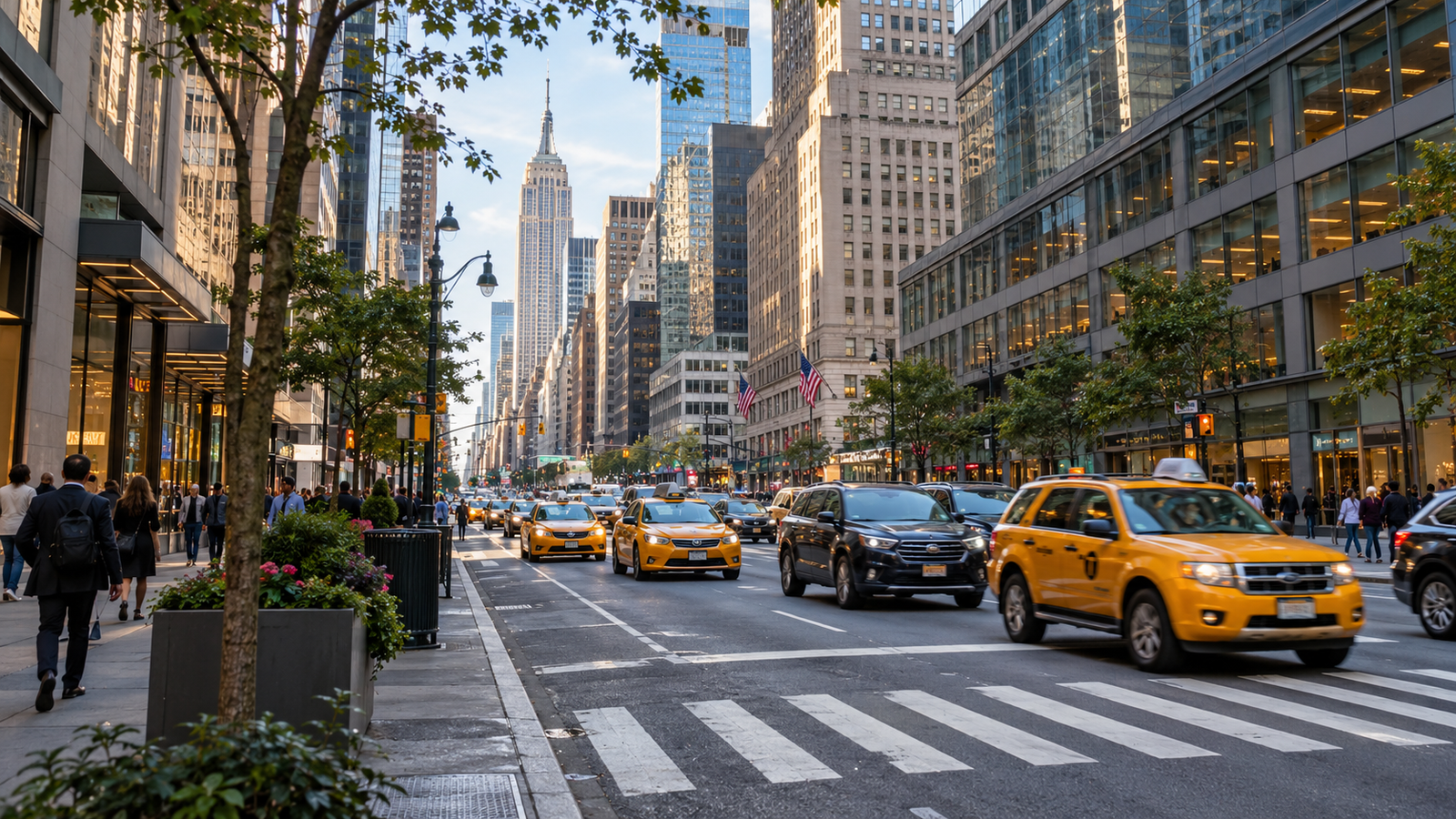
Historical Manhattan pedestrian data
NYC DOT's 2023 borough plan lists 99 Manhattan pedestrian fatalities during 2017–2021. This is a historical five-year total, not a current annual figure or a count for one intersection. DOT pedestrian safety plan.
The statistic provides a defined context for pedestrian safety while leaving individual responsibility to evidence. It does not establish that every avenue is equally hazardous or that a particular driver acted negligently. A claim requires a connection between the actual conduct, event, and injury.
Use local geography to make the investigation more precise. An entrance at Penn Station, a crossing near Canal Street, or a turn in Washington Heights can identify useful records and witnesses. A familiar place name should not become an unsupported claim about its collision ranking.
Midtown station exits and the first crossing
Near Penn Station, Grand Central, and Port Authority Bus Terminal, identify the exit used before entering the street. A station can have several entrances, and a witness saying “outside the station” may describe a different block from the injured pedestrian's route.
Preserve the pedestrian's starting corner, intended destination, and the crossing segment where contact occurred. If the person paused between portions of a crossing, record that sequence. A single broad arrow on a map may omit a change that matters to the driver's approach or the relevant signal.
A companion may know the route while another witness saw the vehicle's turn. Keep their observations distinct. Do not ask everyone to agree on details they could not see. Independent accounts can be useful precisely because they provide different views of the event.
If the pedestrian was visiting Manhattan, retain the directions or appointment information that explain the chosen route. These records provide context without proving that the route was legally proper or improper.
Midtown commercial entrances and curb activity
Near hotels, office buildings, and theaters, the event may involve a turning vehicle, a driveway, or a taxi stopping for passengers. Describe the vehicle's actual movement and whether the pedestrian was crossing the roadway, continuing along the sidewalk, or approaching an entrance.
A building employee may have seen the vehicle arrive without witnessing contact. A camera may show the pedestrian moments earlier but miss the impact. These limited observations can still help establish timing or identity if their limits are stated clearly.
Do not assume a hotel or venue is responsible merely because its guest or customer was involved. Counsel should investigate the conduct or condition alleged to have caused injury and the relevant legal relationship. A business can hold useful evidence without being a proper defendant.
For a taxi-related event, preserve any medallion or plate information, door movement, and passenger activity. The Manhattan taxi accident guide explains additional vehicle-identification and insurance questions.
Canal Street, Chinatown, and Lower Manhattan routes
Around Canal Street, Chinatown, the Financial District, and bridge approaches, identify the precise roadway and direction. A pedestrian may describe the destination by a prominent landmark while the collision occurred on a different connecting street. Keep the destination separate from the contact location.
For a disputed turn, record where the vehicle began and which way it moved if observed. Avoid estimating speed from a brief impression alone. Video, physical evidence, and qualified analysis may be needed to assess a movement that happened quickly.
If the pedestrian was displaced after contact or moved for safety, distinguish the later position from the initial impact area. Photographs taken after relocation should be labeled. They can document injuries, damage, or identifiers without fixing every original position.
A nearby obstruction should be described factually: its location, size as observed, and the view it blocked. Do not assume that its presence proves causation or identifies the party legally responsible for it.
Upper Manhattan and trips tied to daily needs
In Harlem, Washington Heights, and Inwood, a walking trip may connect home, a bus stop, a school, or a medical appointment. Record the actual route rather than relying on a general neighborhood description. A familiar route can still include a specific driveway or crossing that needs separate investigation.
If the injured person uses a mobility aid, describe how it was being used and preserve relevant damage. Avoid treating the aid as either proof of fault or proof that every later limitation is new. Baseline function and the changes after the event need an accurate medical account.
A relative who accompanies the pedestrian may be an important witness, but family relationship does not expand what they could observe. Identify whether they were beside, ahead of, or behind the injured person. Their position may explain why they noticed a vehicle or signal at a different moment.
Residential blocks and vehicle backing movements
On the Upper East Side, Upper West Side, or another residential block, an injury may occur near a garage entrance rather than at an avenue crossing. Preserve whether the vehicle was entering, leaving, or backing, and where the pedestrian was in relation to the entrance.
If a warning was heard, describe it without assuming its source. If no warning was noticed, say that rather than claiming no warning device existed. The difference matters when technical records or vehicle inspection may be necessary.
Photographs of the entrance should show context, not only a close-up of a damaged item. An investigator may need to understand the pedestrian path and vehicle movement together. Take images only from a safe and lawful position; do not recreate the event in an active driveway.
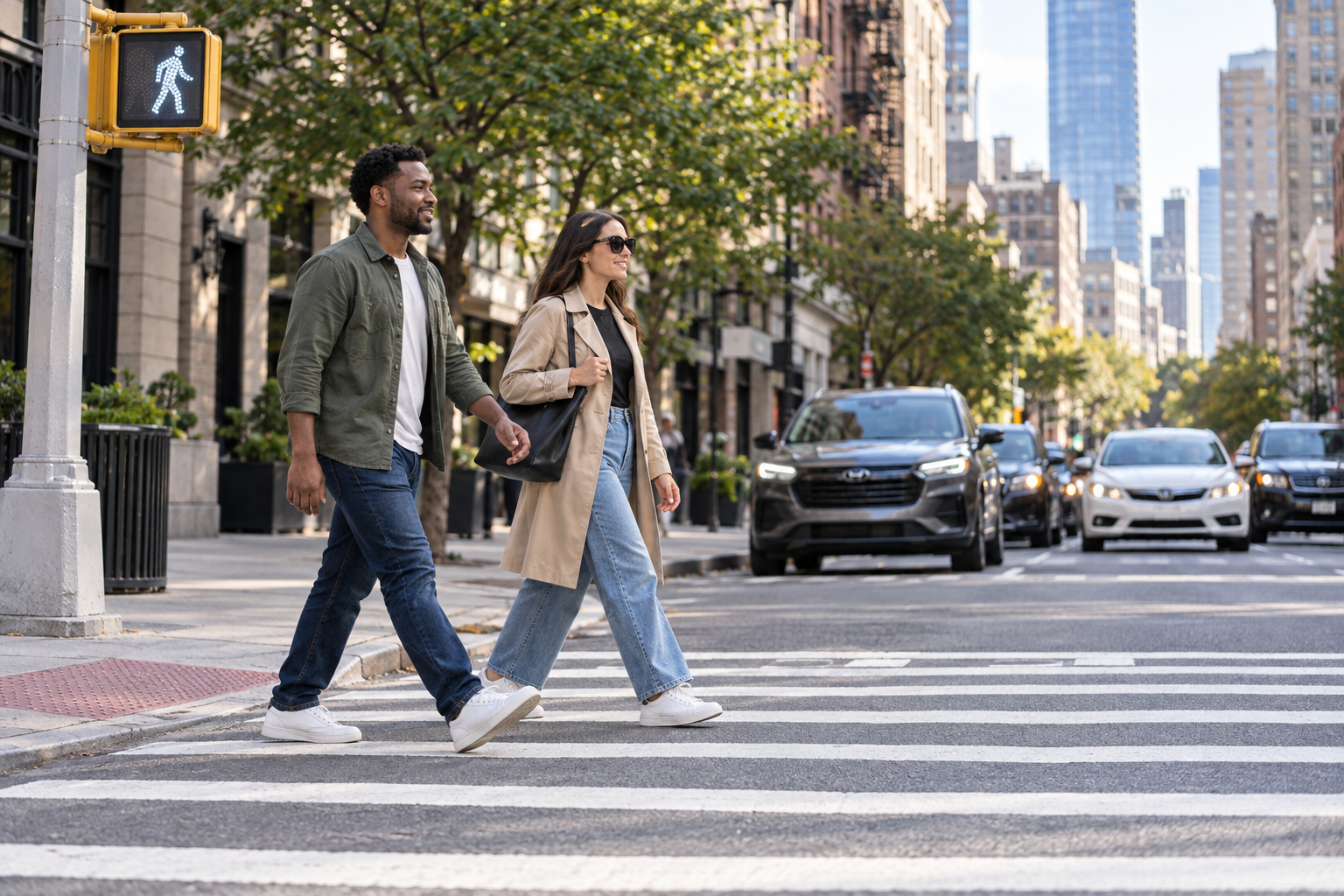
Signals and right-of-way require the actual facts
Vehicle and Traffic Law §1151 addresses crosswalk yielding where signals are absent or inoperative, including limits on sudden entry. Signalized crossings require attention to the applicable controls and sequence.
Drivers' due-care obligation appears in Vehicle and Traffic Law §1146. Neither a driver's assertion of a green light nor a pedestrian's statement of priority should replace examination of the actual movement.
Identify which signal the witness saw, from which location, and at what point. A photograph of another corner's signal or a later cycle does not necessarily establish what controlled the event. Signal records and video may be needed to resolve a genuine dispute.
A witness who did not see the signal can still provide useful evidence about the approach, turn, or impact. Preserve that account without encouraging the person to supply a missing detail. Reliable limited testimony is more useful than false completeness.
The first medical and reporting record
Seek appropriate care and explain the physical mechanism to the treating professional. Include the point of contact, fall, or body movement as remembered. If a detail comes from another person's account, identify that source instead of presenting it as your own observation.
Keep the police report reference and available vehicle and witness information. A report may contain useful leads while still requiring review for accuracy. If something appears wrong, discuss the appropriate correction process rather than altering your own copy as though the official record changed.
Retain original photographs of clothing, footwear, bags, and other potentially relevant items. Discuss preservation before disposing of them. Their significance depends on the disputed issues, and they should not be assigned a technical meaning beyond what qualified analysis supports.
Preserving Manhattan camera evidence with a precise request
List possible camera locations by the view they might provide: approach, crossing, entrance, or aftermath. A camera mounted nearby may face away from the event or have no retained recording. Counsel should verify availability rather than assume a complete visual record exists.
Provide a reasonable time window and explain its source. A message timestamp, emergency call, and receipt may reflect different moments. If the time is uncertain, say so; an overly narrow request based on a mistaken estimate may miss relevant material.
Keep original files and identify the person who supplied them. Preserve a full clip before producing excerpts for discussion. Edited footage may omit context, and a forwarded copy may not establish where the recording originated. Do not access private surveillance systems without authorization.
Insurance and current motor-vehicle claim rules
The DFS no-fault FAQ generally directs pedestrians to the striking vehicle's insurer. Written notice is generally due within 30 days, subject to the documented reasonable-justification exception; individual eligibility needs review.
Certain non-economic claims require serious injury under current Insurance Law §5102 and §5104. Ask counsel to explain how the medical evidence relates to the applicable definition.
Current CPLR §1411 can bar an Article 51 personal-injury claim where claimant fault exceeds defendants' combined fault. The governing dates and statutory applicability should be assessed individually.
Keep benefits and liability correspondence separate. An adjuster's allegation is a position to evaluate, and a payment for one expense does not necessarily settle all rights. Preserve complete letters and any response deadlines so counsel can identify the relevant process.
Recovery in a walking-dependent routine
A Manhattan resident may reach work, groceries, school, and appointments largely on foot or by transit. Document the specific changes caused by injury: a shorter walking tolerance, difficulty with stairs, inability to carry items, or need for assistance. Relate those changes to medical advice and actual experience.
A person able to perform office work may still have difficulty reaching the office. Another may return to a job with altered duties or hours. Preserve employer communications and transportation records that explain the distinction instead of treating employment status as a complete measure of recovery.
Keep receipts with their purpose, including treatment travel or paid assistance. Do not assume every changed expense is legally recoverable. A clear factual file lets counsel assess the available damages without inflating the account through unsupported categories.
Include improvement and activities retained. Recovery can be uneven, and an accurate description of that pattern is more useful than repeated absolute statements that do not reflect daily life.

Visitors and people continuing treatment outside New York
A visitor may return home before the investigation is complete. Preserve the local treatment provider, report information, hotel details, and reliable contact method. Explain travel dates so an attorney can coordinate requests and correspondence without relying on a temporary address.
Save changes to the itinerary and the reason for each change. A rebooked journey can document the aftermath, but it does not automatically establish a recoverable expense. Distinguish medical restrictions from logistical inconvenience or personal preference.
Continuing clinicians should receive an accurate history and know where earlier records are held. A move between locations should not create unexplained differences in the account. If new information corrects an initial estimate, preserve the source and explain the change.
Related legal guides
These guides address issues that may overlap with pedestrian accident matters in Manhattan. Review the guide that fits the facts of your situation.
- Manhattan Truck Accident Lawyer — commercial vehicle evidence and liability.
- Manhattan Motorcycle Accident Lawyer — motorcycle crashes and rider injuries.
- Manhattan Uber & Lyft Accident Lawyer — rideshare coverage and driver status.
Official resources and further reading
Use these resources to review the underlying rules, locate records, or understand the relevant agency process. Check the requirements and current instructions for the particular document or process you need.
Document a changed walking commute without overstating the loss
For someone accustomed to walking across Manhattan, recovery may change a commute before it changes working hours. A Manhattan pedestrian accident lawyer can separate the physical limitation from the transportation response: shorter walks, additional transfers, paid rides, or help from another person. Continuing to attend work does not explain what extra effort or support made attendance possible.
Keep a simple comparison of the usual route and the route actually used during recovery. Record the reason for a change and retain relevant receipts. A more expensive trip might result from an injury-related limitation, a service disruption, or both; identify the distinction rather than attributing every fare difference to the collision. Follow medical guidance when deciding which activities are appropriate.
For a pedestrian injury claim, the useful account is specific and balanced. Note when walking tolerance improved, when assistance remained necessary, and which expenses ended. This creates a practical record of change over time without assuming that every inconvenience is separately compensable or that a return to the office means recovery is complete.
Deadlines and public-entity questions
Ordinary negligence actions generally have a three-year limitation under CPLR §214, with exceptions. Public vehicles or roadway-condition allegations can involve earlier requirements under General Municipal Law §50-e.
A police report, safety complaint, or ongoing insurance discussion should not be assumed to protect every claim. Identify potential public involvement early so counsel can assess the correct entity, duty, and procedure. A street's public ownership alone does not establish governmental liability.
For an independent consultation, bring a chronology and documents requiring a response. Ask about preservation priorities, unresolved facts, fee terms, and communication. Related background appears in the Manhattan car accident page, Manhattan personal injury guide, and New York pedestrian overview.
Separate observations from reconstruction after a fast-moving event
A pedestrian may first become aware of a vehicle at contact. The absence of an earlier view is a fact to preserve, not a gap that must be filled immediately. Describe the last thing remembered before impact and the first reliable observation afterward. An investigator can then look for evidence of the missing interval.
A companion's account should remain identifiable as that person's account. If they later explain the vehicle's approach, record when that information was learned. Otherwise, an initial medical or insurance statement can inadvertently merge personal memory with a reconstruction supplied after the event.
The same care applies to reviewing a video. Footage can correct an estimate, but camera perspective, missing frames, and an incomplete view can affect interpretation. Preserve the recording and discuss what it actually shows rather than treating every apparent movement as a measured fact. Technical conclusions may need qualified analysis.
When preparing a consultation summary, mark each important statement by its source: personal recollection, witness report, photograph, document, or later inference. This does not require a complicated system. A brief note beside a disputed time or location can prevent confusion and help counsel identify the next useful request.
An honest distinction between observation and reconstruction strengthens the usefulness of the file. It allows the investigation to develop as new evidence arrives while keeping a transparent record of how the account became more complete.
Manhattan pedestrian accident FAQs
What if I remember the intersection but not the vehicle?
Preserve the time window, direction of travel, partial markings, and witness information. A focused investigation may identify additional leads. Missing information should be disclosed clearly rather than replaced with an assumption about a vehicle seen nearby.
Does a crowded sidewalk prove a property owner was responsible?
No. The alleged conduct or condition, duty, and causal connection need review. A building may possess relevant footage without being legally responsible for a driver's act. Distinguish an evidence source from a proposed defendant.
Can a driver blame me for looking at my phone?
An allegation should be evaluated against the facts and governing law. Preserve relevant information without deleting or changing it, and describe your actual conduct honestly. The assertion alone does not establish the complete fault analysis.
How do I ask about an error in this guide?
Use the website contact page for editorial questions. Personal claim advice should come from an independent licensed attorney who can review the specific event and deadlines.