
Brooklyn Pedestrian Accident Lawyer
A Brooklyn pedestrian injury can occur at an avenue crossing, beside a delivery entrance, outside a station, or during a walk through a residential neighborhood. The legal questions depend on the actual route and vehicle movement. A familiar street name or a serious injury does not, by itself, establish who was responsible.
A Brooklyn pedestrian accident lawyer should investigate the event, identify the relevant insurance, and explain how medical and financial evidence affects the claim. This guide focuses on practical preparation for that review. It discusses local settings, useful records, current New York rules, and questions worth asking an independent attorney before making decisions about a settlement.
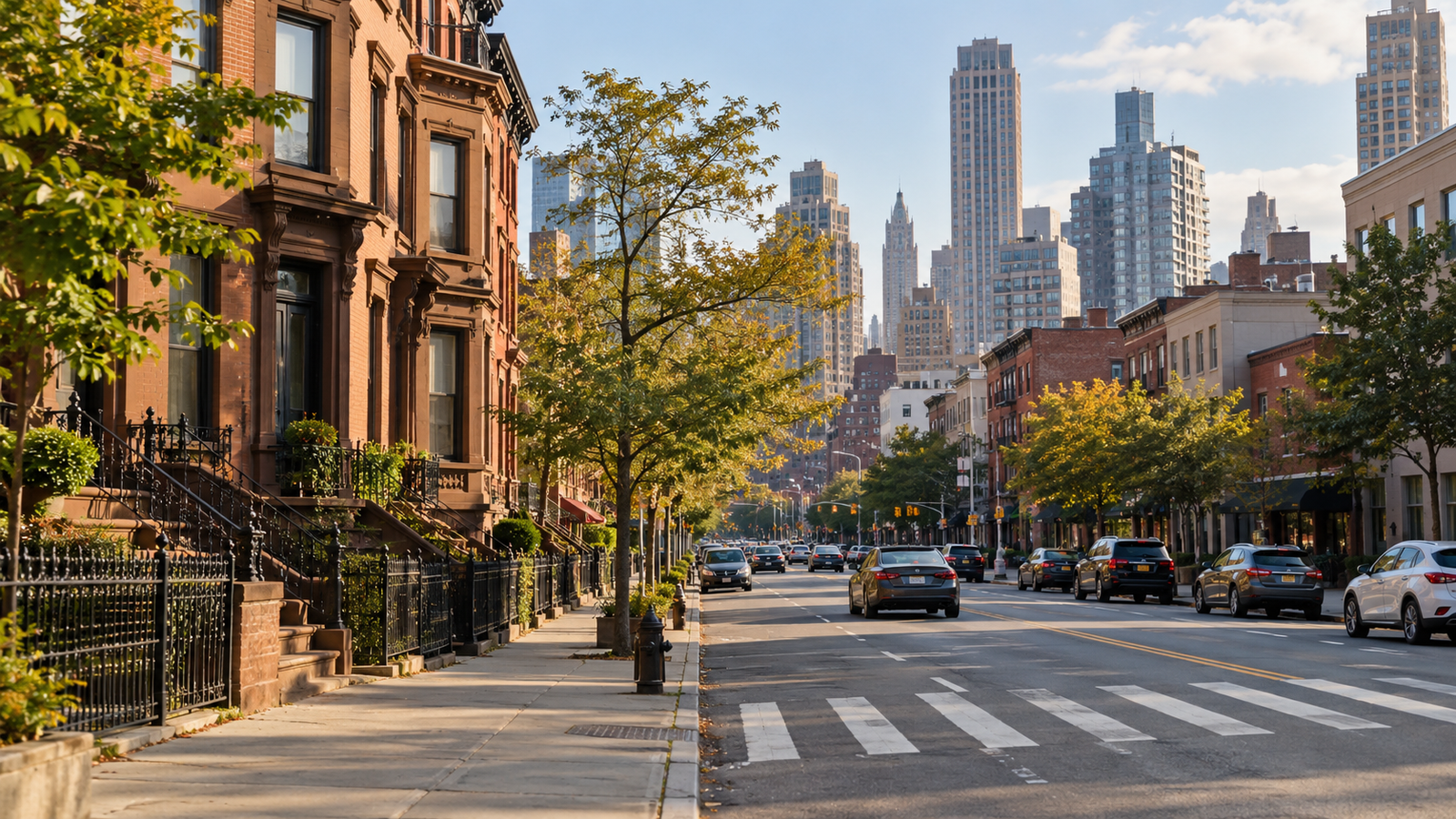
A sourced Brooklyn pedestrian statistic
NYC DOT's 2023 safety plan lists 174 Brooklyn pedestrian fatalities during 2017–2021. This historical five-year figure is not a current yearly count or a measure of one street's risk. DOT borough pedestrian plan.
The data establishes a dated borough context, not individual fault. A claim still needs evidence of the driver's and pedestrian's movements, the governing controls, and the connection between the event and injury. Population, traffic exposure, and other factors also matter when comparing places, so a raw total should not become an unsupported risk ranking.
Local references in this page help identify the records and observations relevant to a particular event. They are not claims that every named location has the same safety history or that a crash there necessarily results from negligence.
Atlantic Avenue and Flatbush Avenue: describe the complete path
For a collision near Atlantic Avenue, Flatbush Avenue, or their surrounding streets, identify the pedestrian's starting corner and destination. If the route crossed more than one traffic movement, record where the contact occurred within that sequence. A broad description such as “near the terminal” can leave the critical location unresolved.
Preserve whether the vehicle was turning, moving straight, pulling from the curb, or entering a driveway. The pedestrian may have seen only the final portion of the approach. An accurate limited account helps identify the independent evidence needed to fill that gap.
A companion's position matters. Someone already across the street may see a different signal or vehicle movement from the person still crossing. Record each account independently rather than creating a group narrative that conceals different viewpoints.
If the event followed an arena or station departure, retain the information that helps establish timing. A ticket or transit record may narrow the window while saying nothing about fault. Use each document for the fact it actually supports.
Downtown Brooklyn entrances and turning vehicles
Around Downtown Brooklyn, a pedestrian's route may begin at a courthouse, office, school, shop, or transit entrance. Identify the actual doorway and walking direction rather than only the building name. A large property may have several exits facing different streets.
For a turning collision, footage of the vehicle before it entered the pedestrian's path may be especially useful. A recording of the aftermath can document identities and positions while missing the movement in dispute. Counsel should target requests to the question that needs resolution.
A nearby business may hold relevant evidence without being legally responsible for the collision. Do not assume that serving the driver or pedestrian as a customer creates liability. The proposed claim needs an identified duty, conduct or condition, and causal relationship.
When the scene changed after impact, explain how. Emergency response, vehicle relocation, and bystander assistance can alter positions. Later photographs should be accurately described rather than presented as a frozen picture of the original event.
Williamsburg and Greenpoint curbside activity
A pedestrian in Williamsburg or Greenpoint may encounter a vehicle stopping for a passenger, unloading goods, or entering a property. Record the specific movement instead of treating all curbside activity as the same event. An opening door and a turning vehicle may require different evidence.
If a taxi is involved, preserve the plate or medallion information and any passenger activity observed. The Brooklyn taxi accident guide explains related vehicle-identification issues. Do not assume a familiar color identifies every legal or insurance relationship.
A parked object or temporary obstruction may affect what people could see. Describe its location and the view it appeared to block, while leaving causation open to investigation. A photograph showing an obstruction is not automatically proof that it caused the collision.
Avoid returning to an active loading area to recreate the incident. Safe photographs, witness information, and appropriate records requests can preserve evidence without exposing someone to another injury.
Sunset Park, Bay Ridge, and commercial driveways
On routes near Fourth Avenue, Fifth Avenue, or a neighborhood commercial entrance, distinguish the pedestrian's path along the sidewalk from a crossing into the roadway. If a vehicle emerged from a driveway, record the entrance and whether it moved forward or backward.
The driver's conduct and a possible property condition should be analyzed separately. A driveway's existence does not establish a defect, and a collision outside a business does not automatically make the business liable. Counsel can determine whether the evidence supports more than a vehicle-operation claim.
If the pedestrian was carrying purchases or assisting another person, describe that fact honestly. It may explain pace, position, or available observations without deciding fault by itself. Do not omit ordinary details because an insurer might try to use them in an argument.
Eastern and southern Brooklyn walking routes
A trip in East New York, Canarsie, Flatbush, Bensonhurst, or Coney Island can involve a bus connection, shopping destination, school, or residential entrance. Identify the exact cross street and direction. Neighborhood names are useful orientation but insufficient for a focused records request.
If a route involved several crossings, preserve the order and any pause between them. A witness may remember a nearby landmark more confidently than the street name. Record the reliable recollection first, then label any later map-assisted reconstruction.
A person using a cane, walker, wheelchair, or another aid should document how it was used and any damage. Baseline function and new effects need to be distinguished carefully. The aid's presence does not determine negligence or eliminate the need to investigate a new injury.
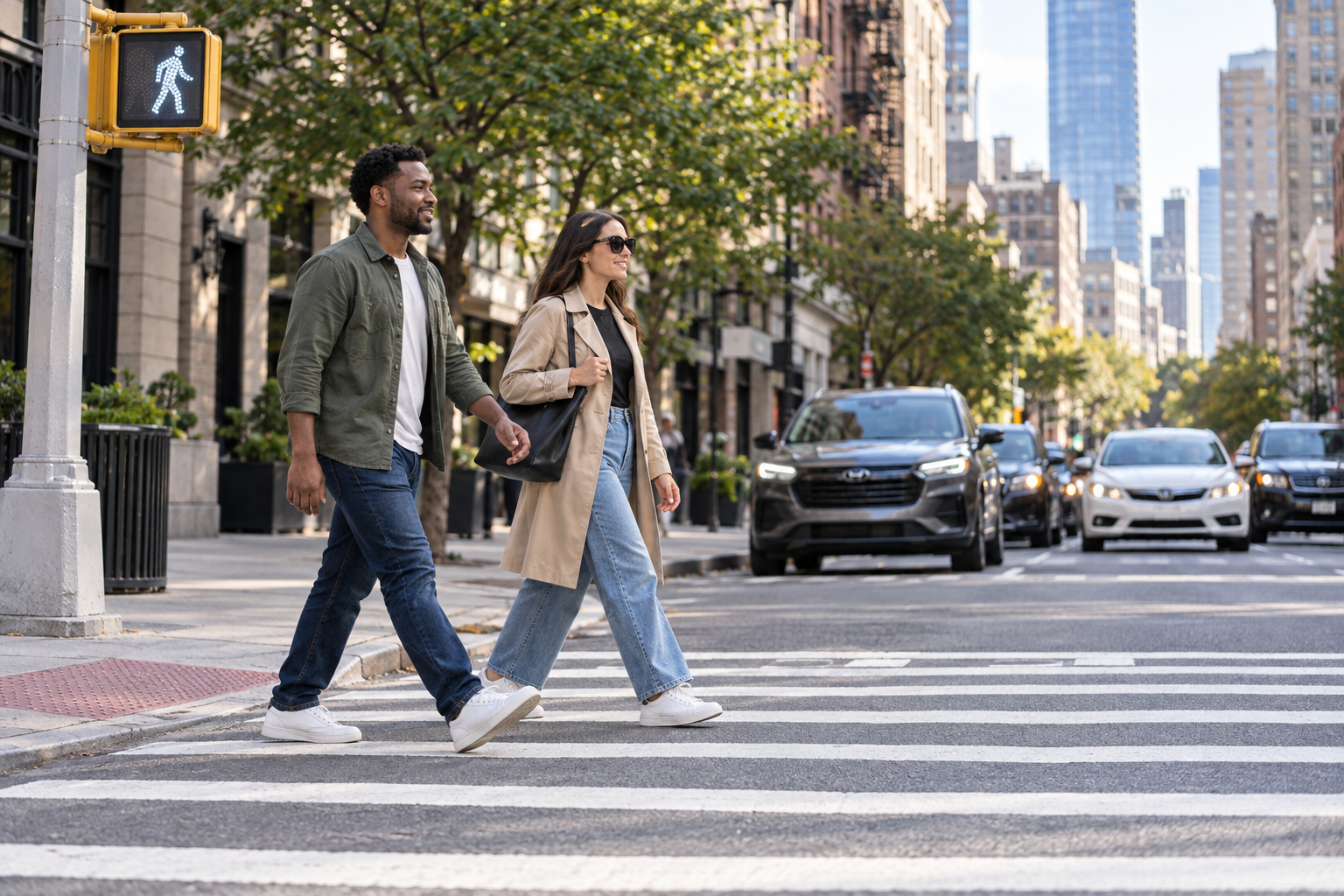
The legal importance of observed controls
Where signals are absent or inoperative, Vehicle and Traffic Law §1151 addresses yielding in crosswalks and limits sudden entry when yielding is impracticable. The facts determine which rules apply.
Drivers must exercise due care under Vehicle and Traffic Law §1146. A claim should be assessed through the actual conduct and evidence, not a blanket statement that a pedestrian always has priority or never has a claim outside painted lines.
Ask which signal the witness observed and when. A later photograph of a different signal face does not establish the phase governing the event. Records and video may be necessary where recollections conflict or a signal's operation is genuinely disputed.
A witness who saw a turn but not the signal can still contribute. Preserve the useful observation with its limits. Encouraging certainty about something unseen makes the record less reliable rather than more complete.
Health needs and a clear physical history
Seek appropriate medical care and describe how the body was struck or moved. If you fell after contact, explain that sequence as remembered. Separate what you observed from information supplied by a witness after the event.
Tell clinicians about relevant earlier conditions and treatment. A prior limitation may require comparison with the new symptoms, not concealment. An accurate baseline helps assess whether the event caused a new injury or changed an existing condition.
Preserve instructions and communications about restrictions. If treatment is delayed by scheduling, transportation, or another practical problem, record the actual reason. Medical decisions should be guided by care needs, not by an effort to make the legal file look a particular way.
Build an evidence index before details scatter
A simple index can identify the police report, witness contacts, vehicle information, photographs, and recordings. Include who holds each original and what it may show. This prevents a useful clip or message from being lost among unrelated files.
Keep complete recordings before making excerpts. If someone sends a short video, ask whether a longer version exists and identify its creator. Preserve an untouched copy before adding labels or arrows. Editing for discussion should not replace the original evidence.
Photograph relevant damaged items and discuss preservation before disposal. Clothing, footwear, bags, or equipment may contribute to a particular issue, but their significance should not be exaggerated. An item can document damage without proving an entire collision mechanism.
Insurance and the current motor-vehicle framework
The DFS no-fault FAQ generally directs pedestrians to the striking vehicle's insurer. Written notice is generally due within 30 days, with a reasonable-justification exception; eligibility and unusual situations require individual review.
Certain non-economic claims depend on the serious-injury provisions in current Insurance Law §5102 and §5104. Ask counsel how the medical evidence relates to the applicable text.
Current CPLR §1411 may bar an Article 51 personal-injury claim when claimant fault exceeds defendants' combined fault. Statutory applicability and effective dates should be assessed for the event.
Keep benefit requests distinct from liability settlement communications. An adjuster's position should be reviewed against the evidence, and a payment for one expense should not be assumed to release or resolve every other issue without examining the documents.
Unidentified drivers and incomplete descriptions
If a vehicle leaves, do not pursue it. Record the last direction observed, approximate time, markings, and partial plate information. A limited description can still be useful when combined with witnesses or nearby recordings.
Preserve the report information and explain what was reported when. Insurance or other possible avenues may have specific requirements. An independent lawyer should assess them rather than promise payment or conclude that missing identity eliminates every option.
Distinguish a later sighting from the collision itself. A camera may identify a vehicle passing through the area without establishing that it caused the injury. Connecting those facts requires careful review of timing and other evidence.
Work, household support, and the course of recovery
Describe actual tasks affected by injury: standing during a shift, walking to transit, lifting supplies, using stairs, or caring for a child. A job title and diagnosis may not explain the practical consequence without that detail.
Preserve expected work schedules, payroll records, and communications about changes. For self-employment, retain the materials needed to distinguish lost revenue from earnings after expenses. Label estimates clearly until supporting records are available.
Household help should be recorded by task, date, and duration. Identify actual costs and who provided unpaid assistance. Counsel can evaluate which losses are legally available; the first task is to document what occurred without assigning speculative amounts.
Include improvements and retained abilities. A person can resume some tasks while still needing support with others. A balanced record helps explain that progression and avoids an unrealistic claim that every activity remained equally limited throughout recovery.

Communicating with insurers without losing the full record
Keep complete letters and attachments rather than only screenshots of selected sentences. Identify the sender, claim number, and response date. A request that appears routine may address a different issue from the one discussed in an earlier call.
If asked to sign an authorization or release, understand its scope before deciding. A proposed payment may concern one expense or a broader settlement. An independent attorney can explain the language in relation to the actual claim.
When a detail changes because new information arrives, preserve the original estimate and source of the correction. A receipt, video, or witness may clarify timing. Transparent corrections help a reviewer understand how the account developed rather than suggesting that inconvenient information disappeared.
Distinguish a roadway concern from a vehicle claim
If a signal, pavement condition, or visibility feature is alleged to have contributed, identify the specific issue. A public street's involvement does not automatically establish a claim against the city. Duty, notice, causation, and other legal requirements need separate review.
A safety complaint may be useful for requesting improvement, but it should not be assumed to satisfy a claim notice. Preserve the complaint and response while counsel evaluates the correct procedure. An agency's investigation or later change does not automatically decide liability for the earlier event.
For a public-entity claim, General Municipal Law §50-e can require earlier notice. Ordinary negligence actions generally have a three-year limitation under CPLR §214, with exceptions. Obtain a case-specific deadline assessment.
Preparing an independent legal consultation
Bring a short chronology and identify the largest uncertainty, such as the vehicle's identity, a disputed turn, an insurer's denial, or the medical connection. Include all correspondence requiring a response, even if its relevance is unclear.
Ask what evidence needs immediate preservation, how the investigation will address the disputed facts, and who will communicate with insurers. Review the written fee and expense terms. A useful consultation explains next steps and limitations rather than predicting a value without records.
Related reading includes the Brooklyn car accident guide, Brooklyn personal injury page, and New York pedestrian overview.
Brooklyn pedestrian accident FAQs
What if two witnesses remember different movements?
Preserve both accounts and their viewpoints. Differences may reflect position, timing, or a genuine disagreement. Counsel can compare them with recordings and physical evidence. Do not pressure witnesses to adopt a shared version merely because consistency seems helpful.
Does a damaged shoe prove the vehicle ran over my foot?
Not by itself. Preserve the item and describe the event, then let appropriate medical or technical evidence address the mechanism. An object can be relevant without conclusively establishing every detail attributed to it.
Can a family member organize the claim records?
They can help with practical organization, subject to the injured person's wishes and any required authorization. Keep the helper's observations separate from the pedestrian's account, and limit unnecessary sharing of private medical information.
Should I return to the crossing to take measurements?
Do not enter traffic or put yourself at risk to reconstruct the event. Explain the location and available evidence to counsel. Measurements or technical documentation, if needed, can be planned appropriately. A safe photograph from a lawful position may help orient the investigation without requiring a reenactment.
Where can I ask about a source or correction?
Use the website contact page for editorial questions. Seek individual legal advice from a licensed attorney who can review the actual event and deadlines.