
Long Island Hit and Run Lawyer
A hit-and-run injury in Nassau or Suffolk County can leave an injured person uncertain about the driver, the vehicle, and the source of payment for treatment. A Long Island hit-and-run lawyer should investigate those questions while reviewing the separate notices and insurance requirements that may apply. Waiting for a complete identification should not become a reason to miss an earlier procedural step.
The exact location matters across a region with many towns, villages, commercial roads, and station connections. A collision near a shopping entrance in Nassau may generate different records from one on a residential street in Suffolk. This guide explains how to preserve the actual event and prepare for legal advice without promising that every unidentified-driver incident qualifies for the same remedy.

A regional safety figure with a defined scope
New York DMV reported that 58 pedestrians died in crashes across Nassau and Suffolk counties in 2024. DMV's Long Island safety announcement.
That figure covers pedestrian crash deaths across both counties. It is not a count of hit-and-run deaths and should not be presented as one. It also does not establish a ranking of roads or municipalities.
The statistic provides relevant regional context while leaving an individual claim to evidence. The actual vehicle movement, contact, location, reporting history, and injury matter. A broad safety number cannot establish that a particular driver caused a collision or that a specific insurance remedy is available.
Identify the county, municipality, and precise collision point
A mailing address may not answer every question about road ownership, police jurisdiction, or records. Preserve the actual intersection, direction, and location with photographs and a map reference where possible. Do not rely only on a nearby store name.
If the injured person moved to safety before responders arrived, distinguish the original collision point from the later assistance location. A report address may reflect the latter. Explain the difference accurately rather than treating it as a detail that must be hidden.
For a collision near a municipal boundary, ask which agency received the report and whether another agency holds relevant material. The goal is a clear record of what was reported, where, and when. An assumption based on a familiar town name can send a request to the wrong record holder.
Hempstead Turnpike: entrances and departure routes
An event near a shopping center can involve a driver entering, exiting, turning, or traveling along the road. Identify the particular driveway and direction. A large property may have several entrances with different camera coverage and sight lines.
A business recording may show the vehicle before it reaches the roadway, while another source captures departure after the collision. Preserve both possibilities. A camera that misses the impact may still establish a plate, distinctive feature, or time window.
Photograph the entrance, markings, curb, and relevant obstructions from a safe position. Later photographs can explain layout without reproducing the original traffic or parked vehicles. Keep their dates clear and avoid presenting later conditions as unchanged.
Mineola and Hicksville: station-area evidence
A passenger or pedestrian near a station may have receipts, trip records, or messages that help establish chronology. A train schedule alone does not prove the collision time. Compare digital records with emergency assistance and witness accounts.
If the injured person occupied a vehicle, preserve that vehicle's identity and any trip receipt even if the other driver left. The occupied driver may have a camera or a clearer view of departure. Their account can be important without resolving the passenger's separate coverage and injury questions.
Identify the actual entrance, crossing, curb, or parking area. A station name can encompass different spaces and record holders. Precision helps make a preservation request useful and avoids relying on an organization that may not control the relevant area.
Sunrise Highway and connecting streets
A collision described only as “on Sunrise” may omit the particular crossing, service road, entrance, or connecting street involved. Record the exact location and movement. A regional corridor name is not a complete reconstruction.
A departing vehicle may turn quickly onto a side street. A witness who misses the plate may still identify the turn, body style, or distinctive damage. Preserve those observations as leads, with their limits, rather than converting them into a confident identification.
References to major roads here are not crash rankings. They identify situations where several possible sources of evidence may need to be connected. The claim should rest on the actual scene and records rather than a general reputation attributed to a road.
Huntington, Babylon, and Brookhaven: neighborhood cameras
A residential camera may capture an approach or departure that a commercial camera misses. Ask through appropriate channels and respect property boundaries. Do not access another person's device or account without permission.
Record preservation requests and follow-up responses. A neighbor's willingness to help does not guarantee a file will remain available indefinitely. Retention varies, and the exact time window can help the owner locate relevant material.
Preserve original files with source information. If a camera clock appears inaccurate, note the issue and compare other records. Do not change a timestamp silently or treat an enhanced image as proof of details not reliably present in the original.
Immediate steps should protect people and facts
Obtain emergency assistance and appropriate medical evaluation. Do not pursue the departing vehicle. A chase can cause another collision and make it harder to preserve the original scene.
Record safely observed details such as plate characters, color, vehicle type, business markings, damage, and direction. Mark uncertainty. A partial plate should remain partial until reliable evidence clarifies it; a plausible guess can misdirect the investigation if treated as fact.
Identify witnesses and their positions. Someone who saw the impact may not have seen the departure, while another person may have seen only the departing car. Keep their accounts independent. Do not ask them to adopt a single narrative based on information none of them personally observed.
Reporting, insurer notice, and statutory filings are distinct
For potential MVAIC unidentified-vehicle claims, Insurance Law 5208 includes a 24-hour report and 90-day affidavit period. It also addresses reporting that was not reasonably possible earlier or occurred as soon as reasonably possible. Other claim categories have different requirements.
Preserve report numbers, dates, agency details, and copies of submissions. If injury or another circumstance delayed reporting, document the timeline and obtain advice promptly. Do not assume delay always eliminates a remedy or that an exception requires no proof.
A call to an insurer, app, or property manager may be useful without satisfying a statutory reporting requirement. Track each obligation separately. Ask counsel which steps apply to the actual claim and which remain incomplete.
Available insurance should be reviewed before assuming a gap
A passenger may have coverage questions involving the occupied vehicle. A pedestrian or cyclist may need a review of household or other potentially relevant policies even without personally owning a car. The absence of the departing driver's insurance information is not a complete analysis.
MVAIC provides a statutory source of benefits for eligible claimants. Qualification, available insurance, accident circumstances, and procedural compliance matter. It is not automatic compensation whenever a driver is unknown.
Keep declarations, policy correspondence, claim numbers, and denial letters. Record when a denial was received. A letter may address one coverage while leaving a separate inquiry open, and multiple possible policies do not guarantee duplicate payment for the same loss.
Contact evidence can change the legal route
Insurance Law 5217 contains a physical-contact requirement for the unidentified-vehicle claims it governs. Courts have considered particular indirect-contact scenarios, but not every evasive maneuver qualifies. Official appellate discussion of contact.
If an unknown vehicle strikes another car and that car strikes the claimant, preserve every stage. The intermediate vehicle may have damage, occupants, and a recording that explain the initial impact. Omitting that vehicle can obscure the relevant sequence.
If there was no contact, say so truthfully. Do not change an evasive fall or roadway departure into an impact to fit an assumed insurance rule. Conversely, do not dismiss an actual indirect collision merely because the unknown vehicle did not touch the claimant directly. Individual legal analysis should follow the real facts.
Document unsuccessful identification efforts
A partial plate or uncertain description may lead to incomplete or conflicting information. Preserve the original observation and later clarification. A vehicle resembling the description is not enough to establish involvement or justify a public accusation.
In Matter of Benalcazar v MVAIC, the court discussed efforts to identify a vehicle and owner from reported information that did not produce a confirmed identification. The decision illustrates the value of documented investigation without guaranteeing another claimant's result.
Keep lawful inquiry responses and explain unresolved gaps. Ownership, operation, address, and insurance are separate questions. A useful record shows what was tried and why identity remains uncertain rather than simply stating that nobody could find the driver.
Damage records and repairs
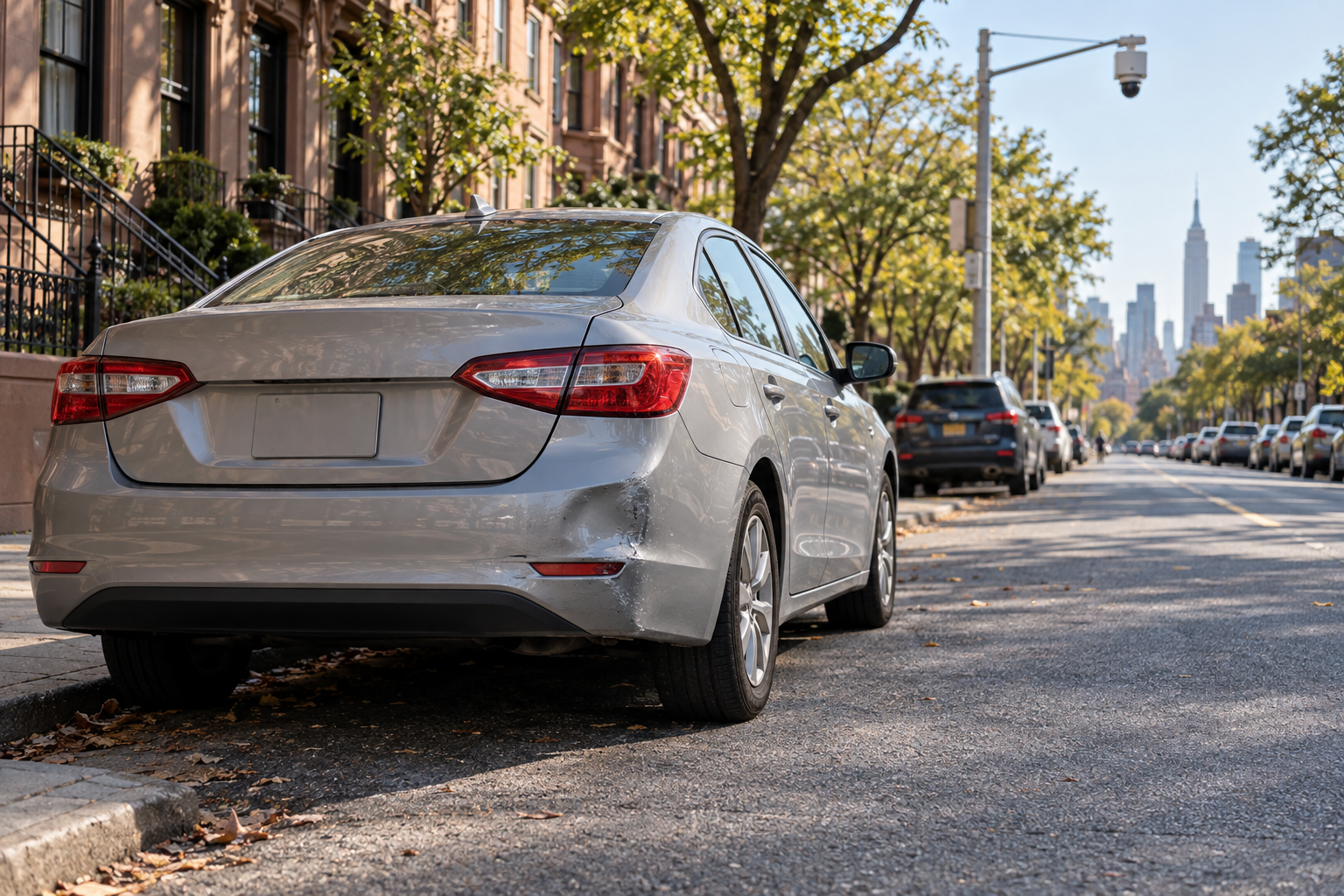
Photograph vehicles and equipment before repair where safely possible. Include overall views and contact areas. Keep towing, storage, inspection, and repair records, along with information about who had possession after the event.
Damage can help explain contact without proving the entire collision sequence. A qualified inspection may be needed where mechanics or reconstruction are disputed. Avoid treating an informal repair-shop guess as a confirmed identification of the departing vehicle.
Practical repair needs should be discussed early. A person may depend on a car for work or medical appointments. Preservation can involve photographs, inspection, or retained parts where appropriate rather than assuming indefinite storage is always necessary. Safety and reasonable access should be part of the plan.
Medical care and transportation disruption
Seek appropriate care and follow treating professionals' advice. Preserve referrals, appointment information, prescriptions, and receipts. Explain prior conditions and changes after the collision accurately. This page cannot diagnose an injury or determine treatment.
Travel can become difficult when a person cannot drive or use their usual station connection. Record alternative transportation and actual costs. Distinguish injury-related needs from ordinary travel or an unrelated mechanical problem with the vehicle.
Document specific daily limitations, including work tasks, shopping, household responsibilities, and family care. If another person helps, record the task and time honestly. Do not invent a commercial charge for unpaid assistance or assume every inconvenience has the same cause.
Income and other losses require supporting records
Keep pay statements, schedules, invoices, and employer communications about missed or modified work. Separate reduced duties from postponed assignments and permanently lost work. Self-employed people should distinguish gross revenue from net earnings and identify ordinary expenses.
Medical restrictions, lack of transportation, and unrelated business changes may affect earnings differently. Explain those causes rather than assigning every missed day to the injury without support. A representative comparison period is more useful than selecting only a peak week.
Keep property damage and treatment expenses in separate categories. Before signing a release, identify which claims and parties it covers. An offer described casually as paying for repairs can include broader terms. Practical urgency should prompt a clear explanation rather than a guess about legal effect.

Current injury and comparative-fault law
The definitions in Insurance Law 5102, including current serious-injury language, matter to motor-vehicle claims. An older checklist should not replace the applicable statute and medical evidence.
The present CPLR 1411 distinguishes Article 51 personal-injury claims from the general comparative-fault framework. A driver leaving does not resolve every issue about the underlying collision. Effective dates and claim classification require attention.
Criminal enforcement and civil recovery also have separate purposes and procedures. Cooperating with police does not automatically complete insurer notices or statutory filings. Obtain advice about the civil plan while identification and any criminal investigation continue.
A hypothetical commercial-entrance collision
Imagine a car leaving a shopping area strikes a pedestrian and departs. A store camera shows the car approaching the exit, a witness sees contact, and a residential camera on the next street shows the departure. Each source may help without independently establishing the entire event.
The investigation should preserve original records, compare timing, and keep observations separate from assumptions. A witness's uncertain plate should not be replaced with a plausible vehicle found online. An enhanced image should not create certainty that the source cannot support.
This is an illustration rather than a reported case or settlement result. It shows why incomplete evidence can still generate concrete tasks and why those tasks should proceed alongside coverage and notice review.
Keep a calendar and prepare the consultation
Many ordinary negligence actions use the three-year period in CPLR 214, but insurance procedures and statutory remedies can require earlier action. The ordinary lawsuit period is not the only date to consider.
Record each task, its source, and the person responsible. Keep important letters, attachments, and proof of submission. A telephone conversation should not be assumed to extend a written deadline or replace a required filing.
Bring reports, the chronology, images, witness contacts, policies, medical information, and denial letters to a consultation. Identify records that may exist but are missing. Ask about immediate preservation, contact issues, identification efforts, representation scope, and written fee terms. A useful review should produce clear next steps rather than a premature estimate of recovery.
Keep original observations even when later evidence clarifies them. A transparent record of what changed and why is more useful than silently replacing an uncertain account with a confident version.
Long Island hit-and-run FAQs
Does a town name identify the correct agency or road owner?
Not necessarily. Confirm the actual collision point and the agency that received the report. Mailing addresses, municipal boundaries, and maintenance responsibilities can answer different questions. Accurate location information helps direct requests appropriately.
What if the other vehicle had an out-of-state plate?
Preserve the plate and any uncertainty, along with photographs and witness details. Ownership, operation, and insurance still require verification. Do not assume an out-of-state plate establishes either coverage or the absence of a remedy.
Can I wait until a criminal case ends?
Do not assume that criminal proceedings extend civil or insurance requirements. Obtain advice promptly about notices, evidence, and the appropriate claim route while cooperating with authorities.
Where is related information available?
The New York hit-and-run guide covers broader issues. The Long Island car accident page offers related motor-vehicle background. The Long Island scooter and e-bike guide explains device distinctions that may affect an unidentified-rider event.