
Brooklyn School Bus Accident Lawyer
A Brooklyn school bus incident can happen during the ride, at a curbside stop, while a child boards, or when another vehicle moves near the bus. Each situation calls for a different factual investigation. A Brooklyn school bus accident lawyer should identify the event, the injured person’s role, and the organizations involved before offering conclusions about responsibility.
For families, the first priorities are the child’s safety, appropriate medical care, and a reliable account of what happened. This guide explains how to organize reports, preserve route and vehicle evidence, understand insurance questions, and review deadlines for a child’s claim. It also distinguishes a service complaint from an injury claim, because the two processes can overlap without being the same.

Real transportation figures and what they do not establish
The NYC Comptroller’s December 2025 report described more than 150,000 OPT complaints during 2023–2024 citywide. These were service complaints, not Brooklyn crash or injury totals.
NHTSA’s 2015–2024 national analysis counted 162 pedestrians killed in school-transportation-related crashes. The category includes direct or indirect involvement of school transportation and does not identify fault in a local event.
These distinctions matter. A complaint history can identify an operational issue for review, but it does not prove that the issue caused an injury. National crash figures cannot be converted into a Brooklyn risk ranking. The individual case needs specific evidence about the route, vehicle, movement, condition, and harm.
Separate the service problem from the injury event
A late bus, changed pickup point, missing attendant, or disputed handoff may be important context. But the legal investigation should identify the event that caused injury and the connection between that event and any alleged failure. A general statement that service was poor is not enough to explain causation.
Write down the sequence in ordinary language. For example, distinguish a delay before pickup from a later collision, or a changed stop from a fall while leaving the bus. Preserve earlier complaints if relevant, while avoiding the assumption that every prior problem proves notice of the particular hazard.
The NYCPS Transportation Guide directs accident and bus-safety concerns to OPT and route or student-service questions to the school. Keep report references and written responses.
Reporting through those channels does not automatically complete insurance or legal notice requirements. Ask counsel to identify the separate processes and deadlines. The family should not have to guess whether one administrative form protects every possible claim.
Medical care and a child’s account
Obtain emergency assistance when necessary and follow medical advice. Confirm the child’s location and the responsible adult or institution. Safety takes priority over photographing the bus or collecting another driver’s information.
Tell the provider what is known and how it is known. If the account came from a child, driver, attendant, or school employee, identify that source. A parent who did not witness the event should not present a secondhand description as personal observation.
Preserve the child’s words without repeated or leading questioning. A dated note of a spontaneous description can help, but the child should not be asked to rehearse a claim or compare accounts with classmates. Further information gathering should be handled appropriately with attention to privacy and reliability.
Keep treatment instructions, appointment information, and school communications together. If symptoms or functional difficulties change, report them to the appropriate clinician. Do not rely on an online article to diagnose the injury or assume that every later problem has the same cause.
Brooklyn pickup environments and useful location details
Downtown Brooklyn and Atlantic Avenue connections
Around Flatbush Avenue, Atlantic Avenue, and Downtown Brooklyn, buses may operate near delivery traffic, intersections, construction, and several school entrances. Record the actual loading point, side of the street, and direction of travel. The school’s main address may not identify the stop used that day.
If a curb was blocked or a stop changed, preserve the notice and describe the resulting movement. A change is a fact to investigate, not automatic proof of negligence. Counsel may need to know who authorized it, what instructions were given, and how it relates to the injury.
Park Slope, Carroll Gardens, and residential blocks
On narrower streets, the position of parked vehicles, corners, and driveways can help explain visibility and movement. Safely obtained photographs may document the layout, but later images should be dated accurately. They do not necessarily establish the conditions at the moment of the event.
For a boarding or unloading injury, identify the bus steps, door, curb, and child’s path. Was the bus stationary or moving? Was assistance being provided? What did the child and witnesses actually observe? The mechanism matters more than a broad label such as “unsafe stop.”
Bedford-Stuyvesant, Crown Heights, and Bushwick
Routes through mixed residential and commercial streets may have witnesses in shops, buildings, or other vehicles. Preserve contacts and original recordings without assuming every person nearby saw the incident. A witness may have seen the approach or aftermath rather than the impact itself.
If several families communicate through a group chat, preserve the relevant conversation but distinguish original observations from repeated information. A message copied by several people does not become several independent witness accounts.
Bay Ridge, Bensonhurst, and southern Brooklyn
For routes near Fourth Avenue, 86th Street, Coney Island Avenue, or other major corridors, record the exact segment and time. An injury during the ride may occur well before the final school stop. Route and vehicle identifiers can help locate the relevant operational records.
Do not infer that a named street is unusually dangerous without a suitable dataset. The purpose of local detail is to improve evidence gathering, not to turn familiar roads into unsupported accident rankings.
The stopped-school-bus rule in New York
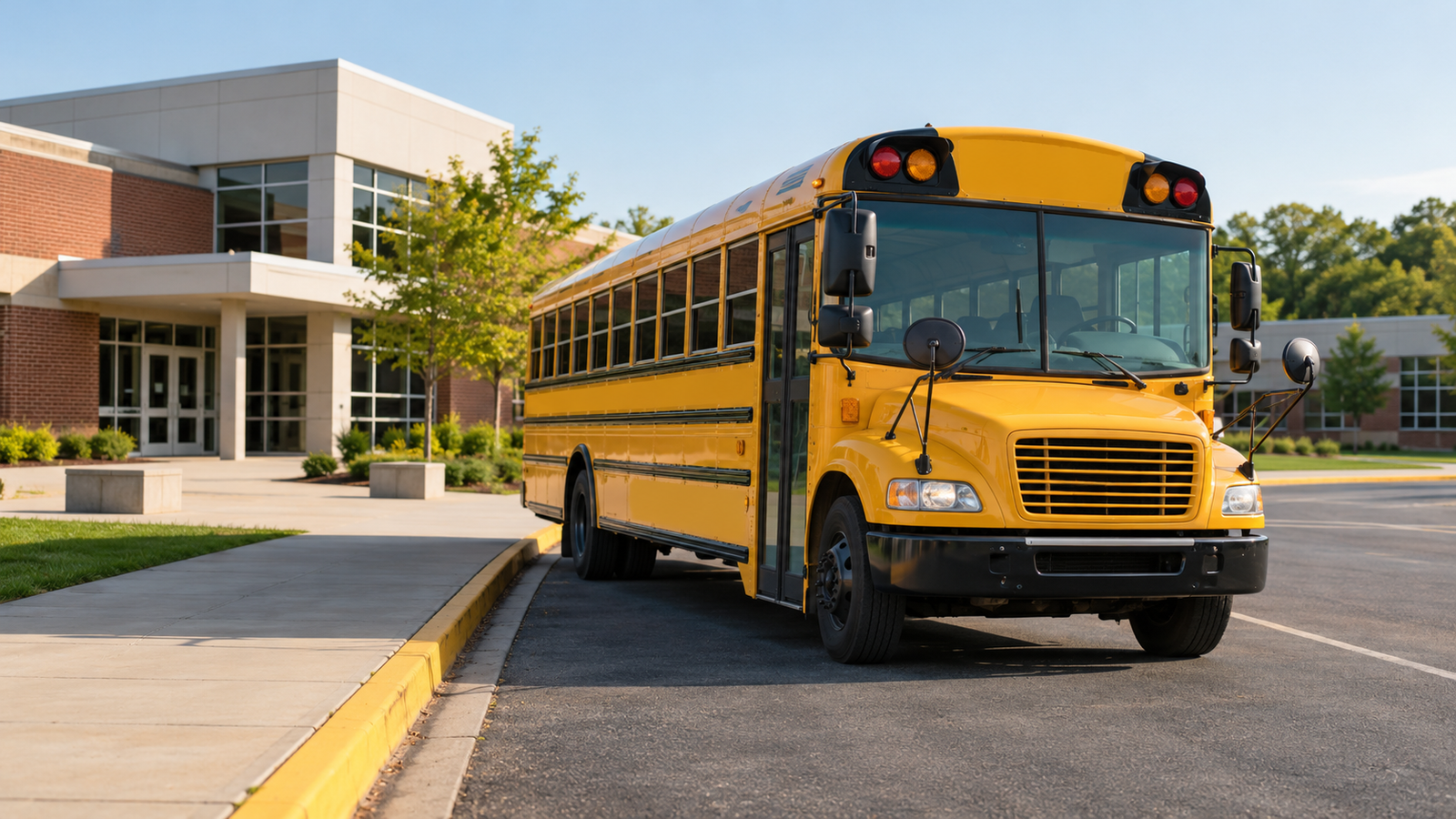
Vehicle and Traffic Law §1174 requires drivers to stop for properly equipped school buses receiving or discharging passengers with red signals operating. The DMV manual includes the opposite side of divided highways.
An investigation should establish the actual signal sequence and movements. A photograph after the incident may show the bus but not whether red lights were operating at the relevant moment. Video, witness accounts, and operational records may help resolve that question.
A passing-driver violation can be relevant without answering every issue in an injury claim. The connection to the injury, the parties, and damages still need proof. Similarly, the absence of a citation should not replace a review of the available evidence.
Who may have a relevant legal role?
The bus operator, another driver, a maintenance provider, a property operator, or another participant may require investigation. A school or public entity is not automatically liable because the trip served students. The applicable duty and causal connection must be assessed for each potential party.
Record the company name, bus and route numbers, plate if safely available, and any known personnel. Preserve information about substitute vehicles or staffing changes. A regular route assignment may not identify the actual vehicle involved on a particular date.
An on-board injury can raise different questions from an injury outside the bus. A fall on steps, a collision, a securement issue, or an alleged supervision failure should be described separately. Avoid calling every event a crash if no collision occurred.
Counsel should explain what evidence supports each theory and what remains uncertain. A participant list is a starting point for investigation, not proof that every listed organization owes compensation. A responsible assessment considers competing explanations as well as potentially supportive facts.
A curbside example: distinguishing layout from causation
Imagine a hypothetical child leaving a bus on a Brooklyn residential block where a delivery vehicle occupies part of the curb. The child falls near the bus steps. A useful review would identify the bus position, child’s path, assistance provided, surface condition, and whether the bus moved.
The delivery vehicle’s presence may explain the setting, but it does not automatically establish that its operator caused the fall. Likewise, a bus stopping away from the usual point does not answer every question about the injury mechanism. The investigation should test the connection rather than assume it.
Potential evidence could include bus video, a nearby recording, the driver’s report, the child’s account, and photographs of the layout. Each source has limits. A later photograph may show the curb but not the vehicle positions at the relevant time.
This is an illustrative scenario, not a reported accident or a prediction of liability. It shows why a Brooklyn school bus injury claim should connect concrete facts to the alleged cause instead of relying on a general impression that the scene looked crowded.
Preserving evidence before routine deletion or repair
Ask counsel about bus recordings, GPS information, dispatch communications, route records, maintenance material, and incident reports. Systems and retention periods vary. Prompt requests can matter, but families should not assume every vehicle has the same technology or that every recording still exists.
Keep original files and complete relevant message threads. A screenshot may omit context, timestamps, or the sender’s identity. If information is corrected, retain the original and explain the correction rather than deleting the earlier version.
If an item such as a mobility device or personal equipment was damaged, preserve identifying information and photographs. Medical or safety needs may require repair; document what changed and why, and tell counsel. Do not perform a dangerous demonstration or delay necessary care merely to preserve an item unchanged.
Respect other children’s privacy. Do not publish names, medical details, or recordings of classmates to seek witnesses. Counsel can consider appropriate ways to identify and contact people with relevant information.
No-fault coverage and civil damages are different questions
Insurance Law §5103 includes bus-passenger benefit priority rules involving applicable household policies and, absent such coverage, the bus insurer. The proper source should be reviewed individually.
Provide household auto policy information and clarify whether the injured person was a passenger, pedestrian, operator, employee, or occupant of another vehicle. Those roles can affect coverage. An injury involving boarding or unloading may also require analysis of the event’s relationship to vehicle use.
The Department of Financial Services generally requires no-fault notice within 30 days, subject to a documented reasonable-justification exception. Seek advice promptly about the applicable policy and notice.
Insurance Law §5104 limits certain motor-vehicle non-economic claims to serious injury. Counsel should determine whether that framework applies rather than assuming every school transportation injury follows identical rules.
Children’s deadlines and public-entity claims
CPLR §208 can extend some lawsuit periods for minors. It should not be read as automatically postponing every insurance, notice, or separate parental deadline.
Applicable public-entity tort claims generally require notice within 90 days under General Municipal Law §50-e. Late-notice relief requires legal evaluation and should not be assumed.
Ask counsel to identify the actual public entity, if any, and the required procedure. A complaint to a school or OPT is not automatically the same as formal legal notice. The family should receive a clear explanation of which step protects which claim.
Current CPLR §1411 includes a special bar for certain Article 51 injury claims when claimant fault exceeds defendants’ combined fault. Avoid relying on outdated generalizations about New York comparative fault.

Recovery, expenses, and a child’s settlement
Keep medical recommendations, school attendance information, and communications about accommodations. Record the child’s actual limitations and improvement. A useful account can include good days and progress without weakening its accuracy.
Preserve receipts and records of assistance, alternative travel, or missed work, but do not assume every item is recoverable. Counsel can distinguish possible insurance benefits, damages, and administrative support. Accurate documentation is more useful than a large unsupported estimate.
CPLR §1207 provides a court approval process for a minor’s settlement. Ask about fees, expenses, protection of funds, and required approvals before accepting terms.
For related reading, see the New York school bus accident guide, car accident FAQs, and Brooklyn car accident page. An independent licensed attorney should apply the law to the specific incident.
Handling a parent group’s information responsibly
After a bus incident, families often exchange messages to learn whether other children were affected. That can identify potential witnesses, but the group conversation should not become a shared script. Preserve the original account and identify whether the sender personally observed the event or heard about it from someone else.
If a parent shares a photograph or recording, keep the source and date. A forwarded copy may be useful initially, but counsel may need the original file and the person who created it. Do not add captions that turn an uncertain image into a statement of fault.
Avoid circulating children’s medical information or full names beyond an appropriate private process. A request for witnesses can be handled without publishing sensitive records. Counsel can advise on a suitable way to obtain relevant accounts and protect privacy.
Also distinguish a collective service concern from each child’s individual injury. Several students may have been on the same bus but experienced different events, symptoms, or losses. One family’s medical history should not be used as evidence of another child’s condition.
If families pursue different administrative or legal steps, keep your own dates and documents organized. Another parent’s report or consultation does not necessarily protect your child’s rights. A separate deadline review remains important even when the factual investigation overlaps.
This approach allows useful cooperation while preserving independent accounts, accurate records, and each child’s interests. It also helps a lawyer identify genuine corroboration rather than repeated versions of the same secondhand message.
Brooklyn school bus accident FAQs
Does a history of late buses prove an injury claim?
No. Prior service problems may provide context, but the claim needs a connection between relevant conduct and the injury. Preserve the history accurately and let counsel assess whether it relates to the event.
What if the child was injured outside the bus?
The location and activity matter. Boarding, unloading, crossing, and other events can involve different duties and insurance questions. Describe the exact sequence rather than assuming passenger rules apply to every situation.
Can parents rely on the child’s age to wait?
Do not assume all deadlines are extended. Insurance notices, public-entity procedures, and separate claims can require prompt action. An early review can protect rights while medical treatment continues.
Should we accept an offer for medical bills immediately?
Understand whether it is a benefits payment or a settlement with a release. The document’s terms matter more than its informal description. Seek advice before signing away claims, especially when the child’s recovery is still developing.
How can a family prepare for the first consultation?
Bring the route and vehicle details, chronology, reports, medical provider list, available recordings, and correspondence. Identify missing information honestly. Website content questions can be sent through the contact page.