
Staten Island School Bus Accident Lawyer
A school bus injury on Staten Island may occur during the trip, at a neighborhood pickup point, while boarding, or as a child crosses after getting off. The first priority is the child's health and immediate safety. The next practical task is preserving enough information to understand the event without assuming that the bus driver, another motorist, or the school is automatically responsible.
A Staten Island school bus accident lawyer can investigate the transportation arrangement, identify potential defendants and insurance, and review deadlines. This guide explains the records and questions that help families prepare for that process, with local context for St. George, New Dorp, Great Kills, Eltingville, Tottenville, and other communities.

The scale of school transportation—and the limits of the numbers
NYC Public Schools' funding page, checked October 26, 2026, describes roughly 9,500 bus routes serving 151,000 students across the city and beyond. These are rounded systemwide operating figures. They are not Staten Island crash totals, injury rates, or evidence that a particular route is unsafe. NYC Public Schools, Funding Our Schools
Broad data can explain why transportation involves many organizations and records, but an injury claim depends on the particular event. The route assignment, vehicle, operator, stop location, and child's movements must be identified accurately.
Be cautious with claims that a named road is the most dangerous school-bus location unless they are supported by a defined dataset and period. This guide mentions local roads to explain what to document, not to create an unsupported crash ranking.
A parent's first practical steps
Obtain emergency help when the child is injured or the scene is unsafe. Give responders an accurate description of what is known and what remains uncertain. Medical professionals should decide the appropriate evaluation and follow-up.
Keep the school, transportation provider, and treating clinicians informed through appropriate channels. Ask how an incident report will be created and obtain any reference information. Preserve messages and names of the people contacted.
Write down the date, approximate time, bus number, route, company name, school, and location while the details are fresh. If another vehicle was involved, preserve identifying information when it is safe to do so. Do not enter traffic or interfere with emergency work to collect photographs.
For a child who has difficulty explaining the event, record observations without suggesting answers. Keep the child's own words separate from an adult's interpretation. The investigation should protect the child's wellbeing as well as the accuracy of the evidence.
Pickup and drop-off locations need precise description
On Hylan Boulevard, Richmond Avenue, Victory Boulevard, or another substantial roadway, the side of the street and direction of travel can matter. Record the nearest intersection, the bus's stopping position, the child's path, and the movements of other vehicles.
In a residential setting, parked cars, driveways, a curve, a hill, or a blocked sightline may be relevant. Preserve photographs of the scene if safe, noting when they were taken. Conditions may differ from those present at the time of the incident.
At a school entrance, distinguish the public roadway, driveway, parking area, and designated loading zone. Identify who was supervising the child at each stage. The relevant duties and evidence may change as the child moves from the bus to school grounds or to a parent.
These details help locate witnesses and possible video. A general statement that the incident happened near the school may be insufficient to identify the correct camera or reconstruct the sequence. Exact information also helps prevent a later account from combining separate locations or events.
Passing a stopped school bus
New York law requires motorists approaching from either direction to stop when the statutory school-bus stopping conditions apply, including the operating red signal. The law also addresses school-ground access areas. Vehicle and Traffic Law 1174
If a child is struck near a stopped bus, preserve evidence about the bus's position, signals, stop arm, the child's location, and the other vehicle's movement. Video may be particularly useful, but it should not be assumed to exist or show every important detail.
A traffic citation and a personal-injury claim are different proceedings. A ticket may contribute evidence, but it does not automatically establish the full value or legal scope of an injury claim. The investigation must still address causation, injury, and the responsibilities of relevant parties.
Conversely, the absence of a ticket does not by itself prove that nobody was negligent. A lawyer can examine available records and witness information without treating the initial enforcement decision as the end of the inquiry.
Injuries on the bus and during boarding
A child may be injured during braking, a turn, a collision, a fall on steps, or a problem with a door or mobility device. Record the child's location inside or beside the bus and what was happening immediately before the injury.
The fact that a bus stopped suddenly does not alone explain whether the driver acted improperly. The stop may have been a response to another road user's conduct, or it may reveal a different issue. Video, witness accounts, and the surrounding traffic sequence can help distinguish those possibilities.
If a lift, wheelchair securement system, or other equipment is involved, preserve identifying information and relevant instructions. Do not alter or test equipment unsafely. Keep existing transportation accommodations and communications that may help establish the support expected.
A supervision concern should be described specifically. Identify who was present, what assistance was needed, and what conduct allegedly contributed to the injury. A general complaint about service quality is not the same as proof of a particular injury-producing failure.
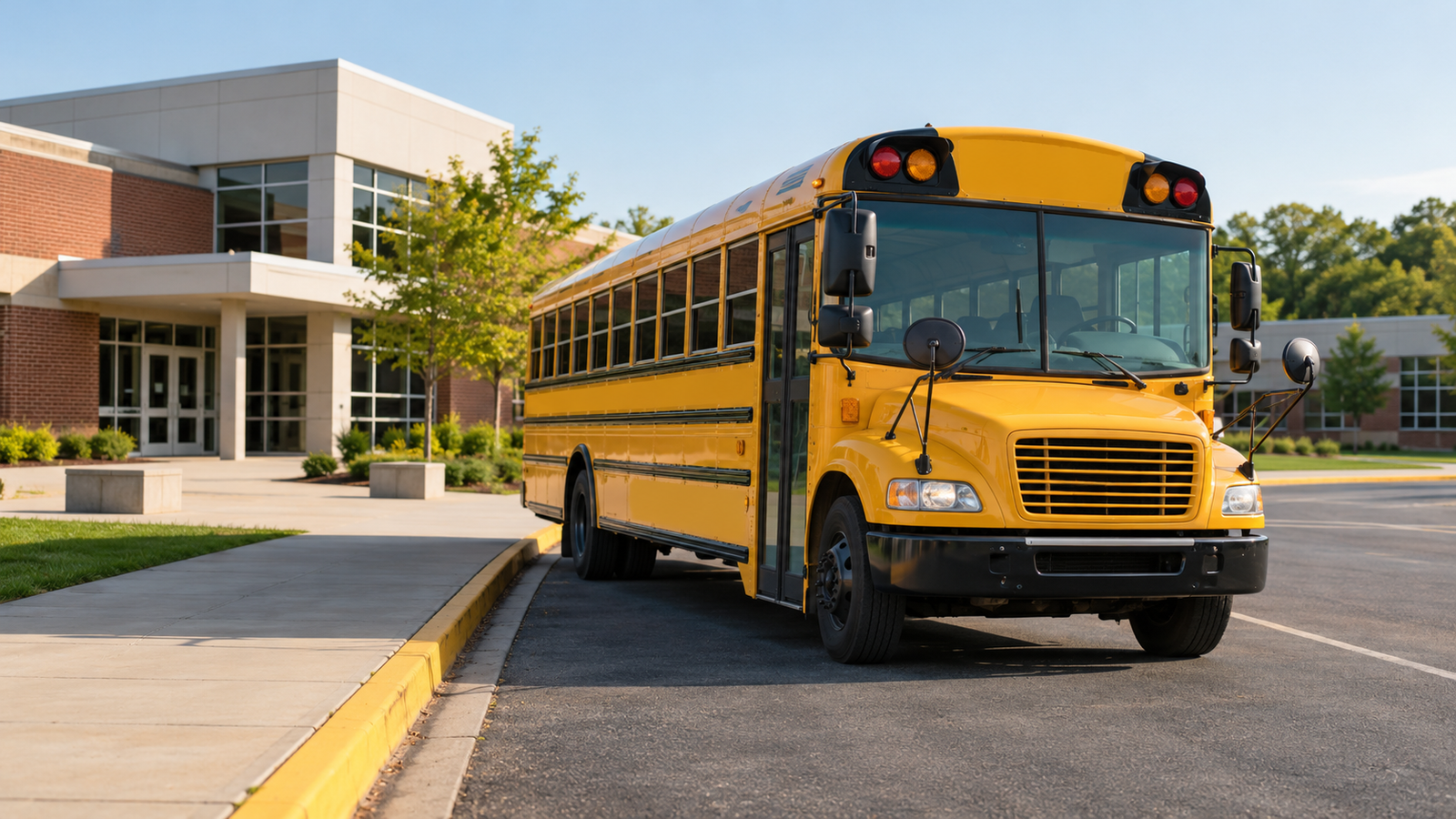
School buses, public transit, and other vehicles are not identical
A child traveling to school may use a yellow bus, public transit, a private vehicle, or another arrangement. Identify the actual vehicle and operator before applying school-bus assumptions. The destination alone does not establish the legal category of the transportation.
For a yellow bus, record the company name, vehicle number, route, and school-related contacts. For a field trip, retain the trip notice and transportation details. If a substitute vehicle or driver was used, note that as well.
The potential defendants may include a private contractor, driver, another motorist, equipment-related party, or public entity, depending on the facts. A school district or city agency is not automatically liable merely because the child was traveling to school.
The investigation should connect duties and conduct to the injury. Counsel may need contracts, employment information, maintenance records, and operational documents to understand the relationships. The name painted on a vehicle is a starting point, not a complete legal analysis.
Preserve records before they disappear
Potential evidence includes bus video, GPS information, dispatch messages, route records, incident reports, inspection records, and nearby surveillance. Availability and retention vary. Prompt, targeted preservation requests can be important.
Give counsel the correct time window and location. A broad request without a route or vehicle identifier may be harder to act on. Keep original messages and files rather than only edited excerpts.
Photographs should show both close details and the surrounding context where safe. For a boarding injury, the steps or doorway may matter alongside the curb and stopping position. For a collision, vehicle positions and road features may help explain the account.
Protect children's privacy. Do not publish footage, names, medical information, or school records to seek public opinions about fault. Share sensitive material through appropriate professional channels and preserve it in its original form.
Medical records and the child's recovery
Follow the treating professionals' recommendations and keep a record of appointments, referrals, and instructions. If new symptoms or concerns appear, report them to a clinician. A legal guide should not be used to diagnose a child's condition.
Document the child's baseline and changes after the event. This may include medically supported limits on school attendance, activity, travel, or therapy. Keep observations factual and distinguish what a parent noticed from what a medical professional concluded.
If the child has preexisting needs, those should be explained accurately. An existing condition does not eliminate the need to investigate a new injury, but it makes careful documentation of changes especially important.
Preserve bills, receipts, transportation expenses, and relevant school communications. Counsel can evaluate which losses are recoverable and what proof is needed. Avoid treating every household disruption as automatically compensable or assuming future costs without appropriate support.
Insurance: do not assume the bus policy always pays first
New York's bus-passenger rule generally gives priority to applicable household motor-vehicle no-fault coverage, with the bus insurer providing benefits when no such policy exists. The person's role and statutory exceptions matter. Insurance Law 5103(a)(1)
Provide household auto-policy information when seeking advice, even though the family car was not involved. A correct coverage analysis can prevent avoidable confusion about where forms and bills should be sent.
No-fault written notice is generally required within 30 days, subject to the regulation's limited justification provision. Do not wait for every investigative record before checking the deadline. New York Department of Financial Services no-fault FAQs
First-party benefits and a liability claim serve different purposes. Keep separate claim numbers and correspondence. A payment for covered expenses does not necessarily settle the injury claim, and a liability investigation does not eliminate the need to meet insurance requirements.
Public-entity deadlines and a minor's claim
The proper parties should be identified early because procedural rules can differ. A private contractor claim and a claim involving a public entity may not share the same notice requirements or lawsuit deadlines.
Where applicable, the municipal tort notice-of-claim period is generally 90 days. School-related claims also require attention to the Education Law. General Municipal Law 50-e, Education Law 3813
New York provides infancy tolling for certain limitation periods, but a family should not assume the child's age automatically excuses a required notice of claim. Obtain a case-specific deadline review promptly. CPLR 208
An email to a teacher, a call to dispatch, or a service complaint may not satisfy formal legal notice. Keep records of those communications, but have counsel determine which additional steps are required. If time has already passed, ask about available options without assuming an exception is guaranteed.
Evaluating compensation and settlement
A claim's value depends on liability, causation, medical evidence, insurance, and legally recoverable losses. The bus's size or the child's school does not establish a settlement amount. Avoid online calculators that imply a reliable result from a few details.
For motor-vehicle claims, New York's serious-injury rules may affect recovery for pain and suffering. The circumstances and medical proof require individual review. Insurance Law 5104
Settling a child's claim involves court procedures under New York law. The family should understand the proposed payment, fees, expenses, liens, and treatment of proceeds rather than treating an offer as an ordinary check. CPLR 1207
Before signing a release, ask what claims and parties it covers. A resolution should be evaluated with appropriate information about recovery and future needs. No guide can promise that a particular injury will produce a particular outcome.
A hypothetical New Dorp drop-off incident
Imagine a child leaving a bus near a neighborhood intersection when another vehicle moves past. The parent arrives moments later and hears different descriptions of the bus's signals and the child's path.
The investigation should separate firsthand observations from information repeated by others. Identify the bus, route, time, driver, witnesses, and possible recordings. Preserve the scene context and obtain medical documentation. The legal conclusion should follow the evidence rather than the first account received.
This is a hypothetical example, not a reported local case. It illustrates why accurate sequence and location matter. The same broad description—an injury near a school bus—can involve different conduct and different responsible parties.

Staten Island school bus accident FAQs
Can an injury while stepping off the bus support a claim?
It may, depending on the condition, assistance required, conduct, and causation. Preserve details about the doorway, steps, curb, and supervision. The absence of a vehicle collision does not end the investigation.
Is a public transit bus treated as a school bus because a child rides it to school?
Not automatically. Identify the actual operator and vehicle category. The applicable duties, insurance, and notice procedures depend on the transportation arrangement and incident.
Should I contact the family auto insurer?
Seek prompt advice about the bus-passenger no-fault priority rules and provide household policy information. The bus insurer is not necessarily the first source of benefits for every passenger.
Does the child's age mean there is no urgency?
No. Insurance notices, public-entity procedures, and evidence preservation can require prompt action. Have the deadlines reviewed rather than relying on a general statement about minors' claims.
What documents should I gather?
Collect bus and route information, incident reports, messages, photographs, medical records, expenses, and insurance details. Include relevant transportation accommodations and describe the child's usual needs and observed changes.
When the first accounts do not agree
Parents may hear one explanation from the child, another from a driver, and a third from someone who arrived afterward. Record each source separately. An inconsistency does not necessarily mean someone is dishonest; people may have observed different portions of a fast-moving event.
Note what the person actually saw, where they were standing or seated, and when they gave the account. Keep uncertainty visible instead of filling gaps with assumptions. For example, a witness who saw a vehicle pass may not have seen when the bus's signals activated.
Photographs and recordings should also be evaluated in context. A close image may omit the surrounding road, while a camera angle can hide a pedestrian or signal. Preserve the complete file when available and avoid editing material to make it appear more decisive.
Counsel may compare accounts with physical evidence, timing, route records, and other documents. The family does not need to resolve every contradiction before asking for help. Providing accurate source information is more useful than selecting one story prematurely.
The same discipline applies to medical information. Keep the clinician's findings separate from the family's observations and from comments made by nonmedical witnesses. A clear record helps each professional assess the questions within their role and reduces the risk that speculation becomes repeated as fact.
## Related guides
Read the New York school bus accident guide, Staten Island car accident guide, and car accident FAQs for related background.