
New York Pedestrian Accident Lawyer
A pedestrian injury claim begins with a human event, not a traffic statistic: someone was walking to work, reaching a station, entering a store, or crossing a street when a vehicle or other hazard caused harm. The immediate priorities are appropriate medical care and a reliable account of what happened. Legal review then connects the location, participants, insurance, and evidence to the rules that govern the claim.
A New York pedestrian accident lawyer should explain those connections in practical terms. This statewide guide addresses motor-vehicle collisions involving people on foot, including turning vehicles, backing movements, commercial vehicles, and unidentified drivers. It also explains why a sidewalk fall or bicycle-only collision may require a different analysis from a pedestrian struck by a car.
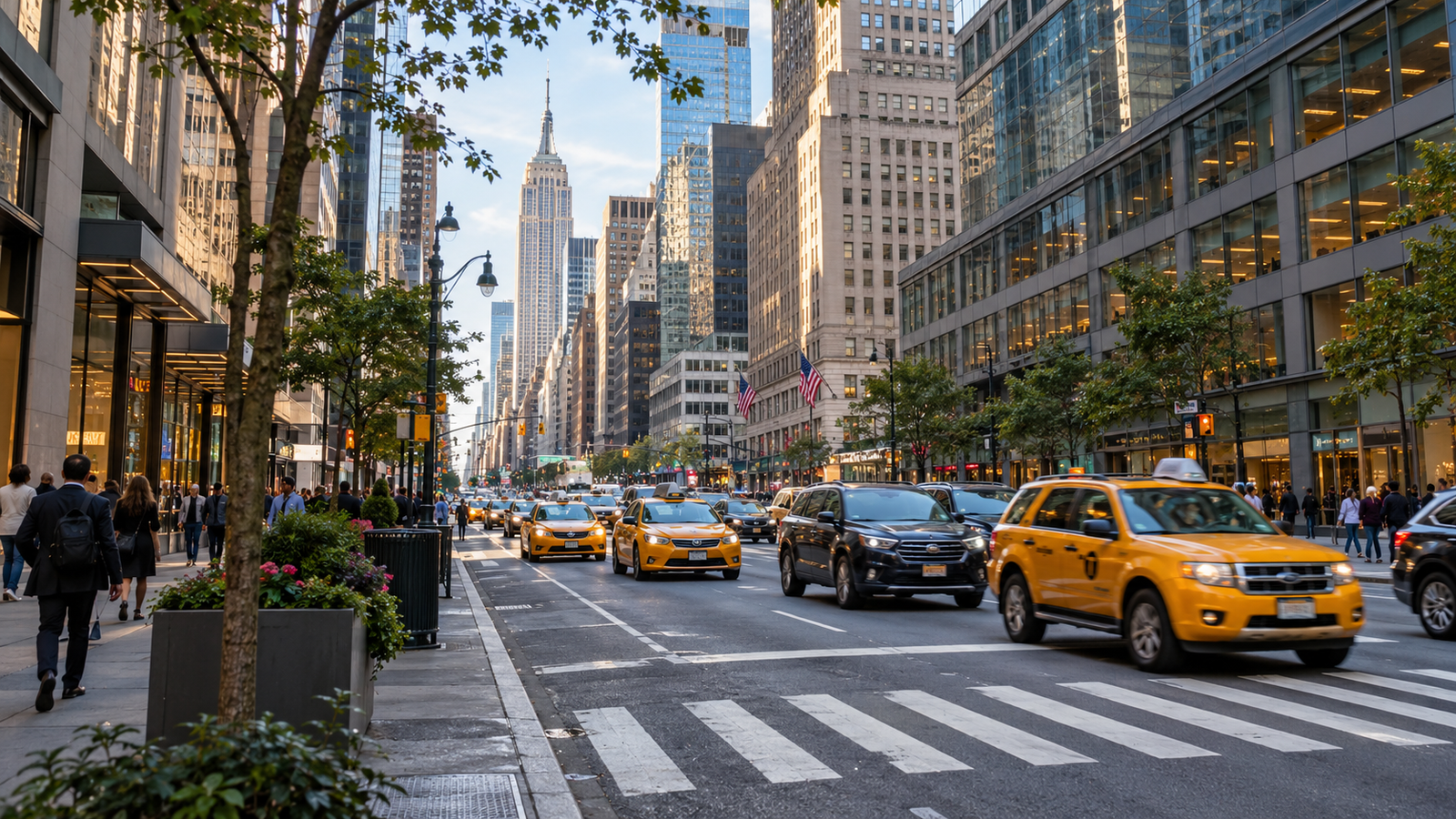
A verified pedestrian figure with its geographic limits
NYC DOT reported 51 pedestrian deaths during the first six months of 2025, compared with 63 in the same period of 2024. These are New York City figures, not statewide totals. NYC DOT's July 2025 release.
The comparison supplies dated safety context. It does not describe every injury, identify fault in a particular collision, or establish a risk ranking for a street outside the dataset. An individual claim needs its own evidence even when the location appears in an official safety program.
Throughout New York, useful geographic detail means the actual intersection, driveway, lane, or walking route. A familiar neighborhood name may orient a reader, but it cannot replace a precise incident location when requesting records or examining responsibility.
Start with the pedestrian's movement and the vehicle's movement
Record where the pedestrian began, where they were going, and the path they followed. Describe the vehicle's approach, turn, backing movement, or departure only to the extent actually observed. A person may have seen the vehicle shortly before contact without knowing where it had been several seconds earlier.
Separate the first contact point from the place where the injured person or vehicle came to rest. Emergency care and traffic safety can change the scene. Photographs taken afterward remain useful, but they should not be described as an untouched reconstruction if people or vehicles had moved.
A witness's viewpoint matters. Someone across the street may see a turn that a companion beside the pedestrian missed. Another person may hear the impact but see only the aftermath. Record these limits instead of combining several accounts into a single supposedly complete story.
If memory is incomplete, say so. Later video or records may clarify the sequence, but preserve the original account and identify the source of any correction. Precision includes knowing which details remain uncertain.
Crosswalk rights are specific, not absolute slogans
Where traffic signals are absent or inoperative, Vehicle and Traffic Law §1151 addresses yielding to pedestrians in crosswalks and limits sudden entry when yielding is impracticable. The actual setting matters.
Drivers also have a due-care obligation under Vehicle and Traffic Law §1146. A lawyer should analyze the applicable duties and evidence rather than assume that one label, such as “outside the crosswalk,” resolves the entire case.
For a signalized intersection, identify the signal that controlled the pedestrian's movement and what was observed when crossing began. Do not substitute a signal visible from another corner or a photograph taken at a different time. Signal timing and operation may require records beyond a witness's recollection.
A driver's green light should not be treated as a complete description of a turning collision. The pedestrian's movement, the driver's maneuver, visibility, and applicable rules still need review. Likewise, a pedestrian's belief that they had priority does not eliminate the need to establish the facts.
Turning, backing, and driveway events require different evidence
For a turning vehicle, the approach and point of entry into the pedestrian's path may be central. Footage that begins only after contact may miss the decisive movement. Identify cameras that could show the approach, while recognizing that a camera's presence does not guarantee useful footage.
For a backing event, describe the vehicle's starting position, the pedestrian's route, and any warning actually heard or seen. Do not assume that a warning device existed or was functioning. Vehicle records and qualified inspection may be needed if a technical issue is genuinely disputed.
At a driveway or parking area, distinguish the driver's operation from any alleged property condition. A shopping center, employer, or building owner is not automatically responsible because the event occurred nearby. Counsel should identify the relevant duty and causal connection for each proposed claim.
If more than one vehicle was involved, preserve all available identifiers. A pedestrian may have been affected by a sequence that began outside their view. The investigation should remain open to that possibility without inventing an unseen collision.
New York City, suburban, and upstate settings
In Manhattan or Downtown Brooklyn, a pedestrian may encounter a turning vehicle near a station, hotel, or commercial entrance. In Queens or the Bronx, a route may include a major corridor and several distinct crossing segments. On Staten Island or Long Island, the event may involve a driveway, transit connection, or longer arterial crossing.
Elsewhere in New York, a pedestrian injury may occur near a village center, university, shopping area, or road without the same layout as a city intersection. These differences affect the evidence to seek. They do not justify assuming that every urban claim is identical or that a suburban pedestrian has no viable claim.
Record the exact roadway and any relevant municipality rather than only the nearest city name. A mailing address, police jurisdiction, and road-maintenance authority can differ. If a roadway condition is alleged, those distinctions may become important to identifying the correct entity and procedures.
Regional guides offer more focused context: Manhattan pedestrian accidents, Queens pedestrian accidents, and Long Island pedestrian accidents.
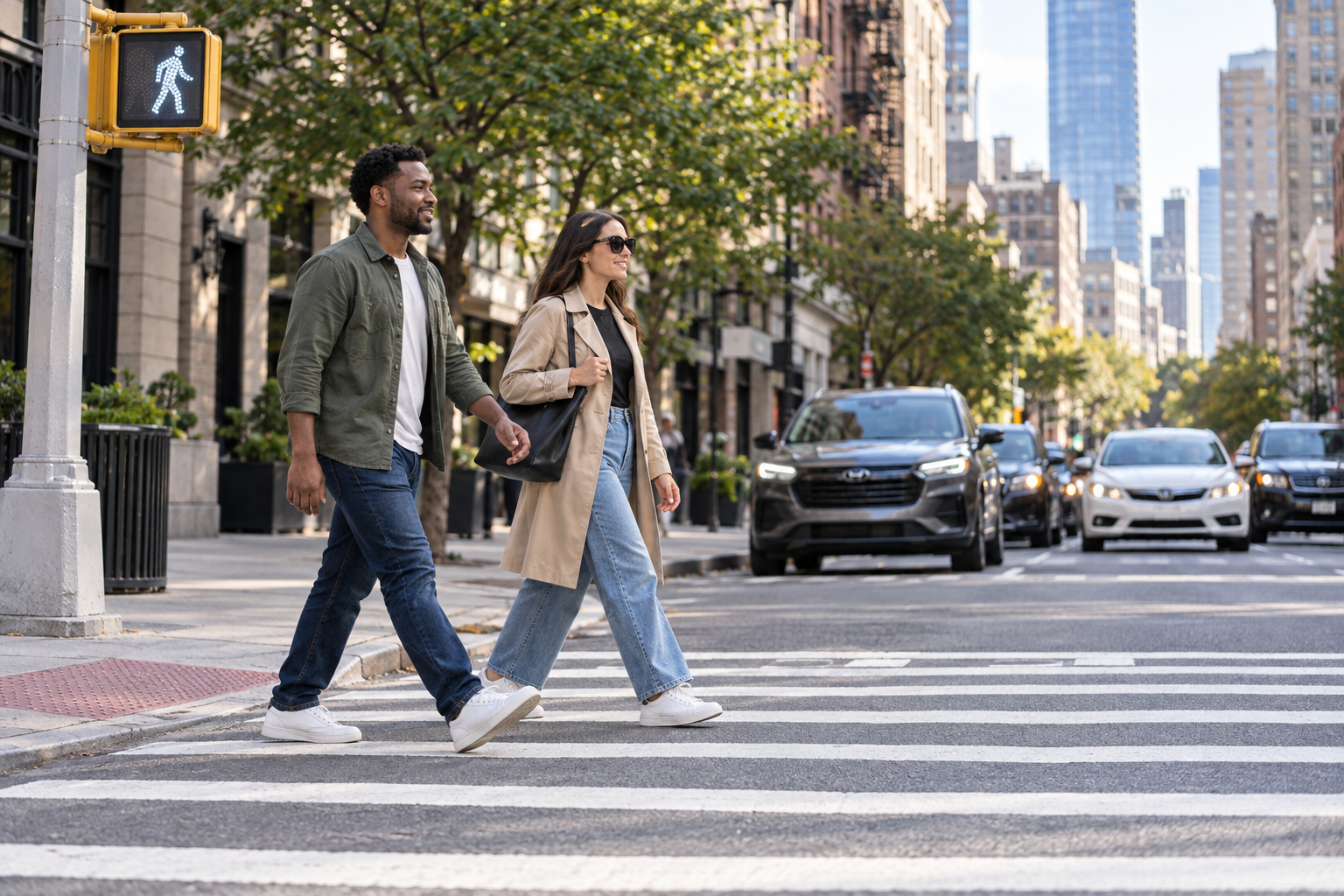
What to preserve after medical needs are addressed
Keep the police report information, driver and vehicle identifiers, witness contacts, and original photographs. If you possess only a partial plate, preserve it as partial. A confident but inaccurate identifier can waste time and misdirect requests toward an unrelated vehicle.
Photograph damaged clothing, footwear, bags, or other relevant items when practical, and discuss preservation before disposing of them. Their significance depends on the issues in the case. They should not be treated as proof of a particular impact mechanism without appropriate evaluation.
Save complete recordings rather than only a short edited clip. Identify who created the file and whether a longer version exists. Preserve an untouched copy before adding captions or arrows for discussion. Do not enter restricted property or access private systems to obtain evidence.
A simple map marked from memory can help explain a route, but label it as your account rather than a measured diagram. Counsel may need additional records or professional analysis to establish distances, sight lines, or vehicle paths accurately.
No-fault benefits for a pedestrian struck by a motor vehicle
The New York DFS no-fault FAQ generally directs an injured pedestrian to the striking vehicle's insurer. Uninsured, unidentified, or other unusual situations require a separate eligibility review.
Written no-fault notice is generally due within 30 days, subject to the reasonable-justification exception described by DFS. Seek guidance promptly rather than waiting for treatment to conclude.
Benefits and a liability claim serve different purposes. Keep claim numbers, adjuster names, requests, and responses organized by issue. A payment toward one expense should not be assumed to resolve every injury-related right or establish the other driver's fault.
If a denial arrives, retain the full document and any response deadline. An attorney can review its stated basis and the available procedures. Do not assume a denial is either automatically correct or safe to ignore.
Current serious-injury and fault rules
Certain non-economic motor-vehicle claims depend on the current serious-injury provisions in Insurance Law §5102 and §5104. Medical evidence must be evaluated under the applicable text.
Current CPLR §1411 can bar an Article 51 personal-injury claim if claimant fault exceeds defendants' combined fault. Counsel should assess applicability and the relevant effective dates.
An allegation that a pedestrian was distracted or crossed improperly needs factual examination. Preserve the actual sequence and any relevant records without changing or deleting material. A legal assessment should distinguish an insurer's assertion from a conclusion supported by evidence.
Older internet summaries may describe rules that no longer match the current statutory text. Ask an independent attorney to explain the framework governing the event rather than relying on a generic promise that fault only reduces recovery or that every diagnosis satisfies the threshold.
Unidentified drivers and incomplete vehicle information
If the driver leaves, prioritize safety and reporting rather than pursuit. Record the departure direction, approximate time, visible markings, and any partial identifier. Nearby footage may help identify the vehicle even if it does not show the impact itself.
Tell counsel what was reported and when. Insurance and other potential avenues can have particular eligibility and procedural requirements. The absence of an identified driver does not justify a blanket promise of payment, and it should not end the inquiry without review.
Witnesses should preserve their own observations independently. A person who saw a vehicle leave may be useful even if they did not see contact. Make that limitation clear so the evidence is not overstated.
The New York taxi accident guide provides related information when a taxi is involved. Vehicle type should be established from evidence, not inferred from an uncertain color or logo alone.
Medical history and the practical impact of injury
Describe symptoms, treatment, and prior conditions accurately. A preexisting problem may require comparison with the person's baseline, not concealment. Clinicians need an honest history, and counsel needs records that explain what changed after the event.
A recovery journal can focus on concrete tasks: walking to transit, standing at work, climbing stairs, carrying groceries, or caring for another person. Include the reason a task was limited and the assistance actually required. Avoid identical daily statements that obscure changing abilities.
For lost earnings, preserve schedules, pay information, contracts, and employer communications. A person who returns with modified duties may still have relevant consequences, but those changes need documentation. Self-employed claimants should distinguish revenue from earnings after expenses.
Keep receipts with the purpose of each expense. Treatment travel, paid assistance, and replacement equipment may present different questions. Counsel can assess recoverability after the underlying facts are organized; a receipt alone does not establish that every cost belongs in the claim.

Public vehicles and roadway-condition allegations
A public bus, government vehicle, signal issue, or roadway condition may require identifying a public entity. The presence of a public road does not automatically create a claim against its owner. Counsel should examine duty, notice, causation, and any defenses relevant to the allegation.
General Municipal Law §50-e can impose a notice-of-claim requirement, generally within 90 days in covered tort matters. Do not assume a police report or agency complaint satisfies it.
Ordinary negligence actions generally have a three-year limitation under CPLR §214, with exceptions and other deadlines. Obtain a specific deadline assessment for the actual defendants and claim rather than calculating from a general webpage alone.
If the injured person is a child or cannot manage the process independently, ask about authority and procedural requirements promptly. Family relationship and age should not be assumed to answer every notice or filing question.
Choosing an independent attorney and preparing questions
Bring a concise chronology, available report and insurance information, medical details, and correspondence requiring a response. Identify the most important uncertainty: the vehicle's identity, a disputed signal, a coverage denial, or the medical connection. That helps make the consultation specific.
Ask how evidence will be preserved, what deadlines require immediate attention, and who will communicate with insurers. Review the written fee agreement and expenses. A useful lawyer explains the investigation and risks without inventing a settlement figure before reviewing the record.
For website editorial matters, the contact page is available. An actual claim should be reviewed by a licensed attorney independently of this educational site.
Separate a safety request from an individual injury claim
A resident may want both an investigation of an injury and a safer crossing for the neighborhood. Those objectives can require different communications. A request for a signal review or a visibility improvement does not necessarily identify the legal claim, notify an insurer, or preserve a filing deadline.
Describe a proposed safety concern with a precise location and observable facts. Avoid presenting an unverified allegation as an established engineering conclusion. An agency can evaluate a concern even when the resident does not know the technical solution, and counsel can assess the separate relevance of any resulting records.
If changes occur after the incident, preserve the dates and distinguish the earlier layout from the later one. A new marking, altered curb, or changed signal may help orient a reader but should not automatically be treated as an admission of prior negligence. The legal significance needs review.
Families can also preserve existing photographs of the location from before the event when lawfully available. Their value depends on when they were taken and what they show. An old street image may illustrate a general arrangement while failing to establish temporary obstructions or conditions on the day of injury. Clear labels prevent those different uses from becoming confused.
New York pedestrian accident FAQs
Is the driver automatically responsible whenever a pedestrian is struck?
No automatic conclusion should replace analysis of the applicable duties and evidence. The crossing, vehicle movement, visibility, and other facts matter. A pedestrian's injury is serious enough to investigate without assuming that injury alone establishes legal fault.
What if I was outside a marked crosswalk?
Record the exact location and circumstances, then obtain legal advice. Crosswalk status is one issue in a broader analysis of duties and conduct. Avoid accepting a blanket statement that the claim necessarily succeeds or fails based on that description alone.
Can a witness be useful without seeing the signal?
Yes. The person may have observed the approach, turn, contact, or immediate aftermath. Preserve the account with its limits. A witness should not be encouraged to supply a signal observation they did not actually make.
Do bicycle or scooter collisions use the same insurance process?
Not necessarily. The vehicle's legal classification and actual coverage can change the analysis. Preserve identifiers and describe the event accurately so counsel can assess the appropriate claim rather than assume every pedestrian injury follows motor-vehicle no-fault rules.