

What distinguishes commercial and residential real estate transactions in New York
New York Commercial and Residential Real Estate Lawyer
Commercial and residential real estate transactions in New York require precise legal oversight to mitigate risk. Tokov Law provides clear, results-driven representation for buyers, sellers, and investors, guiding clients from contract review through closing. The firm’s attorney-led service ensures efficient, risk-aware transactions across New York City, Nassau County, and Suffolk County.
Key Takeaways
- Residential closings rely on Department of Finance rolling sales files for tax class 1, 2, and 4 properties.
- Commercial due diligence requires evaluating leases, environmental conditions, and income statements beyond a home inspection.
- New York transfer tax rates differ between commercial and residential sales, with higher thresholds triggering extra filings.
- NYC commercial sales fell 42% to $2.9 billion in Q1 2024 versus the prior year.
What distinguishes commercial and residential real estate transactions in New York?
Commercial and residential real estate transactions in New York operate under distinct legal frameworks and market dynamics. Residential deals follow standardized processes shaped by consumer protection laws. Commercial transactions demand deeper scrutiny of zoning, leases, and financial structures.
The stakes diverge sharply between these two transaction types. A residential real estate closing New York involves tax class 1, 2, and 4 properties tracked in the Department of Finance’s rolling sales files. These files capture neighborhood data, building type, and square footage for properties sold within a 12-month period. Commercial deals lack this uniform reporting structure. Investors instead confront a landscape requiring meticulous planning and a keen understanding of legal frameworks, as outlined by Coles & Orrentino’s analysis of New York commercial transactions.
How do due diligence requirements differ between commercial and residential deals?
Commercial real estate due diligence NY extends far beyond a home inspection. Buyers must evaluate existing leases, environmental conditions, and property income statements. A commercial lease review New York uncovers tenant obligations, rent escalations, and default provisions that directly affect property value. Residential buyers focus primarily on structural condition and title clearance. Skipping commercial due diligence exposes investors to liabilities buried in lease language or environmental reports.
What financial obligations apply to each transaction type?
The New York transfer tax real estate applies to both categories but at different rates. Commercial transfers above certain thresholds trigger additional filing requirements. Residential sellers face distinct disclosure obligations under state law. The ny real estate contract of sale for commercial property often includes contingencies tied to financing, tenant estoppels, and zoning approvals. Residential contracts follow more standardized forms with fewer negotiable contingencies.
Market data underscores the commercial sector’s volatility. Ariel Property Advisors reported that New York City recorded over $2.9 billion in commercial real estate property sales in Q1 2024, a 42% drop compared to the first quarter of 2023. Residential markets fluctuate differently, driven by mortgage rates and inventory levels rather than institutional investment cycles.
Tokov Law guides clients through both transaction types from contract review through closing. The firm’s real estate transaction services address the distinct demands of each deal structure. A long island real estate lawyer familiar with Nassau and Suffolk County practices helps residential buyers navigate local tax grievance procedures. Commercial investors receive counsel on entity formation and risk allocation. A new york real estate attorney from the firm ensures that no confusion and no pressure cloud the decision-making process. Every transaction receives the attention it deserves.
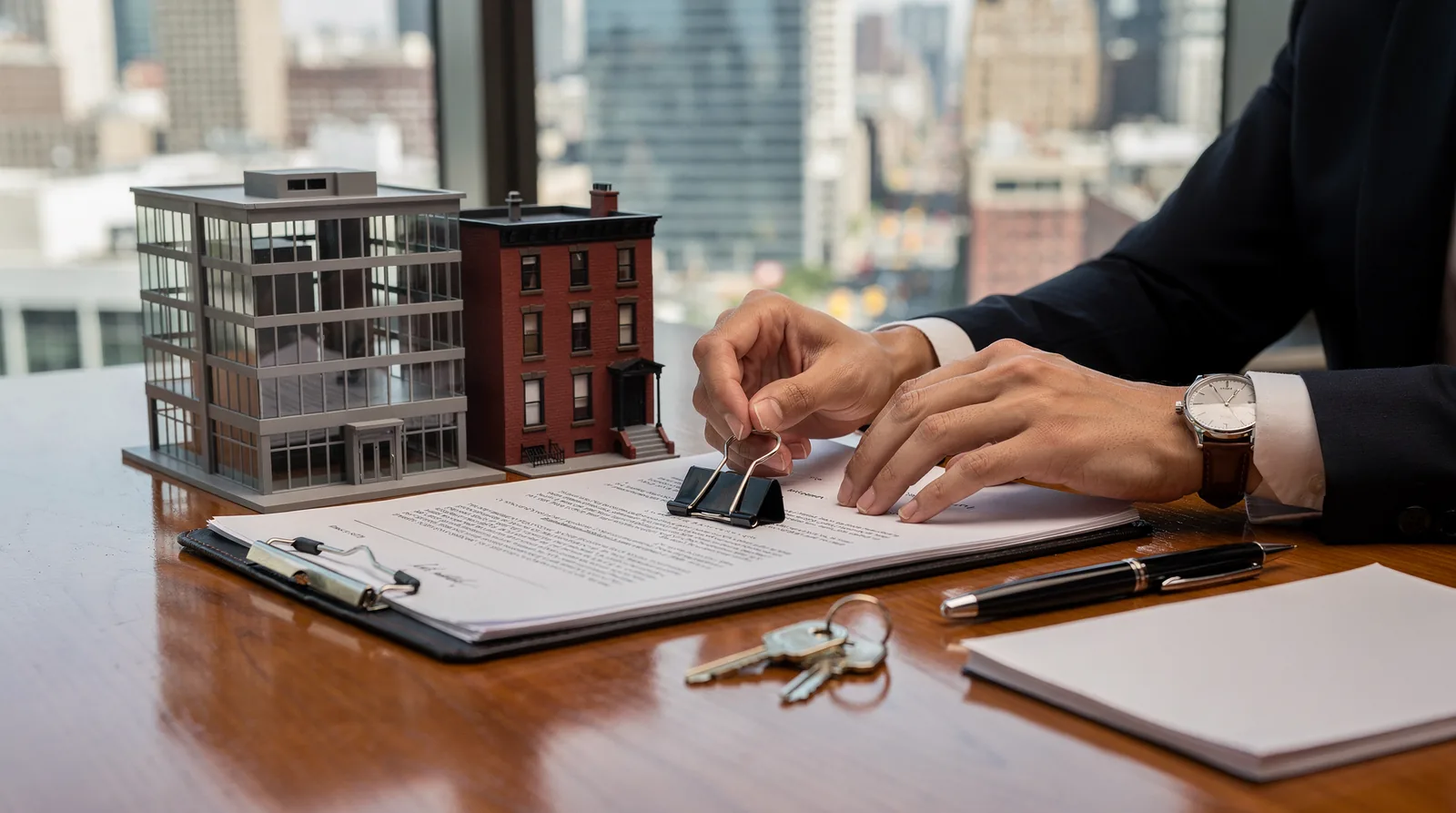
Why do you need a New York real estate attorney for your transaction
Why do you need a New York real estate attorney for your transaction?
A new york real estate attorney provides strategic advocacy with honest guidance and responsive communication so clients understand their options. Real estate transactions in New York involve binding contracts, transfer taxes, and title complexities that carry financial risk when handled without legal counsel. Missing a contract deadline or overlooking a disclosure requirement costs buyers and sellers thousands of dollars in a single transaction.
Tokov Law delivers attorney-led representation across commercial and residential real estate transactions new york, ensuring clients receive direct counsel from an experienced lawyer. The firm does not delegate critical work to paralegals or junior staff. Every contract review, negotiation point, and closing document receives attorney attention. This structure protects clients from the oversights that emerge when non-attorney processors manage transaction details.
What does a real estate attorney review in a New York contract of sale?
An ny real estate contract of sale contains contingencies, financing terms, inspection rights, and default provisions that shape a party’s legal exposure. Tokov Law examines each clause for hidden obligations and one-sided remedies. The firm identifies mortgage contingency deadlines that buyers miss at their peril and seller disclosure requirements that create post-closing liability. A disciplined, evidence-driven strategy guides every review.
How does an attorney protect a buyer during a residential closing?
A residential real estate closing new york transfers title, settles adjustments, and records the deed. Errors in the closing statement or title report become permanent problems after funds change hands. Tokov Law coordinates with title companies, lenders, and opposing counsel to verify every figure and document before the closing table. Clients choose the firm for clear communication and local dedication across New York City, Nassau County, and Suffolk County.
The firm’s commercial real estate due diligence ny practice extends to zoning verification, environmental assessments, and lease audit for income-producing properties. A commercial lease review new york uncovers operating expense passthroughs, renewal options, and assignment restrictions that affect property value. Investors who skip legal review absorb lease terms that erode returns over a decade-long term.
New york transfer tax real estate obligations apply to both residential and commercial sales. Miscalculating the combined state and city transfer tax triggers penalties and delays recording. Tokov Law computes the correct tax liability and ensures compliance with filing requirements. The firm is licensed in New York and New Jersey and provides timely updates so clients remain informed throughout their transaction. A long island real estate lawyer from the firm handles property tax grievances alongside purchase and sale matters, offering integrated representation for Nassau and Suffolk County property owners. Real estate transactions raise questions at every stage, and the firm’s real estate transactions FAQs address common concerns about process, documents, and attorney involvement. No confusion. No pressure. Your Case Deserves Attention.

What does a residential real estate closing in New York involve
What does a residential real estate closing in New York involve?
A residential real estate closing new york transfers legal ownership from seller to buyer through a structured sequence of document execution, fund disbursement, and title recording. Missing a single step jeopardizes the entire transaction and exposes parties to financial liability. The process demands precise contract review, title examination, and coordination of financing and inspections. Tokov Law provides clear, results-driven legal solutions for individuals, families, and property owners across New York navigating these closings.
What documents are signed at a New York closing?
Buyers and sellers execute several binding instruments at the closing table. The ny real estate contract of sale governs the transaction terms and must reflect every negotiated condition. A deed transfers title, while transfer tax returns, loan documents, and affidavits of title complete the package. Each document carries legal consequences that survive the closing date.
How are closing costs and taxes calculated?
New York transfer tax real estate obligations apply at closing, with rates varying by property type and location within the state. Both state and local transfer taxes appear on the settlement statement. Buyers also pay mortgage recording tax, title insurance premiums, and recording fees. Sellers typically cover the transfer tax and any outstanding liens or judgments. The Department of Finance provides rolling sales data for tax class 1, 2, and 4 properties, including neighborhood, building type, and square footage, which helps establish fair market value for tax calculations.
A new york real estate attorney reviews every figure before funds change hands. Tokov Law examines the closing disclosure line by line. No confusion. No pressure. The firm catches discrepancies that cost clients thousands in overcharges or missed credits. Your Case Deserves Attention at every stage, from contract negotiation through final recording.
How does commercial real estate due diligence in NY protect your investment?
Commercial real estate due diligence in NY protects an investment by uncovering hidden liabilities before closing. A disciplined investigation examines zoning restrictions, environmental conditions, title defects, existing leases, and financial records. Skipping this step leaves investors exposed to compliance violations, undisclosed structural issues, and tenant disputes that erode property value. The process transforms an acquisition from a speculative bet into a calculated decision backed by verified facts.
What documents are reviewed during commercial due diligence in New York?
The review spans multiple categories of records. Title reports reveal liens, easements, and ownership gaps. Environmental assessments identify contamination risks that trigger costly remediation under state law. Lease abstracts confirm rent rolls, renewal options, and tenant obligations. Financial statements and tax records validate the property’s income history. Each document answers a specific question about the asset’s legal and operational standing.
How does a New York real estate attorney strengthen the due diligence process?
A New York real estate attorney brings legal frameworks and market knowledge to the investigation. The attorney coordinates with engineers, environmental consultants, and title companies to assemble a complete risk profile. Tokov Law blends practical problem-solving with courtroom readiness when litigation becomes necessary to protect a client’s interests. The firm’s experience includes over 100 resolved cases and millions recovered, reflecting a disciplined, evidence-driven strategy. This approach ensures that every contingency, from zoning nonconformity to lease termination exposure, receives scrutiny before funds change hands.
Commercial property sectors across Greater NYC, including office, industrial, retail, mixed-use, and development projects, each carry distinct risk profiles. A retail acquisition demands different scrutiny than an industrial warehouse purchase. Tokov Law tailors the due diligence scope to the asset type and the client’s investment horizon. The firm’s process identifies deal-breakers early, saving clients from transactions where hidden costs outweigh projected returns. No confusion. No pressure. Your Case Deserves Attention.
What should you know about the NY real estate contract of sale?
A ny real estate contract of sale binds both buyer and seller to specific terms. The document must include the purchase price, closing date, contingencies, and a complete property description. Without these elements, the agreement lacks enforceability under New York law. Parties who proceed on incomplete or verbal understandings risk losing their deposit, forfeiting the transaction, or facing litigation over terms never properly memorialized.
Precision in drafting determines whether the contract protects or exposes the parties. Proper contract formation requires precise drafting; any error jeopardizes the intended protection. A missing contingency for financing leaves a buyer obligated to close even when a loan falls through. An ambiguous property description invites boundary disputes that stall the closing and erode value. Tokov Law reviews every clause for consistency with the client’s objectives and New York statutory requirements.
What makes a New York contract of sale legally binding?
A binding contract requires a written agreement signed by the party to be charged. The document must state the purchase price, identify the property with legal sufficiency, and set a definite closing date. New York courts enforce these formalities strictly. Oral agreements for real property carry no weight in a dispute.
How do contingencies protect buyers and sellers?
Contingencies create conditions that must be satisfied before the deal closes. A financing contingency permits the buyer to cancel and recover the deposit if a mortgage commitment fails to materialize. An inspection contingency allows renegotiation or withdrawal when defects surface. Without these provisions, a buyer assumes all risk from the moment of signing.
Commercial transactions introduce additional exposure. New York’s Labor Law places absolute liability on property owners for many construction-related injuries, a risk addressed in commercial contracts. A commercial real estate due diligence ny review examines existing leases, environmental reports, and structural assessments before the ny real estate contract of sale becomes final. Tokov Law provides strategic advocacy with honest guidance so clients understand their options at every step. No confusion. No pressure. The firm’s disciplined approach ensures that each contract reflects the client’s risk tolerance and commercial goals. Your Case Deserves Attention from the first draft through the closing table.
How is the New York transfer tax calculated for real estate?
New York transfer tax real estate obligations apply to both residential and commercial property sales. Rates are set by state and local jurisdictions, creating layered calculations that vary by property location and classification. Tokov Law provides clear, results-driven legal representation for property owners navigating these obligations across New York.
The calculation structure requires precise attention to jurisdiction. New York State imposes a transfer tax on conveyances of real property. New York City adds its own transfer tax for properties within the five boroughs. The Department of Finance’s rolling sales files list tax class 1, 2, and 4 properties that have sold in the last 12-month period in New York City. These files include neighborhood, building type, and square footage data that inform assessment and tax determinations.
What factors determine the New York transfer tax rate?
Several factors influence the applicable rate. Property classification matters first. Tax class 1 properties, primarily one- to three-family homes, face different treatment than tax class 2 and tax class 4 properties, which include multifamily and commercial buildings. Location within New York City versus Nassau County or Suffolk County changes the local component of the calculation.
The sale price establishes the base for computation. Both state and city portions apply to the consideration paid, though exemptions and abatements exist for qualifying transfers. A new york real estate attorney reviews these variables before closing to prevent miscalculation.
Who pays the New York transfer tax on a sale?
Payment responsibility is negotiable under the ny real estate contract of sale. Sellers typically bear the state and city transfer taxes, but contracts frequently shift this obligation. Tokov Law advises clients on structuring these terms during contract review.
For commercial and residential real estate transactions new york, the firm’s attorney-led service ensures accurate tax allocation. Clients receive a free consultation to assess their specific transfer tax exposure. In select matters, clients pay no legal fees unless the firm secures a successful outcome.
When should you hire a Long Island real estate lawyer for your deal?
A Long Island real estate lawyer becomes essential when a transaction involves property tax grievances, contract negotiations, or closing procedures in Nassau and Suffolk Counties. Local rules differ sharply from New York City practices. Missing a filing deadline or misreading a tax assessment notice triggers financial losses that compound year after year.
Tokov Law is headquartered in Valley Stream and provides clear, results‑driven legal representation for individuals, families, and property owners. The firm’s local dedication ensures clients receive attorney‑led service and timely updates throughout their real estate transaction. No confusion. No pressure.
What local issues does a Long Island real estate lawyer handle that a general practitioner might miss?
Nassau and Suffolk Counties maintain separate assessment rolls and grievance calendars. A practitioner unfamiliar with those schedules forfeits the window to challenge an inflated valuation. Tokov Law leads the full property tax grievance process for Long Island owners and charges a contingency fee of 40% of any tax savings recovered, with no upfront cost.
How does attorney‑led service change the closing experience?
Direct attorney involvement keeps the residential real estate closing New York process on track when title issues or survey discrepancies surface. Clients receive real‑time guidance rather than filtered messages through paralegals. The firm’s disciplined approach to commercial and residential real estate transactions New York protects buyers and sellers from last‑minute renegotiations that unravel deals.
Your Case Deserves Attention. Tokov Law extends that principle across every phase of a transaction, from the initial ny real estate contract of sale review through the final recording of documents. The firm’s broader practice areas cover personal injury and workplace accidents alongside real estate matters, reinforcing a litigation-ready posture that strengthens the firm’s negotiating position when counterparties resist reasonable terms.
What does a commercial lease review in New York cover?
A commercial lease review new york examines every clause that determines financial exposure and operational control. Rent escalations, maintenance obligations, assignment clauses, and default provisions receive line-by-line scrutiny. Missing a single unfavorable term locks a business into years of avoidable liability.
New York commercial real estate transactions present a complex landscape. A keen understanding of legal frameworks and meticulous planning proves essential for any party signing a multi-year lease. Tokov Law advises buyers, sellers, and investors in both commercial and residential real estate transactions new york, guiding clients from contract review through closing. The firm’s lease analysis identifies hidden costs before they become binding obligations.
What hidden costs does a lease review uncover?
Operating expense pass-throughs and common area maintenance charges often lack clear caps. A review flags uncapped escalation formulas that shift unpredictable costs onto the tenant. Tax escalation clauses tied to building sales rather than assessed value create sudden rent spikes.
Can a lease review prevent assignment restrictions?
Yes. Overly restrictive assignment and subletting clauses trap a business in space it outgrows. Tokov Law negotiates reasonable transfer standards that preserve flexibility without triggering landlord consent defaults.
The firm’s disciplined, evidence-driven strategy aims to maximize client outcomes. Whether negotiating a new lease or resolving a dispute, every recommendation rests on documented market practice and statutory requirements. A new york real estate attorney from the firm evaluates personal guaranty provisions, security deposit terms, and cure periods with the same rigor applied to core financial terms.
Clients begin with a free consultation to discuss lease terms, risks, and negotiation strategies before signing any commercial agreement. No confusion. No pressure. The review process delivers a clear risk assessment and a prioritized list of negotiable points. Your Case Deserves Attention. Tokov Law provides the thorough analysis that protects long-term business interests across New York’s demanding commercial market.
FAQ
What distinguishes commercial and residential real estate transactions in New York?
Commercial transactions demand deeper scrutiny of zoning, leases, and financial structures. Residential deals follow standardized processes shaped by consumer protection laws.
Conclusion
Whether the transaction is commercial or residential, the buyer, seller, or investor who engages a New York real estate attorney early gains control over tax allocation, contract terms, and closing procedures. A disciplined review of the contract of sale and local filing requirements prevents costly miscalculations and preserves the ability to challenge an inflated property tax assessment. The next step is a free consultation to evaluate the specific exposure and structure the deal accordingly.