
Bronx Pedestrian Accident Lawyer
A pedestrian struck in the Bronx may have been walking to a bus, leaving a store, accompanying a child, or crossing between familiar neighborhood destinations. The injury can interrupt that routine immediately, while the facts needed for a claim remain scattered among witnesses, medical providers, police records, and vehicle information. A careful investigation brings those sources together without assuming that a location or injury alone proves fault.
A Bronx pedestrian accident lawyer should explain what needs to be established, which insurance questions require attention, and how current New York law applies. This guide offers practical preparation for that discussion, including local street settings, evidence priorities, recovery documentation, and questions for independent counsel.
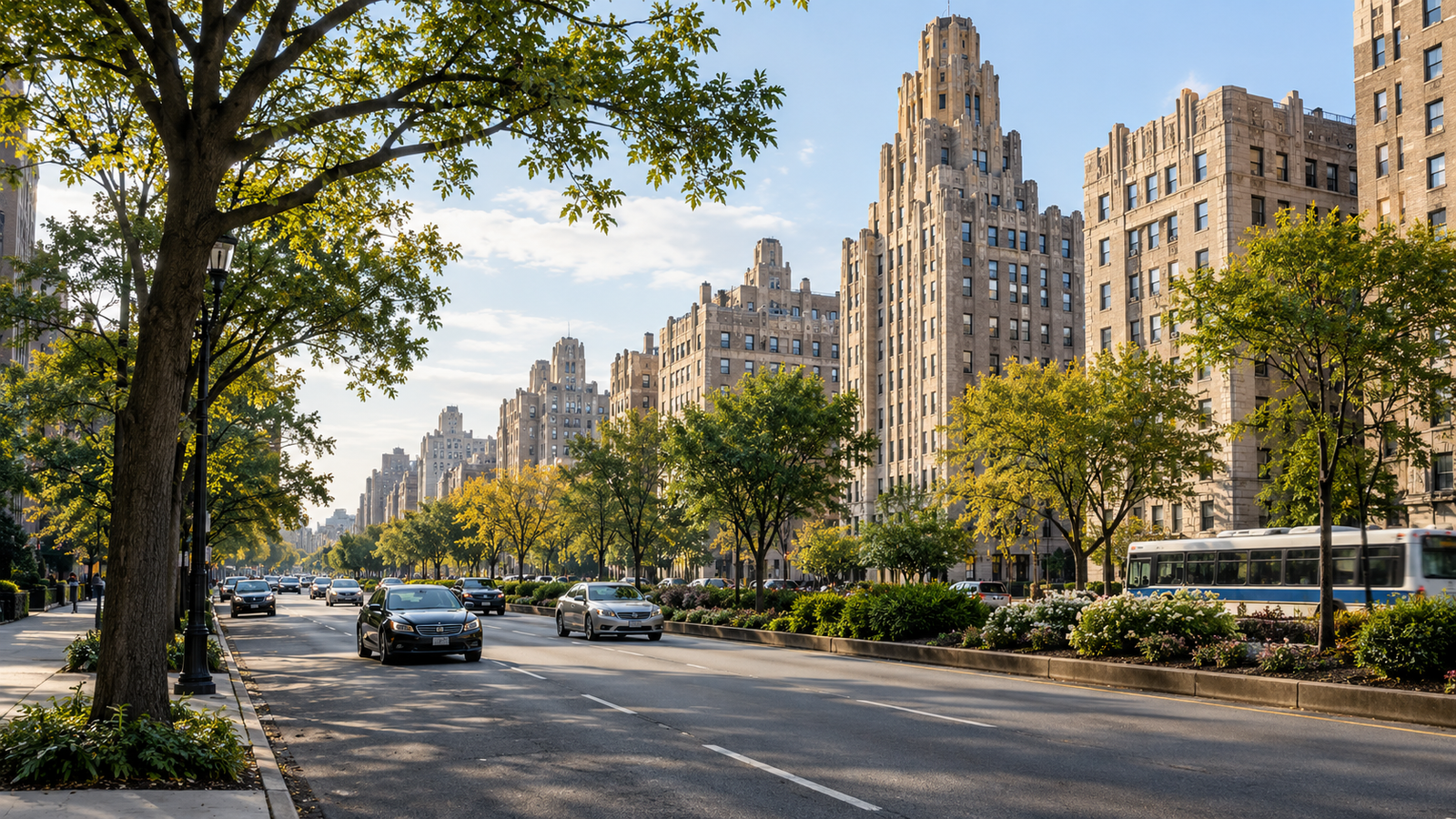
A dated Bronx pedestrian safety figure
NYC DOT's 2023 borough plan lists 69 Bronx pedestrian fatalities during 2017–2021. This is a historical five-year total, not a current annual count or a statistic for one intersection. DOT pedestrian safety plan.
That number establishes a defined safety context while leaving each collision's cause to investigation. It cannot show whether a specific driver yielded, what a witness could see, or how an individual injury occurred. Those questions depend on the actual event and supporting records.
Street references below are intended to make evidence collection more precise. They are not an unsupported ranking of dangerous locations. A clearly identified crossing and time window are more useful to a claim than a broad assertion that an entire neighborhood is hazardous.
Grand Concourse: locate the pedestrian within the crossing
For an event on Grand Concourse, preserve the cross street, direction of walking, and the specific portion of the crossing where contact occurred. If the pedestrian paused or crossed in stages, describe each stage. A general statement that someone was “on the Concourse” may leave several possible vehicle movements unresolved.
Identify the driver's movement as actually observed: straight travel, a turn, a lane change, or another maneuver. The pedestrian may not have seen the approach before contact. An honest account of the first observed moment helps an investigator determine what missing interval needs independent evidence.
A witness's location is equally important. Someone on another corner may have seen a signal or vehicle path unavailable to the injured person. Preserve the account separately rather than trying to make different viewpoints sound identical.
Photographs taken later can illustrate the layout, but label them with their date. Temporary obstructions, parked vehicles, and construction activity may differ from the incident day. Counsel should not have to guess which images depict the actual conditions.
Fordham Road and commercial destinations
Near Fordham Road, a pedestrian's route may involve a store entrance, transit connection, or crossing between several errands. Identify the last doorway or corner before the collision and the intended destination. A receipt may help narrow timing without locating the impact precisely.
If a vehicle turned across the walking path, preserve the sequence rather than assuming the turn itself establishes liability. The relevant controls, pedestrian position, visibility, and driver's conduct need assessment. A recording that begins before the turn can be more informative than a photograph of the final vehicle position.
Businesses may hold useful footage or witness information without being responsible for the event. Distinguish an evidence request from an allegation against a property owner. A proposed claim needs a particular duty and causal connection, not merely proximity to the collision.
When the injured person was carrying bags or assisting someone else, include that detail accurately. Ordinary circumstances can explain pace or position without deciding fault. Omitting them because they might become an argument can make the account less dependable.
White Plains Road, Pelham Parkway, and transit connections
For a walk connected with a bus or train near White Plains Road or Pelham Parkway, record the stop or entrance used and the route toward the crossing. A station or corridor name can cover more than one relevant point. The exact path helps identify likely camera views and witnesses.
If the pedestrian was transferring between services, preserve transportation records and explain the interval between leaving one vehicle and the collision. A transaction time is not necessarily the impact time. Several records may be needed to reconcile the chronology.
A bus's presence does not establish its role in the injury. It may have been involved, may have obstructed a view, or may simply have been nearby. Preserve its identifiers when relevant and distinguish observed facts from a theory about its effect.
Where a public vehicle or public infrastructure is genuinely implicated, raise that promptly with counsel. Operator identity and legal procedure need verification rather than an assumption based on the route or appearance of the vehicle.
South Bronx crossings and commercial vehicle movements
In Mott Haven, Melrose, Hunts Point, or another South Bronx setting, an event may involve a larger vehicle, loading activity, or an entrance to commercial property. Record whether the vehicle was turning, reversing, exiting a driveway, or traveling along the roadway.
Vehicle size alone does not establish negligence. Describe the movement, the pedestrian's path, and any warning actually heard or seen. If the driver could not be seen from the pedestrian's position, that observation should not automatically become a technical conclusion about the driver's field of view.
Preserve business markings and vehicle identifiers where safely possible. A logo may be a useful lead while leaving ownership, employment, and insurance relationships unresolved. Counsel can investigate those relationships through records rather than treating the most visible name as the only responsible party.
If a roadway or property condition is alleged, identify it separately from driver operation. A photograph of debris or an obstruction must be connected to the event before it can establish more than the condition's later presence.
Residential streets and walking with assistance
In Riverdale, Throgs Neck, Morris Park, and other residential areas, a pedestrian may encounter a driveway or backing vehicle rather than a major intersection. Preserve the entrance, walking direction, and vehicle movement. A residential setting does not eliminate the need for a precise account.
When someone uses a mobility aid or walks with a companion, record how the aid or assistance was used. Keep baseline abilities distinct from new symptoms or restrictions. An existing limitation does not answer whether the event caused additional harm, but it belongs in an accurate medical history.
A companion may be both a helper and a witness. Identify where they stood and what they observed before assisting after the event. Their practical support can be important without expanding their firsthand knowledge beyond what they actually saw.
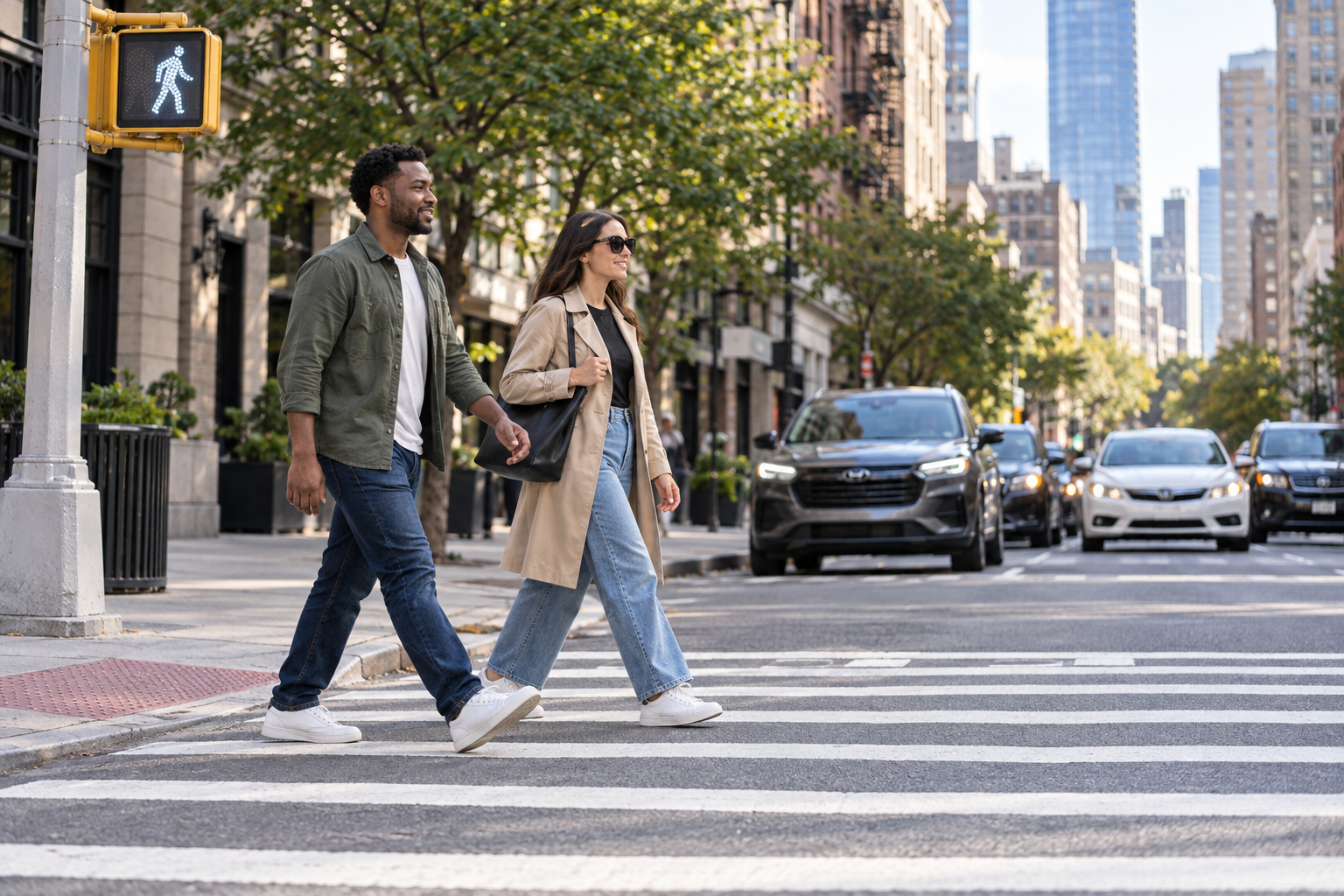
Signals, yielding, and the actual sequence
Vehicle and Traffic Law §1151 addresses crosswalk yielding where signals are absent or inoperative, including limits on sudden entry. The crossing's controls and circumstances determine the applicable analysis.
Drivers have a due-care obligation under Vehicle and Traffic Law §1146. Neither a driver's claim of priority nor an insurer's description of the pedestrian's conduct should replace investigation of the facts.
Ask which signal a witness saw and at what point in the sequence. A signal visible from another direction or a later cycle may not establish what governed the collision. Counsel may need records or footage when timing is disputed.
A witness can help even without seeing the signal. Vehicle approach, contact, and immediate statements may be relevant. Preserve that information with its limits instead of encouraging a more complete-sounding account than the witness can support.
Medical care and early records
Address health needs and describe the physical event accurately to treating professionals. Explain the point of contact, fall, or movement as remembered. If part of the account came from another person after the event, identify that source.
Keep police report information, available vehicle details, witness contacts, and original photographs. If a plate or marking is only partly remembered, preserve it as partial. A mistaken complete identifier can misdirect an investigation more than an acknowledged gap.
Retain relevant damaged belongings and discuss preservation before disposal when practical. Clothing or equipment may be useful for a particular issue, but its technical meaning should not be assumed. A photograph can document condition without proving every aspect of the mechanism.
A focused approach to recordings and witnesses
List possible recordings according to what they might show: the approach, crossing, vehicle departure, or aftermath. A camera located nearby may face away from the event or have no retained footage. Availability and usefulness need confirmation.
Provide a time window and explain how it was estimated. A call, message, or nearby purchase may establish different stages of the day. A request based on a falsely precise time can miss relevant material, so preserve uncertainty where it exists.
Keep complete files and identify who supplied them. Use a duplicate for labels or excerpts. A short clip without its preceding context may be misleading, and a forwarded recording may require additional information about its origin.
Insurance notices and current motor-vehicle rules
The DFS no-fault FAQ generally directs pedestrians to the striking vehicle's insurer. Written notice is generally due within 30 days, subject to the reasonable-justification exception; eligibility requires individual review.
Certain non-economic claims depend on current Insurance Law §5102 and §5104. Counsel should evaluate medical evidence under the applicable serious-injury provisions.
Current CPLR §1411 can bar an Article 51 personal-injury claim when claimant fault exceeds defendants' combined fault. The event's date and statutory applicability need legal assessment.
Keep benefit correspondence separate from liability discussions. A denial or payment in one process may not resolve the others. Preserve complete documents and response dates so counsel can identify the issue rather than infer it from a brief telephone summary.
When the vehicle's identity remains uncertain
Do not follow or confront a departing driver. Record the departure direction, visible markings, and approximate time from a safe position. A partial description may lead to additional evidence when combined with witnesses or recordings.
Tell counsel what was reported and when. Potential insurance or other avenues can involve specific eligibility and procedural requirements. Missing identity should prompt careful review rather than a guarantee of payment or an assumption that no options exist.
If a later recording shows a similar vehicle, distinguish similarity from identification. The connection may require timing, route, markings, and other evidence. An investigation should test the lead before treating it as a proven fact.
Recovery, wages, and family responsibilities
Describe the practical effect of injury on actual duties: standing through a shift, climbing stairs, carrying supplies, reaching appointments, or caring for another person. A diagnosis alone may not explain why a particular task required help.
Preserve schedules, payroll records, and communications about missed or modified work. For irregular employment, messages assigning shifts can be important. Self-employed workers should distinguish revenue from earnings after expenses and mark unsupported estimates as estimates.
Record household assistance by task and duration. Identify actual expenses separately from unpaid help. An attorney can assess legal recoverability after the facts are organized; assigning a speculative value at the outset can obscure the real support provided.
Include improvement and retained abilities. A balanced account explains a changing recovery more accurately than repeated statements that every activity was impossible. Medical advice should guide activity decisions, while the record should reflect what actually happened.

A helper's role in organizing the file
A relative may collect records while the injured person is hospitalized or has difficulty managing correspondence. Keep the helper's observations separate from information reported by the pedestrian. Both sources can be useful when their origin is clear.
Identify language and communication needs early. A person comfortable with everyday conversation may still need qualified help understanding medical or legal terminology. Preserve original statements alongside translations and clarify uncertain wording rather than making it sound more definite.
Limit unnecessary sharing of private medical information. Ask what authorization is needed for requests and communications. A family relationship can make practical assistance easier without automatically answering every question about legal authority or decision-making.
Public entities, deadlines, and independent advice
Ordinary negligence actions generally have a three-year limitation under CPLR §214, subject to exceptions. Public-entity claims may require earlier notice under General Municipal Law §50-e.
A police report, complaint about a crossing, or insurer negotiation should not be assumed to satisfy every deadline. If a public vehicle or roadway condition is involved, counsel should identify the proper entity and procedure. Public ownership of a street alone does not establish liability.
Bring a chronology, medical information, available identifiers, and letters requiring a response to a consultation. Ask about immediate preservation, unresolved facts, fees, and communication. Related reading includes the Bronx car accident guide, Bronx personal injury page, Bronx taxi accident guide, and New York pedestrian overview.
Review proposed payments by their stated purpose
A payment offer may address a damaged item, a medical expense, or a broader release. Keep the complete proposal and ask what rights it affects. The amount alone does not explain whether accepting it would resolve only one issue or end additional claims.
If a caller describes a document as routine, still review its actual language. Identify the company, claim number, and reason for the request. An independent lawyer can explain the scope without requiring the injured person to guess from an informal summary.
Preserve any deadline attached to the proposal and avoid assuming that ongoing discussion extends other legal requirements. A careful record of the offer and response makes later review easier and helps separate negotiation from the distinct task of protecting the claim.
Bronx pedestrian accident FAQs
What if I cannot remember the first contact?
Preserve what you do remember and identify any later information from witnesses or records. Do not fill the gap with a theory presented as memory. An attorney can investigate the missing interval while keeping the sources of each detail clear.
Does the responding agency own the road?
Not necessarily. Response, maintenance, and ownership can involve different entities. If a roadway-condition claim is being considered, counsel should verify the relevant responsibilities rather than infer them from the heading on a police report.
Can a witness who helped afterward still be useful?
Yes, the person may identify the vehicle, describe immediate conditions, or preserve statements. Make clear whether they saw the impact. Their assistance and limited observations should not be expanded into a complete eyewitness account.
Where should editorial questions go?
Use the contact page for website questions. An independent licensed attorney should review personal claims and the deadlines applicable to the actual event.