
New York School Bus Accident Lawyer
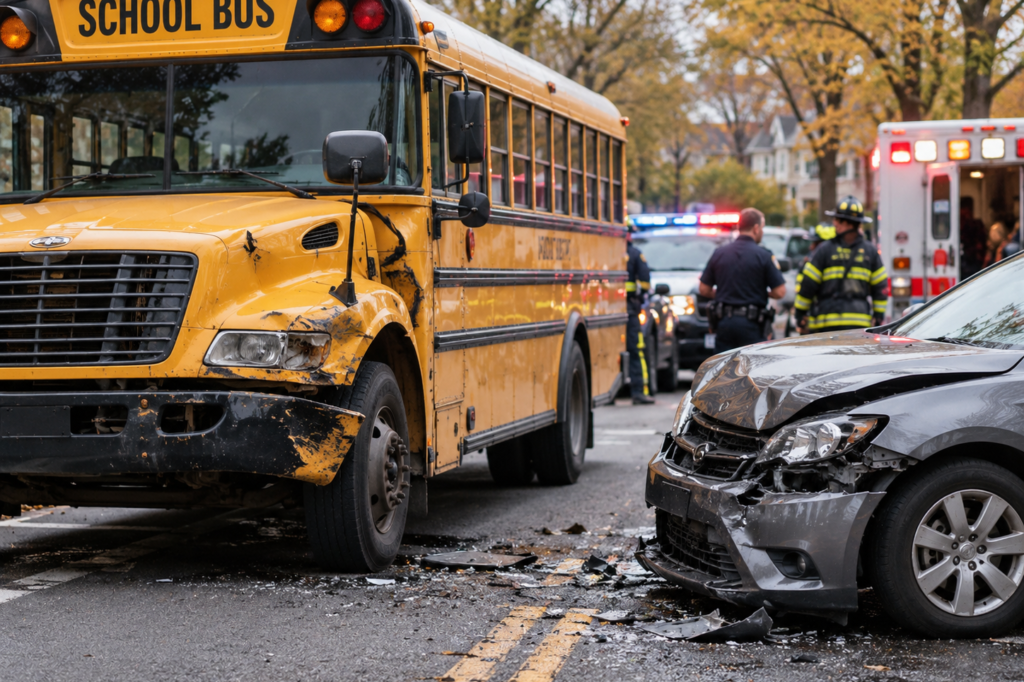
When a child is hurt in a school bus accident, parents need answers quickly. Who was responsible for the bus? Was the driver employed by the school district or a private transportation company? Did a failure in supervision, maintenance, or safe driving contribute to the injury? And perhaps most urgently, is there a 90-day deadline to notify a government entity of the claim?
A New York school bus accident lawyer must investigate both the collision and the legal identity of the people and organizations responsible for transportation. Claims involving public school districts can have significantly shorter notice and filing deadlines than ordinary vehicle accidents. Privately operated fleets may present different rules, even when their buses are carrying public school students.
At Tokov Law, we understand the importance of clear answers when a child or family member has suffered an injury. Our [personal injury practice](/personal-injury/) addresses negligence-related claims, including roadway injuries. Learn more about related car accident cases. If your child was hurt in a school bus collision in NYC, Long Island, or elsewhere in New York, contact us to discuss the incident and applicable deadlines.
Who Can Be Responsible for a School Bus Accident?
School transportation often involves several connected organizations. Establishing who owned, operated, maintained, supervised, and contracted for the bus is a necessary first step.
The school bus driver. A driver may have caused or contributed to a crash by speeding, failing to yield, following too closely, turning improperly, becoming distracted, or failing to respond to a foreseeable hazard. Driver conduct must be measured against applicable legal duties and supporting evidence.
A school district or board of education. A public entity may face liability for acts of employees or its own negligent conduct when applicable legal requirements are established. Governmental immunity and distinctions between discretionary and ministerial conduct can affect certain theories, so liability is never automatic.
A private school bus operator. Many districts and schools contract with independent transportation businesses. A private school bus accident contractor liability claim may concern negligent driving, training, scheduling, inspection, or company policies. Contracts and actual operational control help identify the defendant.
Maintenance, repair, or equipment providers. A mechanical failure can call for examining inspection logs, repair orders, prior defect reports, and parts. If a contractor ignored a known problem or defective equipment contributed to the crash, additional claims may be considered.
Other drivers and entities. A distracted motorist who strikes a bus or unlawfully passes a stopped bus may bear responsibility. Dangerous roadway conditions can present further claims, sometimes involving a public road authority with separate procedural rules.
Not every potentially involved entity can be sued successfully. The evidence must establish a recognized legal duty, a breach, causation, and legally compensable harm.
The 90-Day Notice of Claim for New York School Bus Accidents
One of the most important deadlines in a public school bus case may be 90 days—not three years. When a tort claim is brought against a covered municipality or school district, New York General Municipal Law § 50-e generally requires a properly served notice of claim within 90 days after the claim arises. The notice is a formal legal prerequisite in many public-entity cases, not simply a phone call or school incident report.
The notice typically identifies the claimant, nature of the claim, when and where it occurred, how the incident happened, and injuries or damages known at that time. Service must comply with the statute and applicable rules for the entity involved. A notice directed to the wrong entity, sent by an unauthorized method, or lacking essential information may create serious problems.
Suing a School District for a Bus Accident in NY
Education Law § 3813(2) specifically requires compliance with General Municipal Law § 50-e for many tort claims against school districts and boards of education. This means that a family considering suing a school district for a bus accident in NY should promptly determine whether the district itself is a proper defendant and, if so, what notice must be served.
An internal school accident form is not necessarily a statutory notice of claim. Talking to a principal, requesting a transportation investigation, or reporting the accident to an insurer does not automatically satisfy § 50-e. Families should have the service requirements reviewed as early as possible.
NYC Department of Education School Bus Accident Claims
A case involving New York City public school transportation may raise questions about the NYC Department of Education, the City, the actual transportation contractor, and the properly named public entity. A bus carrying NYC public school students is not necessarily owned or driven by a city employee. Contracts, route records, and vehicle registration should be examined before deciding who must receive formal notice.
For an NYC DOE school bus accident lawyer, proper defendant identification is critical. The fact that the student attends public school does not prove the DOE or City is liable, and a private contractor’s involvement does not automatically eliminate a possible public-entity claim.
What If the 90-Day Notice Deadline Has Passed?
Missing the 90-day window can put a claim at significant risk, but some circumstances may permit a court application for leave to serve a late notice. Under General Municipal Law § 50-e(5), a court evaluates factors including timely actual knowledge of the essential facts, prejudice to the public entity, and relevant circumstances such as the claimant’s infancy.
A child’s age does not automatically eliminate the notice requirement. Neither an informal school report nor the fact that a claim involves a minor guarantees the court will allow late notice. Moreover, the statute restricts how far the court can extend the notice period. Anyone who believes the deadline has passed should seek individualized advice promptly rather than assume the claim is lost or automatically preserved.
Wrongful death claims, claims against entities outside the General Municipal Law framework, and other specialized actions can have different notice triggers. The specific defendant and type of claim must be identified before a deadline is calculated.
General Municipal Law § 50-h: Oral and Physical Examinations
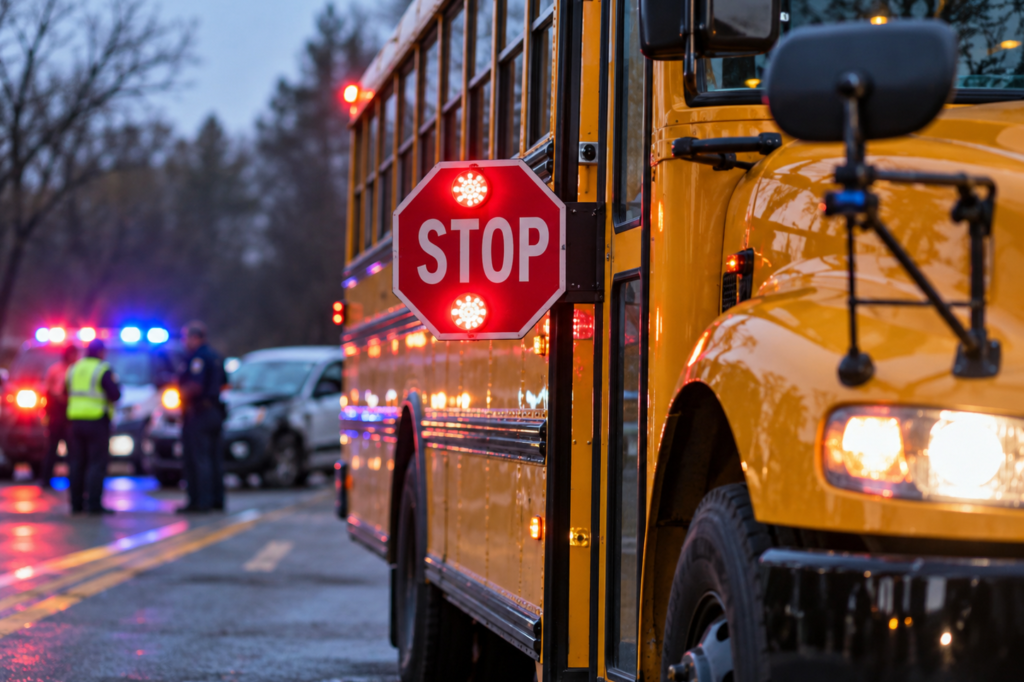
A public entity that receives an appropriate notice of claim may invoke General Municipal Law § 50-h. This law permits a qualifying municipality or school district to demand an examination of the claimant concerning the incident and the claimed injuries or damages.
A § 50-h examination is generally a sworn question-and-answer session and may also involve a physical examination by a qualified physician under the statute. It is not necessarily the same as a trial deposition. A claimant has the right to counsel, and a record of the examination can become relevant later in litigation.
For a child, the process may require careful coordination around age, understanding, medical condition, and the scope of questioning. Families should not disregard a formal examination demand. Certain statutory conditions affect when an action may proceed if an examination has been properly demanded.
School Bus Accident Statute of Limitations in New York
The lawsuit filing deadline is separate from the notice-of-claim deadline. Under General Municipal Law § 50-i, many negligence actions against covered municipal entities and school districts generally must be commenced within one year and 90 days after the incident, subject to applicable exceptions. The statute also addresses service of notice and a waiting period before commencing suit.
For an ordinary negligence claim against a private individual or company, the general personal injury deadline is often three years, as provided by CPLR § 214. That does not mean the private contractor and public district share identical deadlines, even if both are involved in the same crash.
| Potential defendant or claim | Important timing issue |
|---|---|
| Covered public municipality or school district | Often 90-day notice of claim plus one-year-and-90-day action deadline |
| Private bus company in an ordinary negligence case | Often three-year personal injury lawsuit period |
| State of New York where actually a proper defendant | Separate Court of Claims Act notice, service, and filing rules |
| Wrongful death or other specialized claim | Different triggers and limitations may apply |
Does the New York Court of Claims Act Apply?
Usually not merely because a school district or city agency is involved. The New York Court of Claims handles claims against New York State and certain designated entities, not ordinary negligence suits against city governments or local school districts. If the State itself is a legally proper defendant, Court of Claims Act § 10 imposes distinct and potentially very short requirements.
The practical lesson is not to assume that all governmental defendants are interchangeable. Correct defendant identification determines where and how the claim must be pursued.
Public School District vs. Private Bus Contractor Liability
Consider a bus operated by a private transportation company under contract with a local school district. If the bus driver rear-ends another vehicle, the operator’s driving and employment relationship may support a private negligence claim. If school personnel also committed a separate legally actionable failure, a public-entity claim might be evaluated. Conversely, the mere existence of a transportation contract does not establish that the district is liable for everything the contractor does.
The contract may identify who handles driver hiring, safety training, routes, insurance, vehicle maintenance, attendants, and incident reporting. Actual practices can matter as much as contract wording. Some cases involve an independent contractor, while others raise questions about supervision, agency, or obligations retained by the district.
When more than one defendant is potentially responsible, the legal strategy must preserve each viable claim separately. A notice served on one entity does not necessarily protect a claim against another. A private insurer’s claim number does not extend statutory deadlines applicable to a municipality.
Bus Driver Safety, Maintenance, and Supervision Evidence
An early investigation may request the bus’s registration, route assignment, contractor agreement, driver qualification information, inspection records, maintenance history, and incident reports. Available surveillance or onboard video can show the collision, a boarding event, or conditions inside the bus. GPS data, dispatch communications, and witness statements may clarify the timeline.
School bus operations are subject to transportation-related rules as well as ordinary safe-driving requirements. New York Education Law § 3623 addresses school bus standards and safety instruction. The precise requirements for a particular vehicle and operation need to be identified rather than assumed.
If the incident involved an occupied bus stopping to pick up or discharge students, investigators may review bus signaling, stop-arm operation, surrounding traffic, and the actions of other motorists. If the injury involved a child with additional transportation or supervision needs, the child’s specific assigned supports and what was known to responsible parties may become relevant.
Do not delay preservation requests for video or routing data. Some systems overwrite recordings on short cycles. A lawyer may send preservation notices and seek appropriate disclosure procedures, but evidence availability varies from case to case.
Injuries, Medical Documentation, and Compensation
Children injured in bus crashes may suffer concussions, neck or back injuries, broken bones, lacerations, emotional distress, or longer-term disabilities. Some injuries become apparent only after the initial emergency evaluation. Parents should follow medical recommendations and document changes in sleep, activity, school attendance, pain, and mobility without exaggeration.
Potential legally recoverable damages may include medical expenses, future care, functional limitations, pain and suffering, and other case-specific losses. A parent’s own claim, if any, requires a separate legal analysis. Ordinary motor vehicle no-fault coverage may also be relevant for an injured bus occupant or pedestrian, depending on the status of the vehicles and coverage.
A child may have a long recovery horizon. Medical experts may be needed to assess lasting effects on development, education, independence, or future work. At the same time, neither a minor injury nor a serious diagnosis automatically proves another party’s negligence. The evidence must connect the wrongful conduct to the actual harm.

What Parents Should Do After a School Bus Accident
Make sure your child receives appropriate medical assessment. Obtain the date, bus number, route, pickup or drop-off location, driver name if available, and the name of the transportation provider. Ask for copies of available incident documentation and preserve school messages, photographs, treatment records, and witness information.
Write down what your child said as accurately as possible without repeatedly coaching or rehearsing an account. Keep medical appointments and save out-of-pocket expense records. If video may exist, raise the issue promptly. Do not assume an investigation conducted by the district or contractor is a substitute for independent preservation.
Most importantly, have the identity of every possible public entity evaluated immediately. The 90-day notice period can expire while a family is still collecting records or communicating with administrators. A formal legal notice may require specific content and service methods.
Frequently Asked Questions About New York School Bus Accidents
Do I have only 90 days to file a school bus injury claim?
If a covered public school district or municipality is a defendant, a formal notice of claim is often due within 90 days. That is generally different from the lawsuit filing deadline. Private-contractor cases may follow other timing rules.
Can I sue the NYC DOE for a school bus crash?
Potentially, if there is a valid legal basis and the correct public defendant is identified. Many NYC school buses are operated by private contractors. The DOE’s involvement in transportation does not automatically establish liability.
What is a General Municipal Law § 50-h hearing?
It is a formal examination that a qualifying municipal entity may demand after receiving a notice of claim. It can involve sworn oral testimony and, under statutory conditions, a medical examination. Claimants have the right to legal representation.
What if my child was injured by a privately operated school bus?
The driver and private company may face claims if the evidence supports negligence. A school district may or may not also be legally responsible. Each possible defendant and deadline requires an individual review.
Does being a minor extend the 90-day notice automatically?
No. Infancy may be a factor in a court’s consideration of a late-notice application, but permission is not automatic. The applicable limitations period and other statutory factors still matter.
Speak With a New York School Bus Accident Lawyer
If a child, parent, pedestrian, or motorist was hurt in a school bus incident, timing and defendant identification are critical. Contact Tokov Law to discuss what happened and whether a municipal notice of claim, insurance notice, or other immediate step may be necessary.
This page offers general legal information and is not legal advice. Legal deadlines and liability depend on the defendant, claim type, individual facts, and applicable law. No attorney-client relationship arises from viewing this page or sending an inquiry.