
Staten Island Hit and Run Lawyer
When a driver leaves an injury collision on Staten Island, the injured person may have only a direction, a partial plate, or a short view of the vehicle. A Staten Island hit-and-run lawyer should investigate those leads while separately reviewing insurance and notice requirements. The claim process should not depend on waiting indefinitely for a driver to be identified.
The actual circumstances matter: a pedestrian near a driveway, a passenger traveling to a ferry connection, a cyclist on a neighborhood street, and a driver in a multi-vehicle collision may have different evidence and coverage questions. This guide explains practical steps for preserving a reliable account and preparing for advice without promising a particular result.

A correctly scoped safety statistic
The NYC fiscal 2025 management report recorded 211 traffic fatalities citywide, down from 276 in fiscal 2024. NYC management report.
These are all-traffic figures across New York City in specific fiscal periods. They are not Staten Island hit-and-run totals and do not rank local streets. The data supplies broad context for the seriousness of roadway injuries while leaving individual responsibility to the evidence.
For an actual claim, the precise block, direction, movement, and contact are more useful than a general description of a dangerous road. Locations mentioned below identify possible investigative contexts, not statistically established hotspots.
St. George: separate terminal timing from collision timing
An incident near a ferry connection may occur before or after a longer trip. Preserve relevant receipts, trip information, and communications, but do not assume a ferry schedule proves the exact time of impact. Compare it with emergency assistance, phone records, and witness accounts.
Identify the actual entrance, crossing, curb, or roadway involved. A broad reference to the terminal can encompass several areas and possible record holders. A specific location helps narrow requests for recordings and avoids asking the wrong organization for the wrong camera angle.
If the injured person moved to a safer place before help arrived, record both locations. The address in an emergency record may reflect where assistance was provided rather than the initial contact point. Explain that distinction with accurate information instead of treating it as something to conceal.
Hylan Boulevard: focus on the particular driveway or intersection
A driver leaving a commercial entrance may turn across a pedestrian or cyclist's path, while another event may involve a vehicle traveling along the roadway. Identify the specific movement and direction. The same corridor name does not describe one uniform set of facts.
A nearby business may have a camera showing the exit before the collision, while a second location captures departure. Preserve the approach and departure as separate evidence opportunities. A recording that misses impact can still establish vehicle features or timing.
Photograph the driveway, curb, signs, and relevant sight lines from safe positions. Note temporary obstructions such as parked vehicles. A later clear view may explain the layout without reproducing the conditions that affected visibility during the event.
Turning and Lane-Change Disputes on Staten Island Boulevards
A departing driver's conduct after impact does not automatically establish who had the signal or how a lane change occurred. Preserve the lane, direction, signal observed, and sequence before contact. Final vehicle positions may reflect braking or later movement.
Witnesses may see different stages. Someone behind the vehicles may observe the approach but not the first contact. Someone at a corner may see impact but miss an earlier turn. Keep each account independent and record the witness's position.
If speed becomes disputed, distinguish an impression from a reliable measurement. A person can describe sudden movement without knowing an exact speed. Original video and appropriate technical review may help, but an investigation should not turn a dramatic description into an unsupported numerical conclusion.
Residential blocks: doorbell and building-camera leads
A home or apartment recording may show a departing vehicle from a useful angle. Ask through appropriate channels and respect property boundaries. Do not access an account or device without permission, even when the evidence seems important.
Record the request, time window, and response. A casual conversation does not necessarily mean a file will be saved. Retention practices vary, so timely follow-up can matter before a routine overwrite.
Preserve original files and the accompanying messages. If a clock appears inaccurate, note the issue and compare other time sources. An edited timestamp or enhanced image should not be presented as the unchanged original. Reliable interpretation includes the limits of the recording.
Preserve identifying details without pursuing the vehicle
Obtain appropriate emergency assistance and medical care. Do not chase a departing driver or enter traffic to obtain a plate. Record safely observed details such as color, type, partial plate, distinctive damage, business markings, and direction.
Keep uncertainty visible. A plate character remembered as either of two possibilities should not become a single confident character in a later account. Retain the original note and explain any clarification based on new evidence.
A vehicle seen later in the neighborhood may be a lead, not a confirmed match. Provide information to appropriate investigators rather than confronting occupants or posting accusations. Similar vehicles and incomplete observations can produce mistaken identification.
Reporting and affidavits are not the same as insurance calls
For potential MVAIC unidentified-vehicle claims, Insurance Law 5208 includes a 24-hour report and 90-day affidavit period, with provisions for reporting that was not reasonably possible earlier or occurred as soon as reasonably possible. Other claim categories differ.
Keep report numbers, dates, agency details, and copies of submissions. If reporting was delayed, preserve the reason and when it became possible. Obtain advice promptly rather than assuming delay automatically eliminates every remedy or that an exception requires no proof.
A call to an insurer, property manager, or ride platform may serve a useful purpose without satisfying the statutory reporting requirement. Track police reporting, policy notice, and legal filings separately. Ask counsel which steps remain necessary for the actual claim route.
Coverage deserves review even when the other car is unknown
A person injured as a passenger may have information about the occupied vehicle and its policy. A pedestrian or cyclist may need a review of household or other potentially relevant insurance. The absence of the departing driver's insurance card does not complete the inquiry.
MVAIC provides a statutory avenue for eligible claimants. Available insurance, claimant status, accident circumstances, and compliance with requirements matter. It should not be described as automatic payment for every unresolved collision.
Save complete coverage letters and the dates received. A denial may address one provision while other questions remain open. Several potentially relevant policies also do not ensure duplicate payment for one expense. A useful review identifies the coverage being considered and the factual basis for that approach.
Contact and indirect-contact issues require a precise sequence
The unidentified-vehicle claims governed by Insurance Law 5217 involve a physical-contact requirement. Courts have considered particular indirect-contact situations, but an evasive movement does not automatically satisfy the rule. Official appellate discussion.
If a departing vehicle struck another car that then struck the claimant, preserve each stage. The intermediate vehicle may have occupants, damage, or a camera explaining the initial impact. Do not omit that part simply because the first car never directly touched the injured person.
If no contact occurred, describe the event truthfully. A fall while avoiding a vehicle should not be changed into an impact to fit an assumed insurance requirement. Counsel should assess the actual facts and any available alternatives rather than rely on an altered narrative.
Keep a record of identification efforts
A partial plate may lead to conflicting or incomplete information. Preserve lawful inquiries and responses, including unsuccessful ones. The registered owner, actual operator, address, and insurer may require separate verification.
Matter of Benalcazar v MVAIC discusses documented efforts where reported vehicle information did not establish a confirmed owner and driver. The decision illustrates why the investigation record matters without promising the same result for another claimant.
If a lead proves inaccurate, retain the explanation. A clear file should show what was tried and why the identity remains unresolved. Do not treat the first name on a report as conclusive or assume an unsuccessful inquiry means no further legal review is possible.
Vehicle condition and practical repair needs
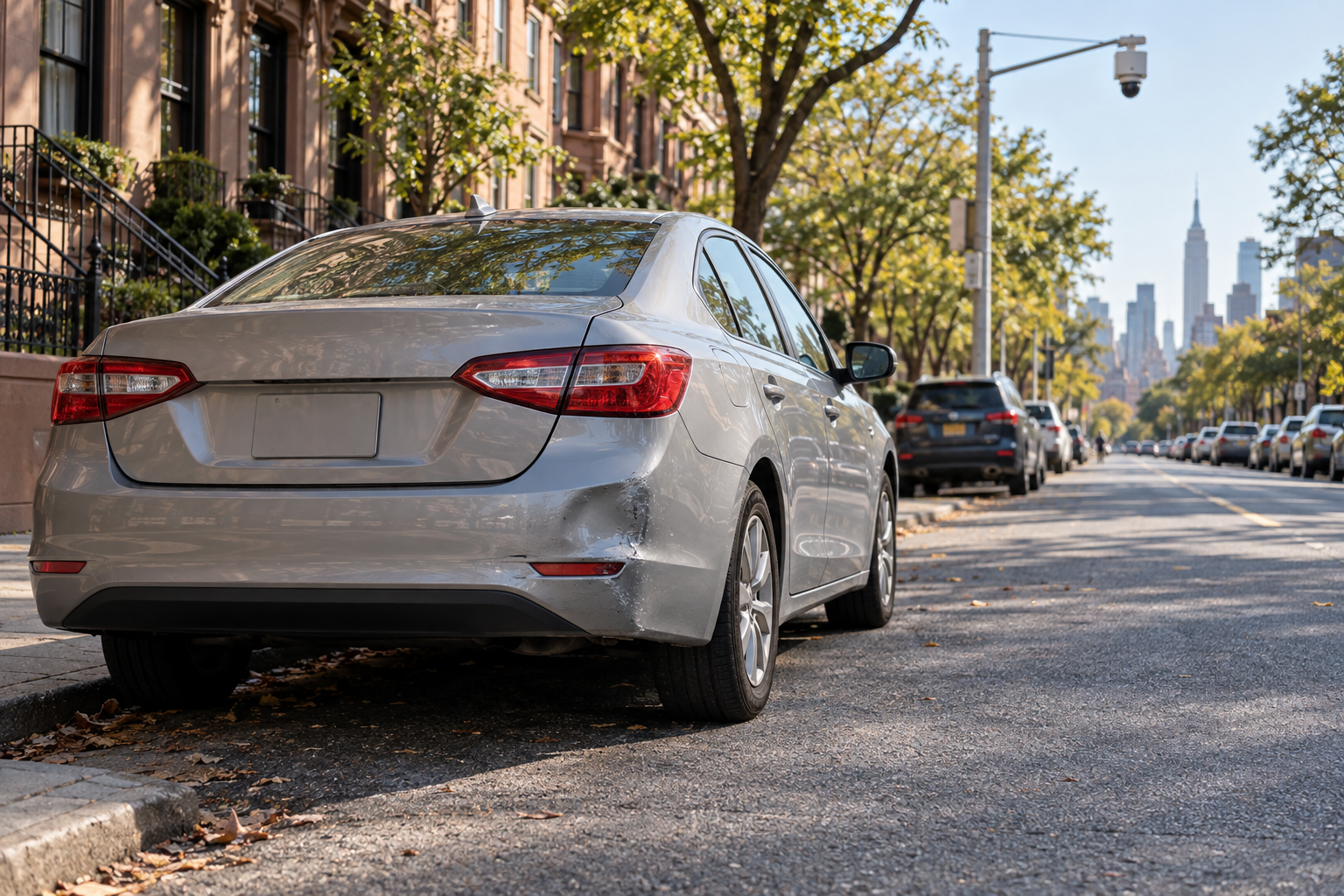
Photograph damage before repair when safely possible, including wider views and contact areas. Keep towing, storage, inspection, and repair documents. Record who had possession of the vehicle or device after the event so condition changes can be explained.
A damaged part may help show contact without proving the entire collision sequence. Avoid technical conclusions from a photograph alone. Qualified inspection may be appropriate when the damage or mechanics are genuinely disputed.
A person may need a vehicle for work, treatment, or family responsibilities. Discuss preservation and repair together rather than assuming indefinite storage is the only option. Inspection, photographs, or retained parts may help document evidence while recognizing practical needs and safety.
Medical care and transportation on Staten Island
Obtain appropriate evaluation and follow treating professionals' advice. Preserve appointment details, referrals, prescriptions, and receipts. Explain earlier conditions and changes after the collision accurately. This page cannot diagnose an injury or recommend treatment.
Travel to appointments can become difficult when an injured person cannot drive or use their usual connection. Record actual alternative transportation and costs. Distinguish an injury-related need from ordinary travel expense or an unrelated vehicle problem.
Daily limitations should be specific. Carrying shopping, climbing stairs, standing through a shift, or helping a relative can involve different demands. Record which tasks changed and for how long. If family provides help, identify the tasks and time honestly rather than inventing charges for unpaid assistance.
Work loss and settlement paperwork
Keep pay statements, schedules, invoices, and communications about missed or modified work. Distinguish reduced hours from postponed assignments and permanently lost work. Self-employed people should separate gross revenue from net earnings and identify ordinary expenses.
Medical restrictions, vehicle unavailability, and unrelated business changes can all affect work. Explain their roles rather than assigning every missed day to one cause without support. A clear financial record should allow another person to understand the comparison.
Before accepting a payment, review the release. An offer described as covering repairs may contain broader language. Ask which claims and parties it affects and whether other obligations need attention. Practical urgency is a reason to seek a clear explanation, not to guess about the document's effect.

Current injury and fault rules should be checked
Insurance Law 5102 contains current definitions relevant to motor-vehicle injury claims, including serious injury. An older online checklist may not reflect the law applicable to the actual claim.
The present CPLR 1411 distinguishes Article 51 personal-injury claims from the general comparative-fault framework. A driver's departure does not remove every question about causation or other road users' actions. Claim classification and effective dates deserve individual review.
Criminal enforcement and civil recovery are separate processes. A police investigation or prosecution may provide useful information without completing insurance notices or preserving every civil requirement. Do not wait for a criminal matter to end before seeking advice about the claim.
A hypothetical neighborhood departure
Imagine a car strikes a pedestrian near a driveway and leaves. A resident's camera shows the vehicle entering the block, a shop camera shows its departure, and a witness sees contact but cannot read the plate. The investigation should preserve each source for what it actually establishes.
The first recording may help identify the vehicle type and timing. The witness may explain movement and contact. The second recording may supply a distinguishing feature. None should be stretched to prove a detail it does not contain, and timing differences should be explained rather than concealed.
This is an illustration, not a reported case or predicted result. It shows why a partial account can still lead to concrete investigative work while coverage and notices are reviewed separately.
Organize dates and responsibilities
Many negligence actions use the three-year period in CPLR 214, but insurance procedures and statutory remedies can require earlier steps. The ordinary lawsuit period is not a reason to postpone reporting or evidence preservation.
Keep a calendar with each task, its source, and who is responsible. Retain important correspondence and attachments. A phone conversation should not be assumed to extend a written deadline or replace a required submission.
At a consultation, bring the chronology, reports, policies, images, witness details, medical records, and denial letters. Identify missing evidence and ask about preservation, contact disputes, identification efforts, representation scope, and written fee terms. The next steps should be clear enough to review and carry out.
Preserve who supplied each fact
When relatives help with records, identify whether they witnessed the event, arrived later, or learned about it from the injured person. Those roles are different and should remain clearly identified. A person can provide valuable practical assistance without becoming a firsthand witness to the collision.
Keep an index of photographs and recordings with their source and date received. Preserve accompanying messages when they explain timing or camera limitations. If a new record changes the understanding of the event, retain the earlier note and document the reason for the update. A transparent history can accommodate uncertainty more reliably than a folder in which earlier accounts disappear whenever a new detail emerges.
Related legal guides
These guides address issues that may overlap with hit and run matters in Staten Island. Review the guide that fits the facts of your situation.
- Staten Island Pedestrian Accident Lawyer — injuries involving people on foot.
- Staten Island Motorcycle Accident Lawyer — motorcycle crashes and rider injuries.
- Staten Island Personal Injury Lawyer — evidence, responsibility, and injury claims.
- Staten Island Wrongful Death Lawyer — claims following a fatal injury.
Official resources and further reading
Use these resources to review the underlying rules, locate records, or understand the relevant agency process. Check the requirements and current instructions for the particular document or process you need.
Keep the vehicle’s collection and storage history after a hit-and-run
After a Staten Island collision, a damaged vehicle may pass from the roadside to a tow yard and then to a repair facility. A Staten Island hit and run accident lawyer may need to distinguish damage visible at the scene from changes documented after those transfers. This does not imply anyone mishandled the car; it establishes which photographs show which stage.
Retain the tow receipt, intake photographs, storage notices, and release paperwork. Note whether loose pieces traveled inside the vehicle or were separately collected. If a part is missing from a later photograph, identify whether a technician removed it rather than assuming the departing driver carried it away. Ask who holds original images when only a small printed copy is supplied.
For a hit-and-run injury claim, a clear custody history can support later examination of disputed contact points. It also helps explain why a vehicle could not remain indefinitely in its roadside condition. Practical storage and transport decisions should be documented accurately, with qualified advice sought before potentially significant repairs change the evidence.
Staten Island hit-and-run FAQs
Can I wait for a neighbor to find the camera recording?
Follow up promptly and document the request. Retention varies, and a casual promise may not preserve a file. Ask counsel about a specific request and other evidence sources while the inquiry remains open.
What if the plate information is wrong?
Keep the original observation and the response showing the problem. Document reasonable follow-up rather than silently changing the account. A mistaken lead requires careful investigation, not an unsupported accusation against a similar vehicle.
Does being unable to drive prove lost income?
Not by itself. Preserve medical restrictions, job requirements, schedules, and actual work changes. Transportation difficulty and physical inability to perform the work may be different issues, even when both arise after the collision.
Where can I review related issues?
The New York hit-and-run guide covers broader claim questions. The Staten Island car accident page provides related motor-vehicle background. The Staten Island scooter and e-bike guide explains why an electric device may require a different classification analysis.