
Staten Island Car Accident Lawyer
Understanding a collision and the next steps
A Staten Island car accident lawyer reviews liability, insurance benefits, medical documentation, and legal deadlines after a crash. An investigation can involve a neighborhood intersection, a collision on Hylan Boulevard, an expressway merge, or a trip across one of the island's bridges. The right starting point is a specific account supported by preserved records.
Staten Island's geography makes location especially important. A crash described as “near the bridge” might have occurred on a local approach, an entrance ramp, or the bridge itself. A collision on Hylan Boulevard could be many miles from another incident on the same road. Exact street names, travel direction, and nearby cross streets help avoid confusion.
This guide explains practical local issues to discuss with a licensed New York attorney. Prioritize medical needs and time-sensitive notices, then organize the evidence. Do not assume that a familiar road or a seemingly minor impact means the insurance process will be simple.
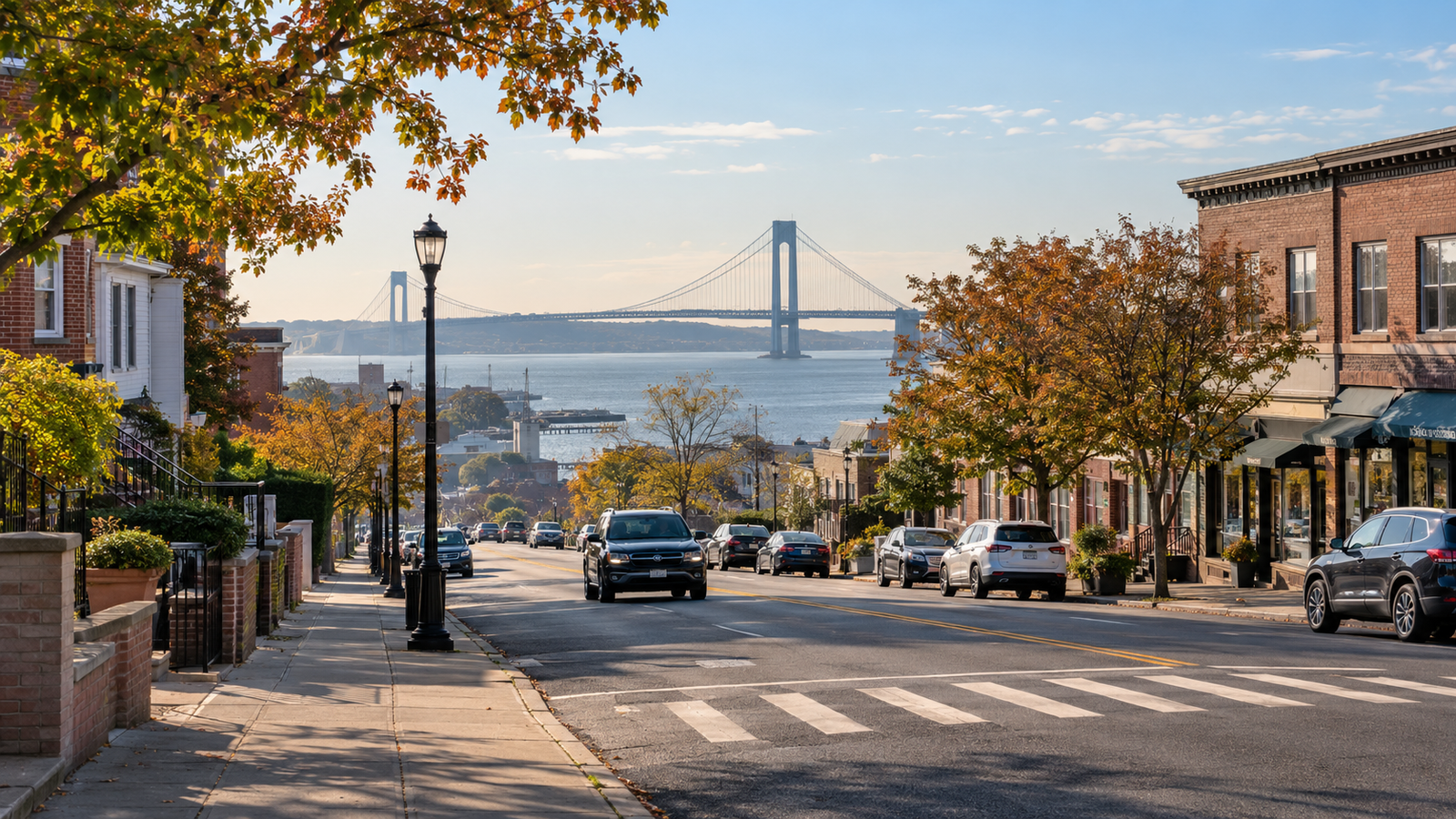
AI-generated Staten Island-inspired illustration; not an image of a specific accident scene.
Hylan Boulevard: documented safety concerns and local detail
NYC DOT's 2023 pedestrian safety action plan update identified Hylan Boulevard from Satterlee Street to Narrows Road South as a priority corridor in the 2019 plan. It reported fewer pedestrian deaths and serious injuries in the later comparison period, and described a 2022 redesign between Satterlee Street and Page Avenue. These historical findings are not a current intersection ranking.
For a Hylan Boulevard crash, identify the cross street, lane, and vehicle movement. Was a vehicle turning into a shopping area, leaving a driveway, approaching a signal, or changing lanes? Note whether the collision occurred near New Dorp, Great Kills, or farther south, but do not substitute the neighborhood name for the precise location.
Photographs should show the road configuration that existed on the collision date. A corridor redesign may change lane markings, crossings, or turning arrangements. An old map image can help locate a place, but it may not reliably establish the traffic controls or visibility conditions present when the crash occurred.
Victory Boulevard, Brook Street, and Fremont Street
DOT's 2022 project descriptions include pedestrian improvements at Victory Boulevard, Brook Street, and Fremont Street, involving a slip-lane closure and a new crossing. That is a documented example of local safety work, not proof of the cause of any later collision.
If your crash occurred nearby, preserve the approach direction and the crossing used. A witness may identify the area by a business, bus stop, or nearby landmark; ask for enough detail to connect that account to a particular corner. Different views of the same junction can produce descriptions that sound inconsistent until the positions are mapped.
St. George, Richmond Terrace, and ferry connections
Trips around St. George and the ferry terminal can involve passengers entering or leaving vehicles, taxis, buses, and pedestrians. Save a ride receipt or pickup record if it helps establish timing. Identify whether the collision happened on a public street, in a designated pickup area, or on another property.
If you were struck while getting into or out of a vehicle, record which door was involved and whether the vehicle had stopped. If a bus or delivery vehicle blocked your view, describe its position rather than assuming its operator was responsible. The investigation should connect a particular act or condition to the accident.
Staten Island Expressway, Route 440, and bridge approaches
For an expressway collision, record travel direction, the nearest exit, and whether the first impact occurred on the main roadway or a ramp. Preserve the sequence in a multi-vehicle crash: the first contact, any subsequent contact, and where your vehicle came to rest. Do not walk into traffic to obtain photographs.
For trips involving the Verrazzano-Narrows Bridge, Goethals Bridge, Bayonne Bridge, or Outerbridge Crossing, establish the actual crash location. A trip between New York and New Jersey can raise questions that cannot be answered from the destination alone. Keep the relevant policy and trip information and ask counsel which rules apply to the particular incident.
Forest Avenue and residential neighborhood streets
On Forest Avenue and local roads in Port Richmond, West Brighton, New Springville, or Tottenville, record driveway entrances, parked vehicles, and the specific intersection where relevant. A crash while leaving a parking lot may require different evidence from a collision at a signal-controlled crossing.
These locations provide useful local context without labeling every named road a current crash hotspot. A responsible safety comparison needs a defined dataset and period. For your own claim, the priority is evidence showing what happened at that place and time, not a general description of traffic elsewhere on the island.
What to do after a Staten Island auto accident
Seek emergency help when necessary, follow responders' instructions, and obtain appropriate medical evaluation. When safe, exchange identifying and insurance information. Obtain witness contact details and photograph damage as well as the wider scene. If photographs were taken after vehicles moved, keep that fact clear in your notes.
Retain towing, storage, and repair paperwork. Ask which charges are accumulating and what arrangements are required, without authorizing a release you do not understand. A vehicle damage claim and an injury claim may be handled separately. Keep copies of documents before giving originals to anyone else.
The MV-104 instructions describe the 10-day reporting requirement for qualifying New York crashes involving injury, death, or property damage above $1,000 to one person's property. Police involvement and insurer notification do not necessarily complete every obligation assigned to the motorist.
Write down a basic timeline while details are fresh. Include the location, direction of travel, first symptoms, treatment, and insurer contacts. Mark uncertain details as uncertain. A truthful account does not need to sound polished; it needs to separate what you observed from what you learned later.
Preserve evidence before vehicles and recordings change
Potential evidence can include dashcam recordings, nearby business cameras, witness accounts, and vehicle photographs. A visible camera may not store recordings or face the relevant area. Identify possible sources promptly so an attorney can assess preservation requests and lawful access. Do not assume footage will remain available while a claim is being evaluated.
Keep the original files and timestamps. Preserve video from before and after the impact, not only the moment of contact. If you annotate a photograph for explanation, retain a clean original. Avoid editing away a lane marking, vehicle position, or other detail that may later become important.
For delivery or fleet vehicles, note identifying markings, plates, and company information when safe. For rideshares, retain trip receipts and app details. The site's truck accident page and Uber and Lyft guide explain related investigation topics.
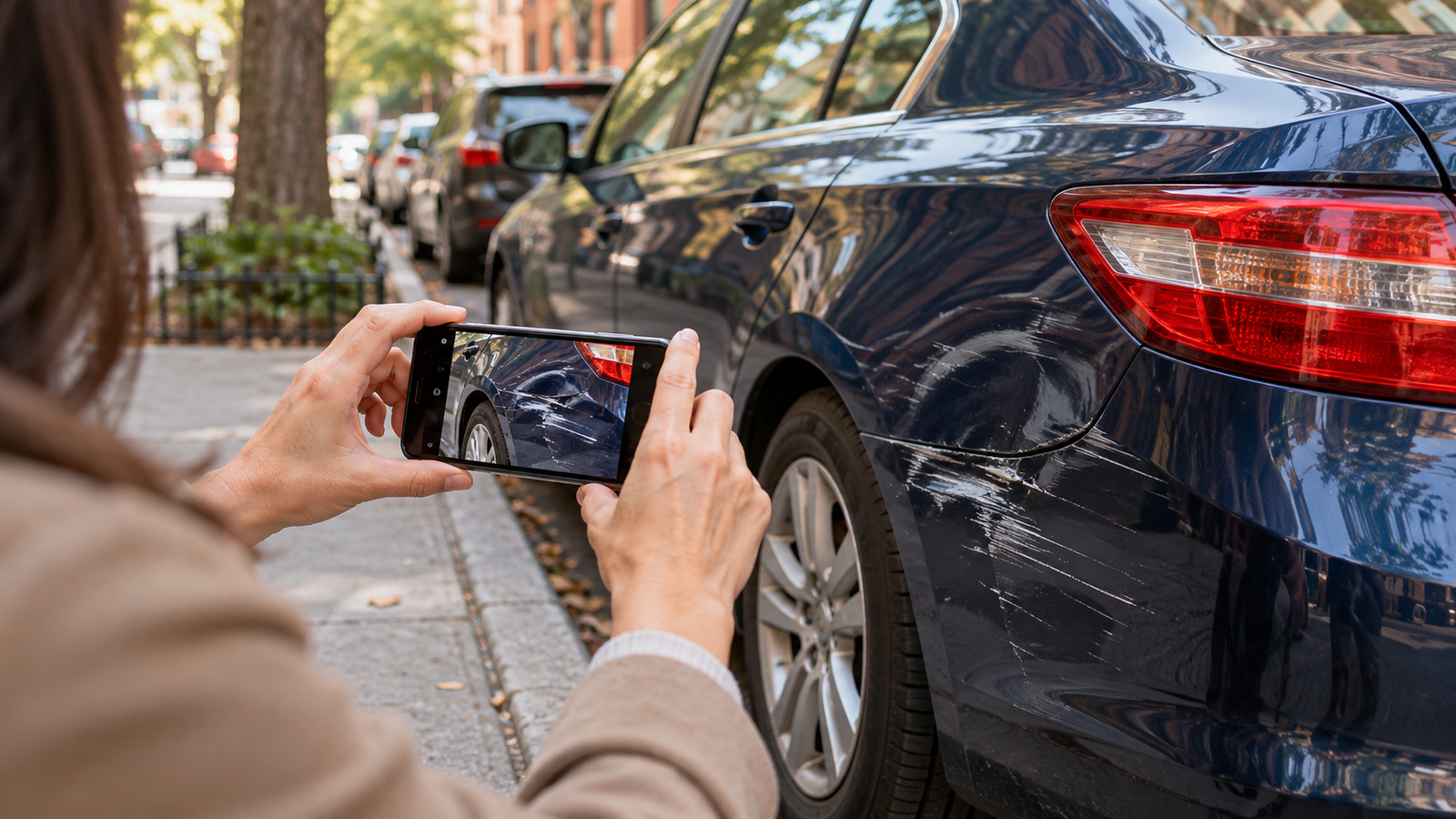
AI-generated evidence-preservation illustration; not an actual accident photograph.
Insurance benefits and an injury claim are different
New York no-fault generally covers up to $50,000 in basic eligible economic losses, subject to coverage rules. It does not pay for car repairs or pain and suffering. Review the DFS auto insurance guide for the coverage framework.
Written no-fault notice generally is due within 30 days, with a limited justified-delay exception. The DFS no-fault FAQs explain notice and insurer identification. Preserve proof of submission and review requests for additional information promptly.
Keep separate records for medical bills, wage documentation, vehicle damage, and liability correspondence. These may involve different adjusters and different coverage questions. A paid repair bill does not establish that an injury claim is resolved. Likewise, a medical provider submitting a bill does not necessarily mean every notice or document required from you has been supplied.
If several vehicles were involved, identify which insurer is handling each part of the claim. A passenger, pedestrian, vehicle owner, and rideshare customer can have different insurance questions. Do not assume the company that first calls you is responsible for every benefit. Save envelopes, emails, claim numbers, and the names of people you speak with.
Medical evidence and New York's injury threshold
For covered motor vehicle claims, Insurance Law § 5104 generally requires serious injury to recover non-economic damages. The categories are in § 5102. A lawyer should assess the applicable law and medical evidence.
Medical records should accurately describe symptoms, examination findings, recommended care, and changes in everyday function. Tell providers about earlier injuries and symptoms so they can assess causation and any aggravation. Neither a dramatic vehicle photograph nor a single diagnostic image answers every medical question. A consistent, truthful account is more useful than an exaggerated description.
If treatment is interrupted, record the practical reason and discuss it with the relevant provider or adviser. Transportation, coverage disputes, work obligations, and other barriers can affect attendance. Keep track of limitations at home and work without diagnosing yourself. Treatment decisions should serve your health; they should not be driven by an attempt to increase the appearance of a claim.

AI-generated illustration; no real client or medical records are shown.
Fault, compensation, and filing deadlines
The current CPLR § 1411 provides for reduced recovery based on claimant fault and an Article 51 injury recovery bar when claimant fault exceeds the combined fault of the defendant or defendants. Individual applicability requires legal review.
Potential losses can include unreimbursed medical expenses, lost earnings, future financial effects, property damage, and legally available non-economic damages. Policy limits, causation, proof, and applicable law affect the outcome. An online settlement calculator cannot reliably value a specific case. A large demand is not the same as a supported settlement assessment or the amount ultimately received.
Keep wage statements, employer correspondence, relevant tax records, and receipts. Self-employed people may need invoices and contracts showing actual lost income rather than only gross revenue. Ask how reimbursements, outstanding bills, legal fees, and case expenses could affect a proposed settlement. Understand the scope of any release before signing it, including which claims it ends.
Ordinary negligence injury actions generally have a three-year limit under CPLR § 214. Where applicable, General Municipal Law § 50-e generally requires notice within 90 days. Other limits and exceptions need prompt review.
Do not use the longest possible deadline as a reason to wait. Footage may be overwritten, witnesses can become difficult to reach, and insurers may require information long before a lawsuit would be filed. Bring the accident date, correspondence, and any government-vehicle involvement to a licensed lawyer's attention early. A deadline assessment should address all relevant notices and claims.
Questions for a Staten Island auto accident attorney
A consultation should identify immediate deadlines, missing evidence, and the insurers potentially involved. Bring the accident date, precise location, report number, photographs, and correspondence. Explain whether the trip crossed a state boundary or involved a public vehicle, commercial driver, or unidentified motorist.
Ask who will manage the matter, how updates are provided, and what the written fee agreement says about expenses. Verify the lawyer's credentials and identity. A promise about a particular settlement amount should not replace a careful explanation of proof, coverage, and the uncertainty that remains.
For broader topics, review the site's Staten Island personal injury information and car accident FAQs. A collision across the Verrazzano may also make the Brooklyn accident guide useful for local context.
Staten Island car accident questions
Does living in New Jersey change everything about my claim?
Residence is one fact, but the crash location, vehicle coverage, and circumstances also matter. Preserve your policy and trip records and obtain advice about applicable law. Do not assume that crossing a bridge automatically makes either state's rules control every issue.
What if the accident happened in a shopping center parking lot?
Record the entrance, aisle, direction of travel, and any signs or markings. Identify the property accurately and preserve potential camera locations. Responsibility depends on the evidence and relevant duties; being on private property does not automatically answer fault or insurance questions.
Can an intersection improvement prove another driver was negligent?
No. A safety project can provide background, but a claim still needs evidence connecting conduct to the collision. Photograph the actual layout and signals. Avoid treating a planned improvement as if it had already been completed when the crash occurred.
What if pain started after I left the scene?
Seek appropriate medical advice and describe the timing accurately. Do not assume delayed symptoms prove or disprove a particular injury. Keep a record of when symptoms began and what activities were affected, and let qualified clinicians evaluate your condition.
How do I organize several insurance claim numbers?
Create a short index listing each insurer, claim number, adjuster, and the issue being handled. Store correspondence by date and note submission deadlines. This helps prevent a repair update from being confused with an injury request or a no-fault coverage letter.
Take an organized next step
Whether a collision occurred on Hylan Boulevard, in St. George, or on an expressway approach, start with health needs and a precise record. Preserve evidence, track notices, and obtain individualized advice. Use the Tokov Law contact page for questions about this website.