
Queens Taxi Accident Lawyer
A taxi injury in Queens can involve an airport arrival, a neighborhood errand, a connecting train trip, or a ride across borough lines. The passenger may be unfamiliar with the road and may leave the scene with little more than a payment notification. A Queens taxi accident lawyer should turn those fragments into a focused investigation: identify the vehicle, establish the movement that caused injury, review insurance, and protect the relevant evidence.
This page explains practical issues for taxi passengers, pedestrians, cyclists, and other motorists. It covers yellow-cab trips and the importance of distinguishing a taxi from an app-dispatched or locally licensed vehicle. The name used in casual conversation does not necessarily describe the licensing category or policy that applies.

A local inspection facility and a carefully scoped statistic
TLC reported 101,177 safety and emissions inspections at its Woodside facility in fiscal 2025, across TLC-regulated sectors. These were inspections, not unique vehicles or Queens crashes. TLC fiscal 2025 report.
Woodside's connection to taxi regulation is useful context, but it does not establish that a particular vehicle was safe, defective, or responsible for an injury. An inspection record should be matched to the vehicle and date, and evaluated alongside maintenance, repairs, and the collision evidence. An unrelated inspection total cannot prove negligence.
Similarly, identifying Queens Boulevard, Northern Boulevard, or an airport access road does not establish a dangerous-location ranking. The useful task is to document the exact lane, entrance, crossing, or vehicle movement involved in the actual event.
Airport trips: distinguish the queue, terminal, and collision location
At JFK or LaGuardia, preserve the terminal, pickup level, approximate queue time, and any receipt or booking record. A passenger may remember leaving a terminal but not which road the driver used afterward. A companion's messages, flight arrival details, and payment information can help establish a timeline without proving every turn.
An airport trip can involve several organizations with different roles. A terminal operator, taxi dispatcher, vehicle owner, and driver are not interchangeable. Identify who controlled the conduct or condition at issue instead of assuming that the airport is responsible merely because the trip began there.
If the event occurred during loading, write down where the passenger and luggage were positioned. A taxi moving while someone reaches into the trunk presents different factual questions from a rear-end collision after departure. Describe the physical sequence accurately so the investigation does not begin with the wrong category of event.
For a trip that continued after a minor-looking impact, distinguish the impact location from the later drop-off. Ask counsel how to preserve route and trip information. A receipt may identify the ride while leaving the precise location unresolved.
Queens Boulevard, Northern Boulevard, and intersecting movements
Along major corridors in Sunnyside, Woodside, Elmhurst, and Jackson Heights, a taxi may stop, turn, or change lanes near a passenger destination. Record the direction of travel and the nearest cross street. When possible, identify whether the taxi was beside the curb, in a moving lane, or entering a separate roadway area.
A passenger's view through a side window may differ from a driver's forward view. Explain what you actually saw and what you learned afterward. A sound, sudden turn, or impact sequence can be useful evidence even when you cannot identify the signal color or another vehicle's approach.
For a pedestrian event, preserve the crossing path and the taxi's movement separately. Do not assume a statement such as “near the corner” establishes whether contact occurred within a crosswalk. Photographs and independent recordings may help resolve the geometry without requiring an injured person to return to live traffic.
A storefront camera can be valuable even if it misses the impact. It may show the taxi seconds beforehand or identify a witness. A targeted preservation request should describe the relevant view and time window rather than demand unrelated footage from an entire neighborhood.
Jamaica, Flushing, and rides connecting with transit
A taxi ride to Jamaica Station or a Flushing destination may be one leg of a longer journey. Keep the taxi record separate from rail, bus, or subway records. The combination may establish timing, but the final transit transaction should not be treated as the time of the taxi event without checking the sequence.
If the taxi stopped at an entrance different from the requested one, record both locations. Explain whether the passenger was still inside, stepping out, or walking away when injured. The point at which a ride ended can be disputed, and a generic statement that it happened “at the station” may omit an important fact.
A family member who arranged the ride may possess information that the passenger never received. Preserve the original booking confirmation and identify the account holder. Do not assume that the person who paid is the only person entitled to discuss their own injury with counsel.
Rockaway and cross-county trips need a complete route account
For rides involving the Rockaways, a bridge crossing, or a destination in Nassau County, separate the pickup jurisdiction, collision location, and drop-off. A Queens pickup does not establish that every legal issue arises in Queens. Conversely, crossing a county line does not by itself explain which insurance policy applies.
If the passenger was unfamiliar with the route, record recognizable landmarks without guessing at road names. A later map review should be labeled as a reconstruction. Preserve the original recollection so counsel can distinguish what was remembered from what was inferred afterward.
Weather, visibility, and road layout may be relevant, but avoid declaring them the cause without evidence. Tell the investigator what could be observed from your position. The driver's operation and other road users' movements still require an independent assessment.
Getting the right information after an injury
Seek appropriate medical attention and communicate the mechanism of injury to the treating professional. A passenger should describe the seat occupied, direction of movement, and any contact with the interior. A pedestrian should explain the walking path and point of contact if known. Avoid filling gaps with someone else's theory.
Preserve the vehicle plate, medallion or license information, driver details, police report reference, and insurer correspondence when available. If only a partial identifier is remembered, retain it as partial. Overstating certainty can misdirect an investigation toward the wrong vehicle or business.
Keep an unedited copy of each photograph and message. When adding labels or arrows for discussion, work on a duplicate. Record who took a photograph and whether the vehicles had already moved. A clear explanation of limitations is more useful than presenting an imperfect image as a complete reconstruction.
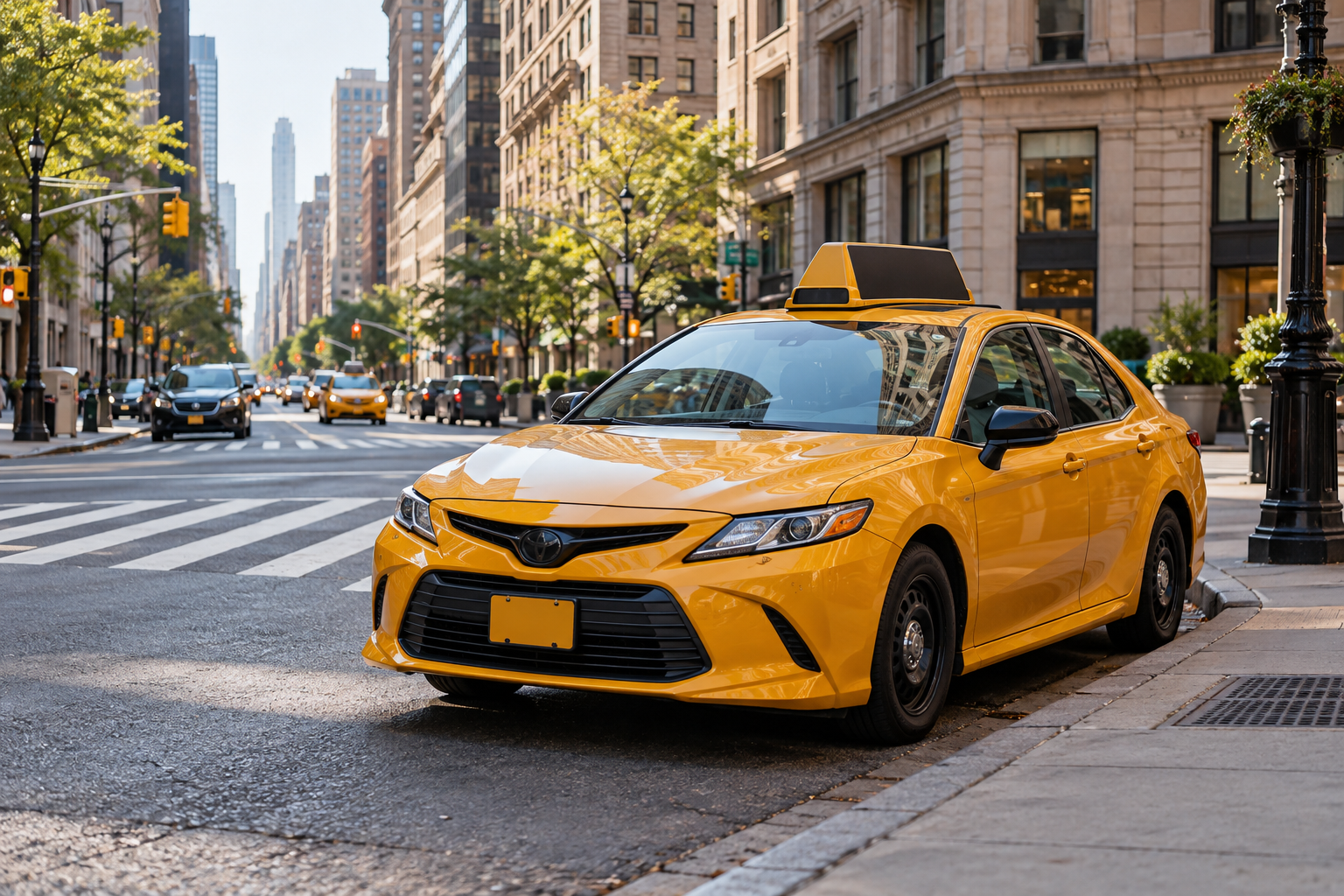
How a Queens taxi claim is investigated
The first responsibility question concerns the conduct that caused the event. That may involve the taxi driver, another driver, a door opening, or an unrelated condition. Ownership and business relationships must then be established using records rather than inferred from a brand or payment descriptor.
Ask an attorney to explain which evidence would distinguish the competing accounts. If one driver says the taxi changed lanes and another says it was stationary, footage of the approach may matter more than a photograph taken much later. An investigation should be directed by the disputed issue.
A passenger may have a claim even when the drivers disagree, but the disagreement does not establish a settlement value. Medical causation, coverage, available proof, and the applicable legal framework remain important. Counsel should explain those questions in terms of the actual facts.
Related guidance appears in the Queens car accident page and Queens pedestrian accident page. A person injured on foot should not assume the taxi passenger's insurance process is identical to their own.
Insurance categories and early notices
The New York DFS no-fault FAQ generally directs occupants to the occupied vehicle's insurer and pedestrians to the striking vehicle's insurer. Eligibility and exceptions need individual review.
Written no-fault notice is generally required within 30 days, subject to the documented reasonable-justification exception described by DFS. Starting a TLC complaint is not a substitute for examining insurance notices.
For a medallion taxi, consult the current 35 RCNY §58-13 insurance rule and actual policy. Older summaries may differ. Do not apply the same insurance assumption to every vehicle described as a cab.
Organize benefits correspondence separately from settlement communications. Record the claim number and the issue addressed in each letter. If several insurers are involved, ask counsel to clarify their roles so that a request about treatment is not confused with a proposal to resolve liability.
Current injury and fault rules
Certain non-economic motor-vehicle claims depend on the serious-injury requirements in Insurance Law §5104 and §5102. The current statutory text should guide the assessment.
Under current CPLR §1411, an Article 51 personal-injury claim may be barred when the claimant's fault exceeds the defendants' combined fault. Applicability and effective dates require legal review.
An insurer's early description of fault is a position to evaluate, not a substitute for evidence. Preserve information that may support or contradict it. A truthful account includes uncertainty and relevant prior conditions, even when those facts make the analysis more complicated.
Medical records should explain both the diagnosis and its functional consequences. Ask treating professionals questions about care and restrictions; let an independent attorney evaluate how that evidence relates to the law. Neither a dramatic vehicle photograph nor a billing total alone answers the statutory questions.
Employment and household records that explain the actual loss
Queens residents work in many settings, including healthcare, hospitality, construction, offices, transportation, and small businesses. Identify the specific duties affected rather than relying on a job title. A person able to answer emails may still be unable to lift stock, stand through a shift, or perform another essential task.
Preserve the schedule before the event and document actual changes afterward. For self-employment, retain contracts, invoices, canceled work, and business expenses needed to distinguish revenue from earnings. An estimate should be marked as an estimate until the underlying records support it.
Household consequences also need detail. Record who helped with shopping, caregiving, or transportation, when assistance was needed, and whether costs were incurred. Do not turn every inconvenience into a claimed expense without discussing legal availability and proof.
Keep a balanced recovery record, including improvements and tasks that remain possible. Accurate detail helps explain why assistance was necessary on some days and not others. It also avoids an unrealistic picture in which every activity is described as equally affected throughout recovery.

Documents to bring to an independent consultation
Bring a short chronology, available identifiers, medical information, and all letters requesting a response. Include any signed document even if it seemed routine. Counsel needs to know what has already been communicated, not just the documents that appear favorable.
Ask which unanswered question matters first: identifying the cab, preserving footage, resolving an insurance issue, or assessing a public entity's involvement. A useful consultation produces priorities and an explanation of uncertainty. It should not begin and end with a promised settlement figure.
Ordinary negligence claims generally have a three-year limitation under CPLR §214, while exceptions and earlier requirements can apply. Public-entity issues may involve General Municipal Law §50-e. Obtain a case-specific deadline review.
The New York taxi accident overview supplies statewide context, and the Queens personal injury guide discusses broader injury questions.
When several passengers have different records
A family or group may share a ride while each person has a different view and different medical needs. Keep individual accounts separate. One passenger may have seen a vehicle approach, another may remember the driver's words, and a third may have been looking down. Comparing accounts is useful; rewriting everyone's memory into one uniform story is not.
Identify who holds each original document. The person with the payment card may have the fare record, while someone else has photographs or a hospital discharge summary. Assemble a shared index if helpful, but do not circulate private medical information more broadly than necessary. Each injured person can decide what to provide to their own professional advisers.
When the group includes someone visiting from another country, preserve a reliable contact method and language preference. Explain travel dates and the location of continuing treatment. Translation needs should be addressed accurately rather than asking a companion to guess at unfamiliar medical or legal terminology.
If passengers have different interests or accounts, raise that with counsel early. Sharing a taxi does not require everyone to make the same claim or accept the same description of events. An attorney should explain any representation concerns before sensitive discussions proceed.
Finally, avoid using a group chat as the only archive. Messages can be lost when a device is replaced or an account changes. Save the relevant original files securely and identify who created them. A concise record index helps the investigation without requiring repeated requests to every member of the group.
Queens taxi accident FAQs
What if I cannot identify the airport taxi?
Provide the terminal, pickup time range, destination, payment method, and any companion's records. An attorney can evaluate which requests may identify the vehicle. Do not assume a missing receipt makes investigation impossible, or that a bank charge alone proves the entire event.
Is a trip arranged through an app always a rideshare claim?
No. An app can be used to arrange different services. Preserve the actual booking and vehicle details so counsel can identify the operation and policy. The interface used to request a ride does not settle every licensing or coverage question.
Can a witness who saw only the aftermath help?
Potentially. The person may identify the vehicle, describe immediate statements, or explain where people were positioned. Make clear that they did not see the impact. A useful limited observation should not be expanded into an eyewitness account of events they missed.
Should I accept a refund of the fare?
First understand what is being offered and whether any release accompanies it. A fare adjustment and a settlement of injury claims are different matters. Preserve the communication and ask an independent lawyer about language that could affect your rights.
Where can I report an error in this page?
The website contact page accepts content questions. For advice about an actual injury, consult a licensed attorney who can examine the records and relevant deadlines.