
Queens Product Liability Lawyer
A kitchen appliance injury can leave a household with several urgent problems at once: medical treatment, a damaged cooking area, and a product that someone wants to return immediately. Before the evidence is changed, a careful investigation should identify the model, how it was used, what happened, and which parts of the event remain uncertain. Safety and medical care come first throughout that process.
A Queens product liability lawyer can assess whether a defective design, manufacturing problem, inadequate warning, or other actionable conduct caused the injury. This guide concentrates on household appliances, shared use, instructions, and purchase records. It also explains why a recall, a broken part, or a frightening event is important evidence without automatically establishing a successful claim.

An appliance recall provides a concrete example
CPSC announced the May 1, 2025 recall of about 1,846,400 SharkNinja Foodi OP300 series pressure cookers in the United States over a burn hazard involving the pressure-cooking lid. This is a national product count, not a Queens injury count. Official CPSC pressure-cooker recall
The example illustrates the importance of model-specific research. A family may refer to every appliance of the same brand by a common nickname, while the relevant notice covers a defined series. The actual label and available serial information are more reliable than memory alone.
A recall remedy also has a defined scope. Read the current official notice for the affected item and follow its safety directions. An injury investigation should not turn a general description of a recall into instructions for operating or testing a potentially dangerous appliance.
Document what occurred before reconstructing why
Write an account of the sequence in ordinary language. Identify who was present, what the product was doing, what the user observed, and how the injury happened. Separate a sound, movement, or visible condition from an interpretation about a mechanical failure.
For a hypothetical pressure-related incident, the user may know that hot contents escaped but not which component failed or whether pressure remained inside. That uncertainty should stay visible until qualified inspection can address it. A confident but unsupported explanation can misdirect the review.
Include what happened immediately afterward. Emergency treatment, movement of the appliance, cleanup, and conversations with customer service can affect the evidence. Do not omit an action because you worry it was mistaken; the attorney needs an accurate history.
Ask witnesses to preserve their own recollections. A person who heard the event from another room should not be described as having seen the lid move. Distinguishing firsthand observations from later information helps experts evaluate the mechanism fairly.
Queens households may have several product users
In Flushing, Jackson Heights, Jamaica, Astoria, Bayside, or the Rockaways, an appliance may be used by several family members or housemates. These communities are geographic examples, not documented product-injury hotspots. The relevant question is who used and maintained the actual item.
Record the usual routine and any departure on the day of the event. Who assembled the product, selected settings, cleaned it, or replaced parts? Different people may know different portions of its history, and that history should not be reduced to one person's assumptions.
Keep original instructions in every language supplied. If a family member translated them, preserve the original and explain what was communicated. A language issue may be relevant to how a warning was understood, but it does not automatically determine legal liability.
If the item was borrowed, identify the owner and how it was transferred. The injured person may not have the box or purchase receipt, yet the owner may hold useful documents. Ask for those materials without changing or disposing of the product.
Identify the entire appliance configuration
Preserve information about the main unit, lid, removable components, accessories, and replacement parts. A replacement bought later may have a different source or model designation. The investigation may need to determine which combination was present during the event.
Keep photographs showing labels and the overall arrangement when this can be done safely. Do not reassemble a broken item to make the picture look complete. The post-incident condition can be important evidence in its own right.
Retain manuals, packaging, recipes or operating instructions actually followed, and relevant customer-support messages. These materials can help clarify the intended use and the user's understanding. They should be preserved even if the instructions appear unfavorable to an initial theory.
Tell counsel about earlier repairs, unusual behavior, missing components, or prior incidents. A product that had been used without difficulty can still warrant investigation, while a history of problems does not automatically establish the cause of the latest injury.
Product defects and user conduct require a factual review
New York product cases can involve manufacturing, design, or warning defects, with a required connection between the alleged defect and injury. New York appellate product-liability framework
The review should examine the actual use rather than assume that any deviation from an instruction ends the case or that ordinary use proves a defect. The relevant legal consequences depend on the product, the conduct, foreseeability, and causation.
A technical expert may need to compare the item's condition with its intended specifications or evaluate how a safety feature functioned. A warning issue may require different evidence, including the wording, placement, and relationship to the accident.
Ask the attorney which theory the available facts support and what remains to be tested. A case can begin with several possibilities and narrow after inspection. The goal is a supported explanation, not a list of every possible legal label.
Preserve safely without repeating the accident
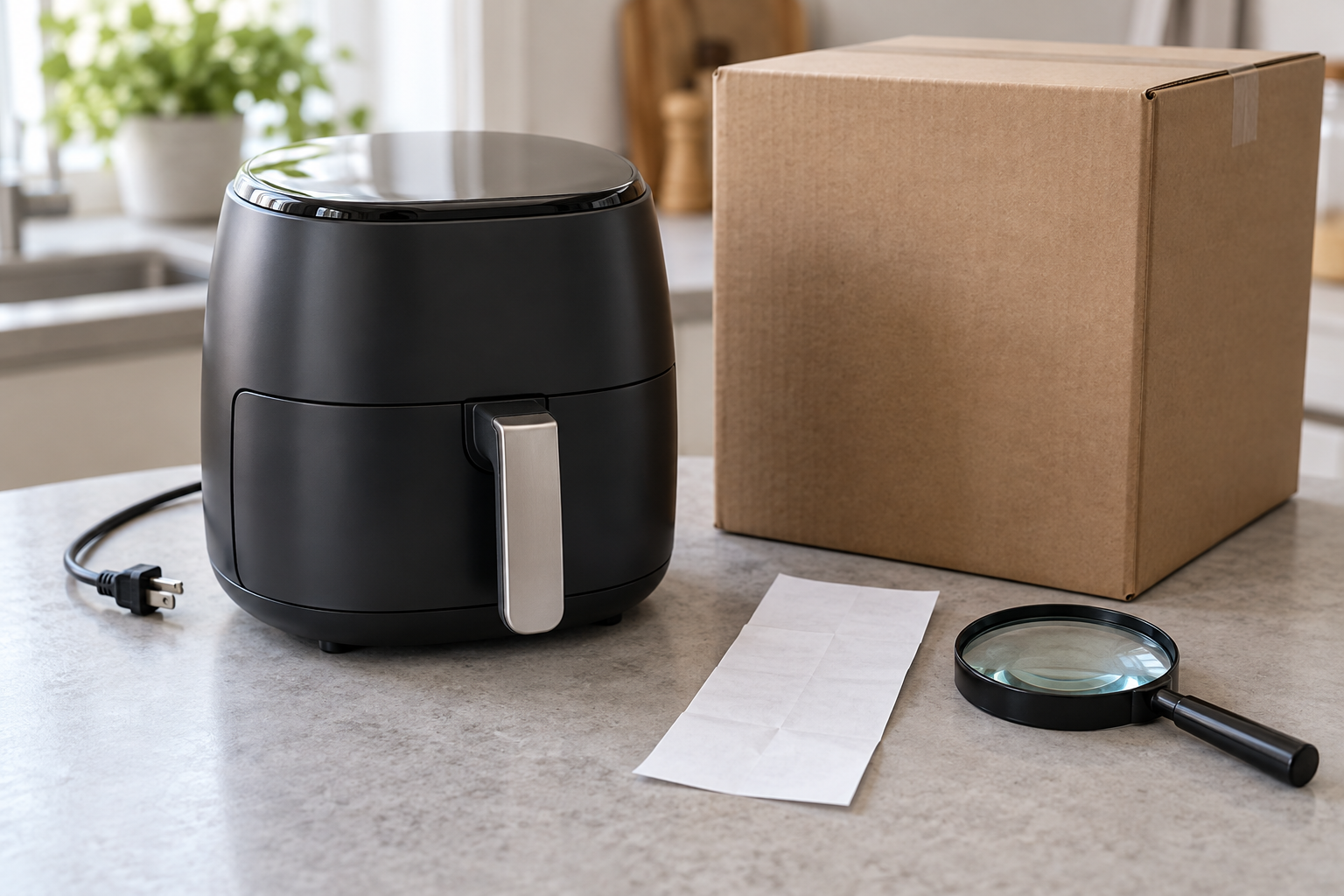
Do not operate an appliance again to demonstrate the problem. Recreating heat, pressure, electrical failure, or moving parts can cause another injury and change the evidence. A video of a second dangerous event is not a substitute for a properly planned inspection.
Obtain appropriate safety guidance about the item and surrounding area. If emergency responders or qualified professionals direct removal or isolation, follow those directions. Tell counsel where the product is and who can arrange safe access.
When the incident has ended and the area is safe, keep loose components together without cleaning, repairing, or altering them. If something has already been changed, record what happened and why. The investigation should account for the actual condition rather than pretend it remained untouched.
Food, liquids, or damaged materials may create separate hygiene or safety issues. Do not preserve them in a way that exposes people to harm. Ask counsel and appropriate professionals how any relevant evidence can be documented or retained safely.
Online orders and store purchases leave different trails
For an online purchase, save the order confirmation, seller information, listing, delivery record, and payment details. The name of the marketplace may differ from the company that sold the appliance. Screenshots should include dates and identifying information where available.
For a store purchase, retain the receipt, packaging, warranty registration, and any service agreement. If the receipt is missing, a payment record or loyalty-account history may help reconstruct the transaction. Explain what is available rather than assuming the inquiry is impossible.
A gift or secondhand purchase adds another step. Identify the original purchaser or prior owner and what they know about the item's age and condition. Do not guess a purchase date merely because a model was advertised during a particular year.
Counsel can investigate which manufacturers, distributors, sellers, or other participants may have a legally relevant role. The supply chain must be established from evidence; a brand name or storefront sign does not answer every question.
A repair request should preserve the history
Keep communications with repair technicians and customer support. Record the reported problem, proposed work, and parts replaced. A service visit may generate notes that help explain the item's condition before or after the injury.
If an inspection is proposed after a serious event, tell counsel before authorizing destructive testing or disposal, while continuing to follow immediate safety directions. The interested parties may need a coordinated process that records the condition and allows appropriate participation.
Do not ask a technician to write a conclusion they cannot support. A factual description of what the technician observed is valuable even if the cause remains uncertain. The difference between an observation and an opinion should remain clear.
If the appliance has already been repaired or replaced, preserve invoices, photographs, removed-part information, and correspondence. Explain the sequence promptly. The effect on a potential claim depends on what evidence remains and the circumstances of the changes.
Medical evidence and household consequences
Seek appropriate treatment for the injury and give clinicians an accurate description of the event. Preserve records of initial care, follow-up, and any ongoing limitations. A technical investigation of the product and a medical assessment of the injury answer different questions.
Document the effect on work and household activities with concrete details. A hand injury may affect cooking, childcare, or a job requiring fine movement in different ways. Describe the actual tasks and restrictions rather than relying only on a diagnostic label.
Keep receipts for relevant expenses and identify what each payment covered. Treatment, temporary assistance, and damaged property should be organized separately. Counsel can assess which losses are supported and how they relate to the alleged product failure.
Future harm should be evaluated using the patient's prognosis. No reliable case value follows automatically from a burn description, appliance price, or advertised settlement in an unrelated matter. Responsibility, causation, and the individual evidence remain central.
Timing depends on more than the recall date
New York's general personal-injury period is three years, subject to applicable exceptions and the particular claim. CPLR 214
A limited discovery framework applies to certain latent substance-exposure injuries, not every later-discovered product problem. CPLR 214-c
Warranty claims have separate rules, including a generally four-year period and particular accrual provisions. UCC 2-725
Provide the purchase, delivery, injury, repair, and recall-notice dates. Do not assume that contacting customer service, reporting a problem, or receiving a replacement pauses the legal clock. Ask counsel to evaluate timing while the evidence is being gathered, rather than waiting for the company to finish its process.

Preserve the instruction the user actually encountered
A current website manual may differ from the booklet supplied with the product. Save the original version if available, along with any updates received before the event. The timing of a warning can matter to the investigation.
If the product arrived without instructions, document how it was packaged and what information accompanied it. Avoid assuming what should have been included until the model and transaction are verified. A family recollection can be supplemented by photographs, emails, or the purchaser's records.
Record whether the user saw a warning on the product, in packaging, or through an app. Do not answer a question about actual knowledge by quoting a manual discovered only after the injury. The review should distinguish information available at the time from information learned later.
This is particularly important when several people share an appliance. One person's experience with an older model may not show what another user knew about the item involved. Individual accounts help the attorney evaluate how the instructions relate to the event.
Plan the first legal consultation around unanswered questions
Bring a concise account, the available identifiers, purchase records, medical information, and the product's current location. State clearly whether the item has been returned, altered, or discarded. Those facts can determine what investigation is still possible.
List the questions that matter most: whether the product failed, whether a warning was adequate, who supplied a component, or whether a repair affected the event. A focused list helps counsel identify the appropriate technical work.
Ask about inspection costs, expert review, communication, and the scope of any proposed representation. An initial intake does not necessarily mean an attorney has agreed to handle the matter. Confirm responsibilities, particularly for urgent preservation and timing issues.
A responsible consultation should address limitations as well as strengths. Product liability can require significant factual development, and the evidence may support a different explanation from the one first suspected. That possibility should be part of the review from the beginning.
Keep an inventory of the materials supplied at the first meeting. If additional photographs or records arrive later, identify what is new so the reviewer can incorporate them without confusing different versions.
Queens product liability FAQs
Does a product need to be recalled before I can seek advice?
No. Recall status is relevant information, not a prerequisite to investigating an injury. Counsel can evaluate the product, use, alleged defect, and causation from the available evidence. A recall alone also does not establish every element of a claim.
What if several people used the appliance?
Identify each person's role and knowledge. Separate the usual routine from what occurred during the incident. A complete use and maintenance history helps experts evaluate possible causes without assuming all users had the same information.
Should I keep the replacement lid or accessory?
Preserve information about every component present during the event and tell counsel which parts have since changed. Do not operate or reassemble an unsafe appliance for evidence collection. Safe handling and a coordinated inspection are more appropriate.
Can I rely on an online video showing a similar failure?
It may suggest a question, but it does not prove what happened to your item. Model, condition, use, and mechanism can differ. Preserve the link if relevant and focus the investigation on the actual product and incident.
Does accepting a refund end an injury claim?
The effect depends on the documents and circumstances. Keep all forms and communications and obtain advice before signing a release you do not understand. A general webpage cannot determine the scope of a particular agreement.
What if the appliance was a gift?
Ask the purchaser for available order and warranty information and preserve the product identifiers. The injured user's relationship to the purchase is one fact for counsel to review; a missing personal receipt does not automatically settle the legal question.
Related Queens resources
The New York product liability overview explains the broader framework. See the Queens personal injury guide for general injury context and the Queens medical malpractice page when a separate concern involves clinical treatment or use of medical equipment.