
Manhattan Hit and Run Lawyer
A driver leaving a Manhattan collision can create an urgent search for a plate, camera recording, or witness while an injured person is trying to obtain care. A Manhattan hit-and-run lawyer should connect that investigation with a separate review of insurance and notice requirements. The search for the driver should not become a reason to overlook deadlines that may run before identification is complete.
The right approach depends on whether the injured person was walking, cycling, driving, or riding as a passenger; whether contact occurred; and what policies may apply. This guide explains useful evidence around Midtown, Lower Manhattan, Harlem, and residential neighborhoods, together with the legal questions that deserve prompt individual advice.
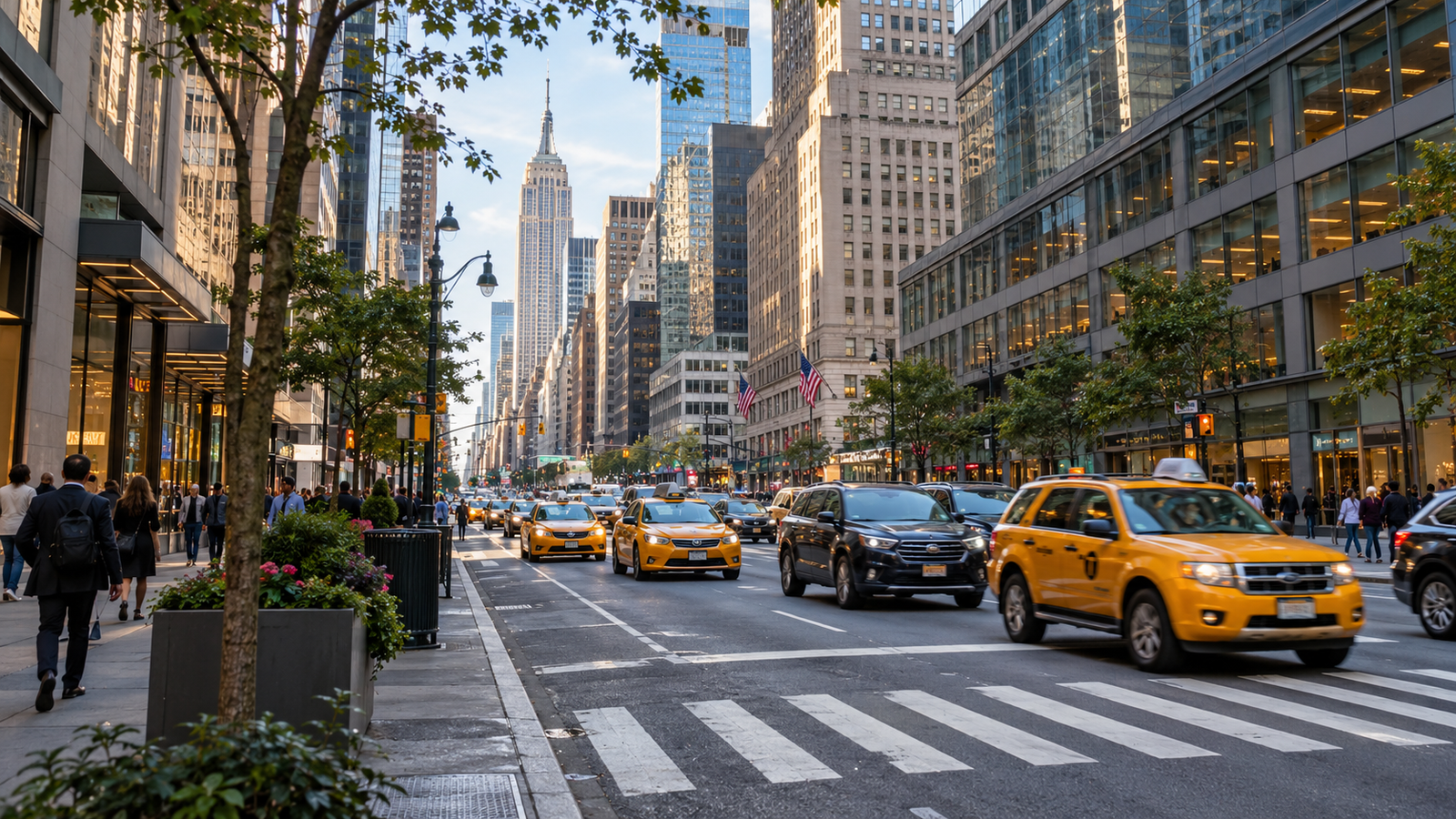
Citywide safety context should not be mistaken for local hit-and-run data
NYC's fiscal 2025 management report recorded 110 pedestrian fatalities citywide, compared with 119 in fiscal 2024. NYC fiscal 2025 management report.
Those figures cover all pedestrian traffic deaths in the stated fiscal periods. They are not Manhattan hit-and-run counts. Their relevance is the seriousness of pedestrian injury, not proof that a particular street or driver caused a collision.
For an actual event, the exact avenue, cross street, direction, and movements are more valuable than an unsupported label such as “dangerous intersection.” A location should help identify witnesses and records rather than substitute for evidence of what occurred.
Midtown: follow the approach and departure separately
Near Penn Station, the Theater District, or office buildings, a collision may occur amid pickups, deliveries, and changing curb activity. Identify the precise curb and travel direction. A general description such as “outside the station” may encompass several camera owners and very different views.
A building recording may show the vehicle approaching without showing contact. Another camera farther along the avenue may show a plate or distinctive damage as the vehicle leaves. Preserve the time window for both stages rather than asking only for the instant of impact.
Do not assume that a hotel, office, or store will retain video because someone mentioned the collision to an employee. Identify the appropriate contact and make a specific preservation request through suitable channels. Record the response and retain the original file if one is supplied.
Lower Manhattan: short blocks and turning sequences
Around Canal Street, Chambers Street, and the Financial District, the departure route may involve a quick turn onto another block. A witness who could not read the plate may still identify the direction, vehicle type, or a distinctive feature. Keep that observation separate from information learned later.
If the injured person was crossing, record the corner, signal observed, and point reached before contact. A driver's departure does not itself establish the signal phase or eliminate questions about the collision. Those facts still need evidence.
An original recording should be preserved even when it appears inconclusive. Later review may identify useful timing or a second camera location. Do not replace it with an edited clip that removes the approach, and do not treat automated image enhancement as proof of detail absent from the source.
Harlem and residential blocks: local witnesses may know the sequence
An event near a storefront, building entrance, or bus stop may have witnesses who saw only part of the incident. Ask where each person was and what drew their attention. Someone who heard impact and then saw a vehicle leave did not necessarily observe how contact began.
A doorman, worker, or resident may help identify a recording or recurring commercial vehicle without knowing who drove it that day. Preserve the lead while avoiding an unsupported accusation. A business logo can identify a possible record holder, but ownership, operation, and work activity require verification.
If a vehicle is later seen in the area, provide information through appropriate investigative channels. Do not confront its occupant or publicly label someone responsible based on resemblance alone. Similar vehicles and incomplete observations can produce mistaken identification.
Preserve the first account without forcing certainty
Write a brief chronology while memory is fresh, identifying what happened before contact, what was felt or seen, and what happened afterward. Mark uncertain details clearly. An incomplete but honest account is more useful than a polished narrative that fills gaps with assumptions.
Record partial plates exactly as remembered, including uncertainty about characters. Keep the original note. If later footage changes the understanding, preserve both the initial observation and the reason for the revision rather than silently rewriting history.
Witnesses should give their own accounts. Avoid circulating a single suggested description that may influence everyone else's memory. A lawyer or investigator can compare independent accounts and explain differences without asking people to agree on facts they did not observe.
Reporting and statutory notice are separate tasks
For a potential MVAIC unidentified-vehicle claim, Insurance Law 5208 includes prompt reporting and affidavit requirements, including a 24-hour report and a 90-day affidavit period. The statute recognizes reporting that was not reasonably possible earlier or occurred as soon as reasonably possible; other claim categories differ.
Preserve when and how the incident was reported. If injury or another circumstance delayed reporting, document the facts and obtain advice promptly. Do not assume either that delay automatically destroys every remedy or that an exception applies without proof.
An insurance call, building incident report, or message to a ride platform does not necessarily satisfy a statutory requirement. Keep a separate list of police reporting, insurer notices, and legal filings. A useful consultation should identify which steps have been completed and which remain open.
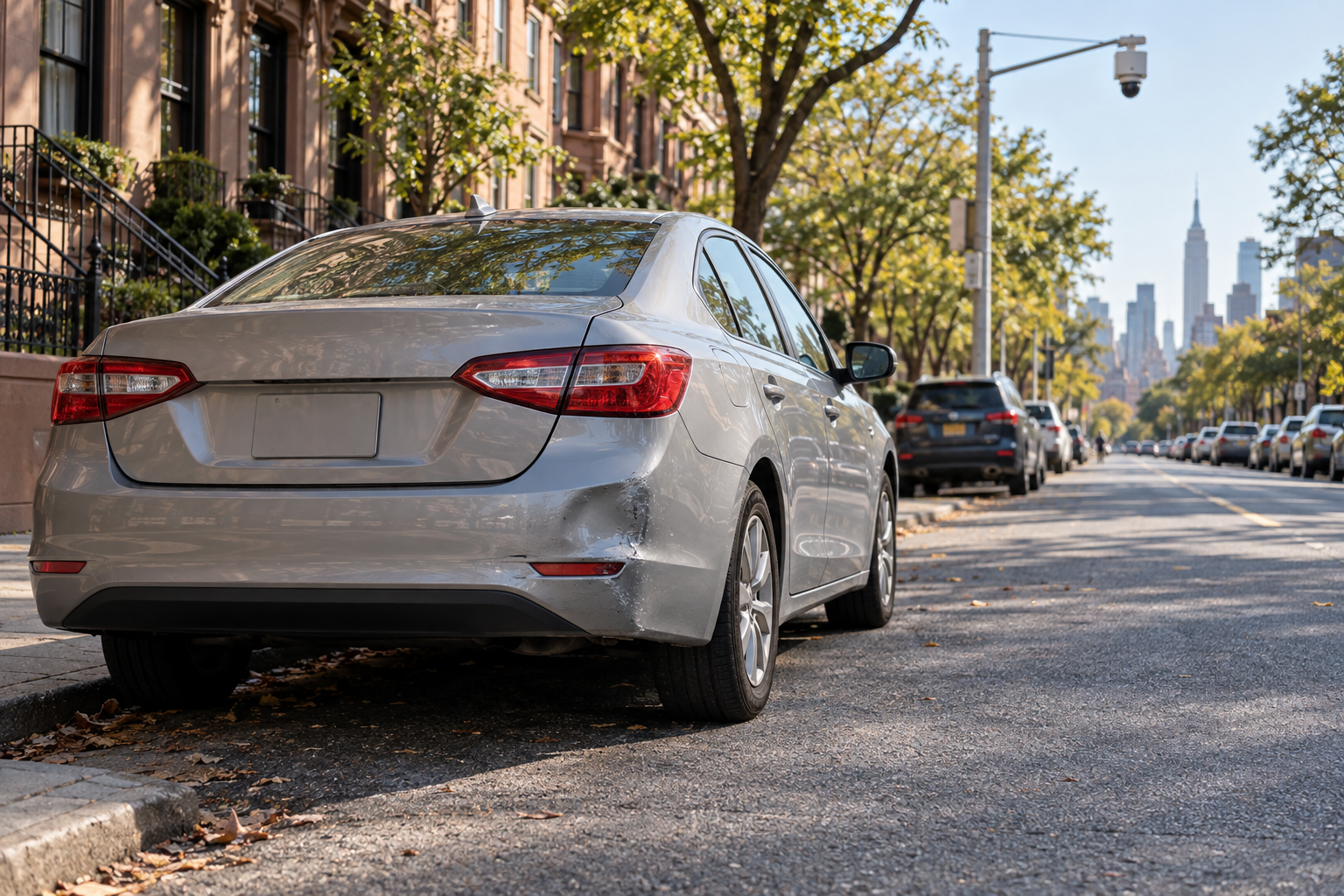
Insurance should be investigated before assuming there is none
An injured pedestrian may not own a car but may still need a review of applicable policies and household circumstances. A passenger may have information about the vehicle occupied even when the striking vehicle is unknown. A driver may have policy obligations and coverages requiring prompt attention.
MVAIC provides a statutory avenue for eligible claimants; it is not automatic compensation for every driver who leaves. MVAIC official information. Counsel should assess qualification, available insurance, accident circumstances, and compliance with requirements.
Retain declarations, policy correspondence, claim numbers, and denial letters. A denial should be read for the coverage and facts it addresses. It may not resolve every possible source, and several potential sources do not necessarily pay the same loss more than once.
Contact evidence can become a decisive issue
Insurance Law 5217 contains a physical-contact requirement for the unidentified-vehicle claims it governs. The actual sequence matters, including whether another vehicle or object transmitted an impact. Courts have considered indirect-contact scenarios, but not every evasive maneuver qualifies. Official appellate discussion.
Preserve damage photographs, clothing or equipment information, witnesses, and original recordings where appropriate. If the departing car struck another vehicle first, identify that vehicle and its occupants. The intermediate driver may hold evidence even if they were not the person who left.
Describe a noncontact event truthfully. A person who fell while avoiding a vehicle should not claim direct impact to fit an assumed rule. A person injured through an actual chain of collisions should not omit that chain merely because the first vehicle never touched them directly. Legal analysis follows the facts.
A plate is a lead, not always a complete identification
A plate may be partial, misread, or associated with information that cannot be confirmed. Preserve follow-up efforts and responses. Reasonable attempts to identify the vehicle, owner, and operator can become important when seeking a statutory remedy.
The official decision in Matter of Benalcazar v MVAIC discusses documented efforts after reported vehicle information failed to establish an owner and operator. It illustrates an investigative issue, not a promise that a different claimant will qualify.
An owner and driver are not necessarily the same person. A commercial name on a vehicle may involve additional parties. The investigation should connect each proposed party to reliable facts rather than treat the first name in a report as a final answer.
Police and criminal proceedings do not replace a civil plan
The decision to investigate or prosecute an offense belongs to the relevant authorities. A civil claim involves separate questions of coverage, responsibility, injury, and procedure. A driver may be identified without every civil issue being resolved.
Cooperate appropriately and keep report details, but do not wait for a criminal case to finish before reviewing insurance notices or other deadlines. A pending investigation does not automatically extend every civil requirement.
If a report contains a factual error, retain supporting evidence and ask about the proper correction process. Distinguish an officer's personal observations from statements supplied by others. A report can be important without conclusively proving every fact recorded in it.
Medical documentation should begin with accurate care
Seek appropriate evaluation and follow the advice of treating professionals. Preserve referrals, appointment information, prescriptions, and receipts. Explain prior conditions and changes after the collision. This page cannot diagnose an injury or recommend a personal treatment plan.
An injured Manhattan pedestrian may find walking, climbing subway stairs, carrying groceries, or standing at work difficult. Record the actual task and limitation rather than only a broad statement that daily life changed. If help or alternative transportation becomes necessary, document what was used and why.
If care is interrupted, preserve the reason. Transportation, scheduling, insurance disputes, and personal choices can produce different records. An accurate explanation helps avoid assumptions about a gap in treatment.
Different losses require different proof
Medical expenses, income loss, property damage, and noneconomic injury claims may follow different rules. A payment addressing one category does not decide all others. Keep separate folders with a short explanation linking each expense or loss to the event.
The current definitions in Insurance Law 5102 matter to motor-vehicle claims, including injury-threshold issues. Older summaries should not replace current text and individual assessment.
For earnings, preserve pay statements, schedules, invoices, and employer communications. Distinguish missed work from postponed work, and gross revenue from net earnings. A repair bill for damaged equipment should not be used as a substitute for proof that an injury prevented someone from working.

A practical example: the vehicle that leaves after a second impact
Consider a hypothetical avenue collision in which one vehicle strikes a second car, pushing it into a pedestrian, and then leaves. The pedestrian may know little about the first vehicle. The second driver may have a camera, damage evidence, and a clearer view of the departure.
The investigation should preserve each stage: the initial collision, the movement of the second car, the pedestrian's position, and the departure. A short clip showing only the pedestrian's injury may omit the event needed to understand responsibility and coverage.
This example is not a reported case or a prediction. It shows why witnesses and vehicles that remain at the scene can be important even when the primary identification problem concerns someone else. A complete sequence is more useful than a label applied before the evidence is reviewed.
Current fault law and a calendar of separate requirements
CPLR 1411 now distinguishes Article 51 personal-injury claims from the general comparative-fault framework. The fact that a driver left does not eliminate the need to review the collision and applicable law. Effective dates and claim classification require attention.
Many negligence actions fall under the three-year period in CPLR 214, but an insurance or statutory proceeding may involve other requirements. Do not use the ordinary lawsuit period as a reason to delay early notices or evidence preservation.
Keep a calendar showing each task, its source, and who is responsible. A letter requesting information, a reporting requirement, and a court filing are different items. Ask counsel to clarify the route being pursued before assuming one deadline controls the entire matter.
Prepare for a useful attorney consultation
Bring the first chronology, reports, recordings, photographs, witness information, policy documents, and insurer correspondence. Identify evidence believed to exist but not yet obtained. A missing store recording or unknown policy can become a concrete follow-up task.
Ask how the investigation will distinguish vehicle ownership from driver identity, whether contact is disputed, and which notices require immediate action. Discuss representation scope and written fee terms. A useful review should explain next steps and uncertainty without promising a recovery based simply on the driver's departure.
Related background appears in the New York hit-and-run guide and Manhattan car accident page. An event involving an electric device may also require the classification review discussed in the Manhattan scooter and e-bike guide.
Preserve the distinction between assistance and firsthand knowledge
Family members often help an injured person collect papers, speak with building staff, or arrange transportation. Keep a note of who performed each task and who supplied each fact. A relative who arrived later can describe the condition they observed, but should not speak as though they witnessed the collision.
The same distinction matters when several people share a phone or account. Identify who took a photograph, sent a message, or received a call. Original records can become confusing when forwarded repeatedly without their source information. A simple folder and communication log can preserve that context.
When a witness request is made, focus on the time, place, and information sought. Avoid publishing unnecessary medical details. Someone with useful footage needs to know the relevant event, not the injured person's entire treatment history. Counsel can help coordinate a focused request and preserve responses in a form that can later be evaluated.
Manhattan hit-and-run FAQs
Can building footage identify the driver automatically?
A recording may show a vehicle or plate without showing the driver clearly. Preserve the original and its source, then corroborate identification. Avoid treating an enhanced or incomplete image as proof of details that cannot reliably be seen.
What if I was hospitalized and could not report promptly?
Preserve the medical and reporting timeline and obtain advice immediately. Statutory exceptions may require proof of why earlier reporting was not reasonably possible. Do not assume the delay either automatically ends the matter or requires no explanation.
Should I post a suspected driver's name online?
An investigative lead can be mistaken. Provide relevant information through appropriate channels and preserve supporting material. A witness request can seek recordings or vehicle details without publicly accusing a person whose involvement has not been established.
Does the driver leaving guarantee compensation?
No. Identification, applicable coverage, statutory eligibility, causation, injury, and procedure still matter. A careful legal review should explain the evidence and available paths without equating wrongful departure with an automatic payment.