
Staten Island Pedestrian Accident Lawyer
A pedestrian injury on Staten Island may happen during a walk to the ferry, a bus connection, a shopping trip, or movement across a residential driveway. Those settings can produce different evidence and different questions about responsibility. The first task is to identify the precise route and vehicle movement while the injured person receives appropriate care.
A Staten Island pedestrian accident lawyer should explain how the event, insurance, medical proof, and deadlines fit together. This guide provides practical preparation for an independent consultation. It addresses motor-vehicle collisions involving people on foot and distinguishes them from other events, such as a sidewalk fall or a collision involving only a bicycle, that may require a different analysis.
Historical pedestrian data for Staten Island
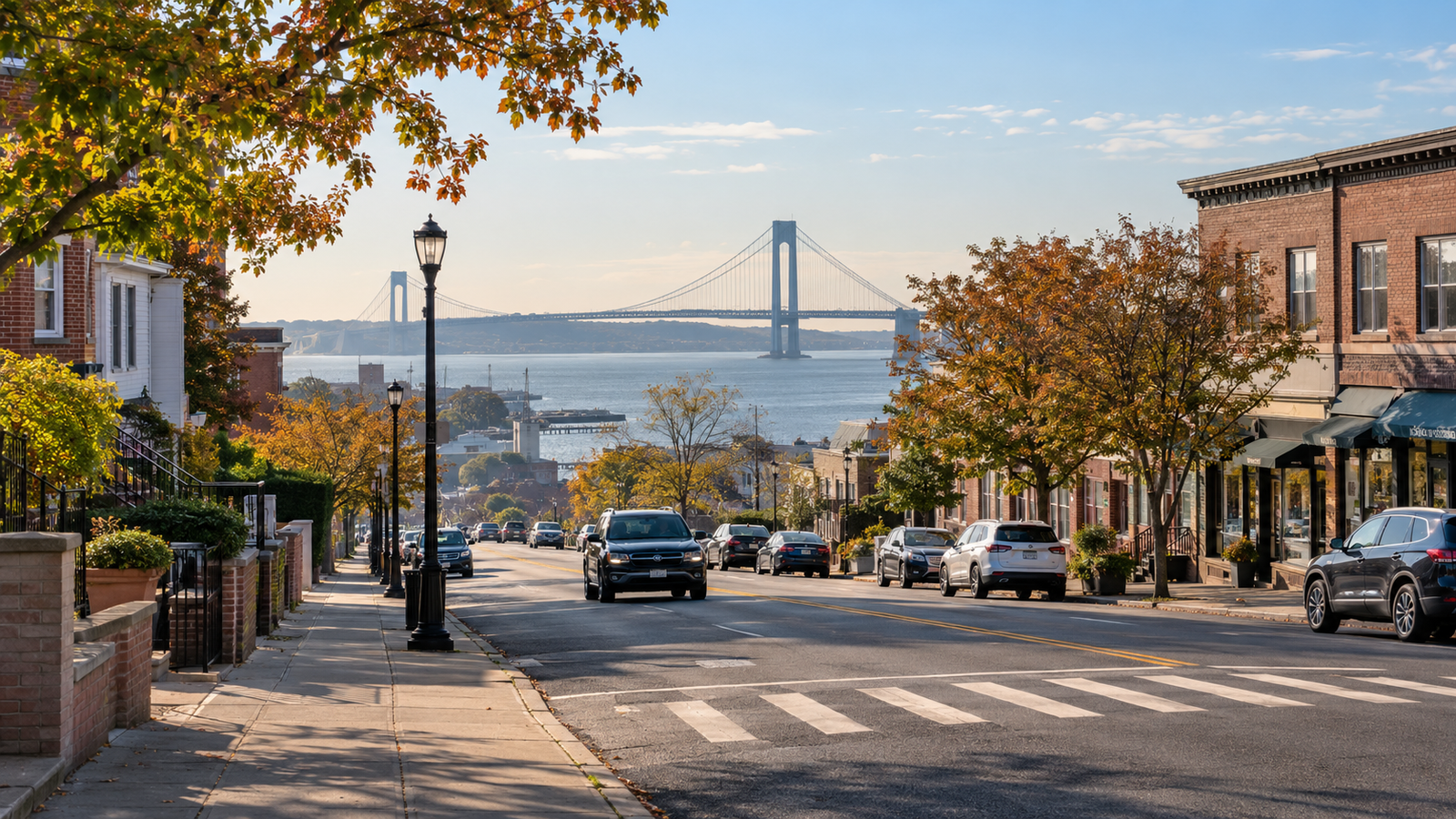
NYC DOT's 2023 borough plan records 24 Staten Island pedestrian fatalities during 2017–2021. This is a historical five-year figure, not a current annual count or a statistic for one road. DOT pedestrian safety plan.
A defined statistic can provide context without proving individual fault. It does not show what a driver saw, which signal controlled a crossing, or whether a particular condition contributed to an injury. Those issues require evidence tied to the actual event.
The local references below help readers describe where and how an injury occurred. They should not be read as an unsupported ranking of dangerous streets. A specific intersection, driveway, or entrance is more useful to an investigation than a general claim about an entire corridor.
St. George and the walk beyond the terminal
A pedestrian leaving the St. George ferry terminal may walk toward a bus, taxi, workplace, or neighborhood destination. Preserve the terminal exit and the path followed afterward. A ferry arrival time can narrow the chronology, but it is not necessarily the time of a collision several minutes later.
Identify whether contact occurred at a crossing, driveway, pickup area, or another location. A broad statement that the event happened “at the ferry” may point to several different scenes. The actual location determines which cameras, witnesses, and records may be relevant.
A terminal employee or transportation worker may have seen only part of the sequence. Record that person's role and viewpoint without assuming they controlled the vehicle or witnessed the impact. Someone can provide useful identification evidence without being a defendant or a complete eyewitness.
If the event involved a taxi pickup or drop-off, distinguish the passenger's exit from the subsequent walking route. The Staten Island taxi accident guide explains related identification and insurance questions.
Hylan Boulevard: preserve the crossing's exact geometry
For an event along Hylan Boulevard, record the nearest cross street, direction of walking, and point where the pedestrian entered the roadway. If the crossing occurred in stages or included a pause, preserve that sequence. The phrase “crossing Hylan” may omit the detail needed to understand the vehicle's path.
Describe the vehicle's movement only as observed. A turning car, a vehicle traveling straight, and one leaving a driveway present different factual questions. A pedestrian may have noticed the vehicle only shortly before contact, and that limit should remain clear.
Photographs can help illustrate the crossing, but later images may not show temporary obstructions or the same parked vehicles. Identify when each image was taken and whether it depicts the incident scene or a later visit. Counsel can then assess its proper use.
A map drawn from memory can orient a consultation. It should not be presented as a measured reconstruction unless that work was actually performed. Distances and sight lines may require additional records or qualified analysis.
North Shore commercial streets and driveway movements
In Stapleton, Port Richmond, Mariners Harbor, and other North Shore settings, a pedestrian may pass commercial entrances or loading areas. Record whether the vehicle was entering, exiting, reversing, or moving along the street. The activity of the surrounding businesses does not establish the cause of the event.
If a driveway or property condition is alleged to have contributed, identify it separately from the driver's operation. A business is not automatically liable because a vehicle was visiting its premises. Counsel should evaluate the relevant duty and causal connection for each proposed claim.
A shop camera may show the vehicle's approach while missing the impact. That limited view can still help establish identity or movement if its purpose is explained accurately. Do not assume that a visible camera necessarily recorded or retained useful footage.
When an obstruction is relevant, describe what it blocked from the witness's viewpoint. A photograph showing an object nearby does not alone establish that it prevented the driver or pedestrian from seeing the other.
New Dorp, Great Kills, and residential routes
A walk in New Dorp, Great Kills, Tottenville, or another residential area may involve a driveway, school destination, bus stop, or shopping connection. Preserve the actual route rather than only the neighborhood name. Familiarity with the area does not eliminate the need to identify the particular entrance or crossing.
For a backing vehicle, record the starting position and the pedestrian's movement if known. If a warning was heard, describe it; if none was noticed, say that rather than claiming no warning system existed. Technical equipment questions may require records or inspection.
A companion walking ahead or behind may have a different view from the injured person. Keep each account independent. The investigation should use those differences to identify missing information rather than force the witnesses into one uniform narrative.
If a child, older person, or person using a mobility aid is involved, describe the actual circumstances without making assumptions about fault based on age or disability. Baseline abilities and assistance should be documented accurately.
Bus connections and the difference between nearby and involved
A pedestrian may be injured while approaching or leaving a bus stop without being struck by the bus itself. Preserve which vehicle actually made contact and how the bus, if relevant, affected the sequence. A nearby vehicle should not become a proposed defendant merely because it appears in the background.
If the bus was involved, record the route, vehicle identifiers, direction, and operator information where safely available. Public and private operations can raise different procedural questions. Counsel should verify the entity rather than rely on a passenger's general description of the service.
Transportation records may help establish timing, but they rarely explain the entire collision. Keep them with the walking account, witness information, and other evidence. Each source should be evaluated for the specific fact it supports.
Right-of-way questions require the actual controls
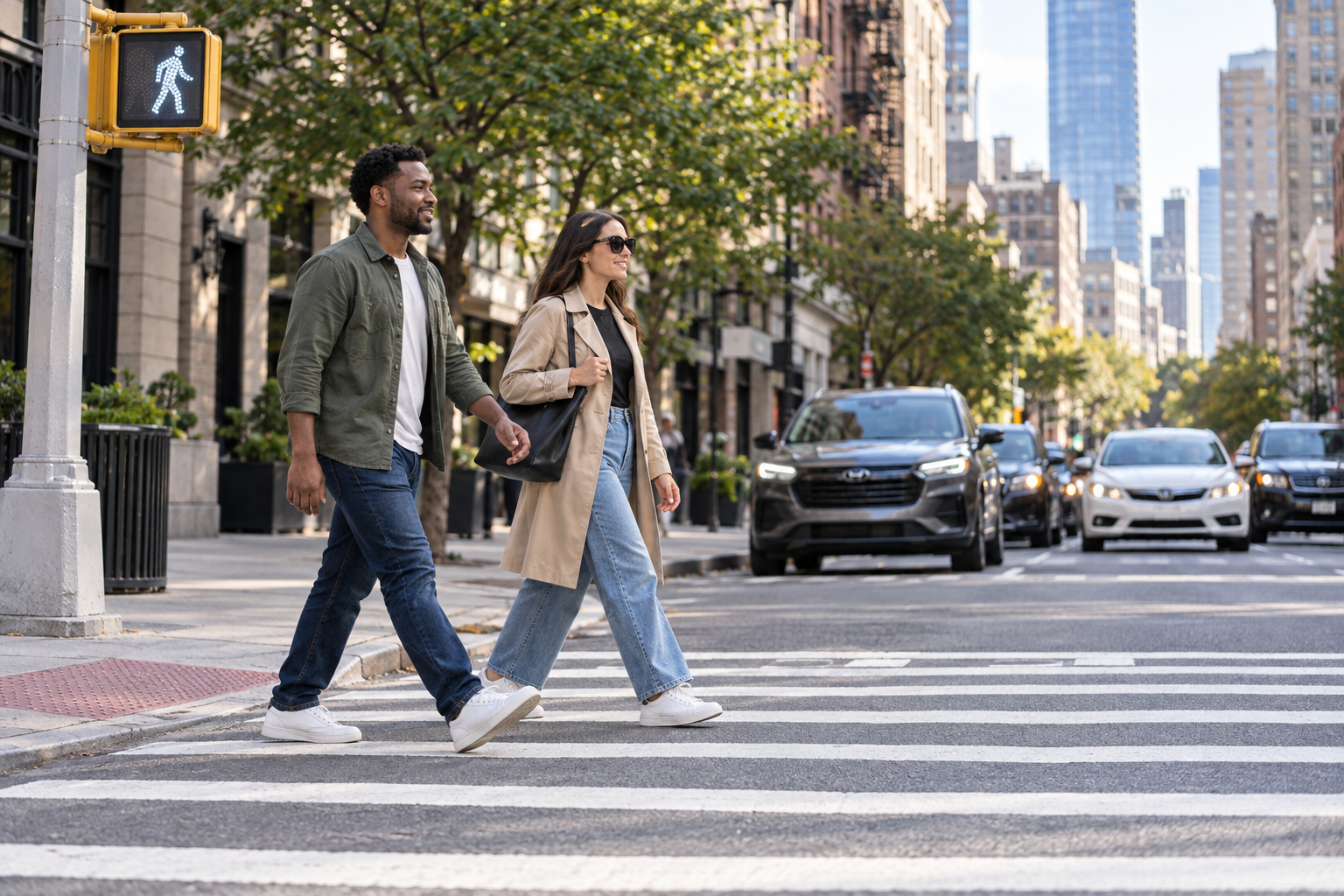
Vehicle and Traffic Law §1151 addresses crosswalk yielding where signals are absent or inoperative and limits sudden entry when yielding is impracticable. The applicable rule depends on the crossing's circumstances.
Drivers' due-care obligation appears in Vehicle and Traffic Law §1146. Neither a pedestrian's presence nor a driver's assertion of priority should replace a factual assessment of the event.
For a signal dispute, identify which signal each witness saw and at what moment. A later photograph of the layout does not prove the phase during impact. An attorney may need video or records to assess timing and operation.
A witness who did not see the signal may still describe an approach, turn, or immediate statement. Preserve that useful observation with its limits. A reliable partial account is preferable to a confident statement about something the person did not observe.
Medical history and the physical sequence
Seek appropriate care and explain the contact, fall, or movement as remembered. Distinguish firsthand observations from information provided by another person after the event. Clinicians need a dependable physical history rather than an unsupported legal conclusion.
Include relevant previous conditions and treatment. The medical assessment may need to compare prior function with new symptoms or restrictions. Concealing the baseline can hinder both care and an accurate evaluation of causation.
Keep treatment instructions and communications about activity limits. If scheduling or transportation affects follow-up, record the actual reason. Do not create treatment solely for a claim or disregard professional advice because the investigation is unresolved.
Preserve a useful set of original evidence
Retain police report information, vehicle identifiers, witness contacts, and original images. Record partial numbers as partial. An uncertain description can be investigated, while an inaccurate claim of certainty can send requests toward the wrong vehicle.
Keep complete recordings and identify their source. If someone supplies a short excerpt, ask whether the full version exists. Work from a copy when adding labels for discussion so the original remains available for review.
Photograph relevant damaged items and discuss preservation before repair or disposal when practical. Clothing or mobility equipment may contribute to an issue without proving the entire mechanism. Their significance should be assessed rather than inferred solely from appearance.
A focused evidence index can list what each item shows, who created it, and where the original is held. That organization helps a lawyer identify the next useful request instead of repeatedly searching an unstructured collection.
Insurance and current New York claim rules
The DFS no-fault FAQ generally directs pedestrians to the striking vehicle's insurer. Written notice is generally due within 30 days, with a reasonable-justification exception; eligibility and unusual cases need review.
Certain non-economic claims depend on the current serious-injury provisions in Insurance Law §5102 and §5104. Medical evidence should be assessed against the applicable text.
Current CPLR §1411 can bar an Article 51 personal-injury claim where claimant fault exceeds defendants' combined fault. Counsel should examine statutory applicability and effective dates.
Benefits and liability claims should remain distinguishable in the file. Record each adjuster's role and preserve complete letters. A payment or denial addressing one expense does not necessarily resolve every other question about the injury.
An unidentified vehicle calls for prompt review
Do not chase a driver who leaves. Preserve the last direction seen, approximate time, markings, and any partial plate information. Those details may support identification through other records even when no one has a complete description.
Tell counsel what was reported and when. Potential insurance or other avenues can have particular eligibility and procedural requirements. Missing identity should prompt a careful inquiry without a guarantee that any specific program will pay.
A later sighting of a similar vehicle should be treated as a lead until the connection is established. Timing, route, and additional identifiers may matter. A responsible investigation tests the evidence rather than turning similarity into certainty.
Documenting mobility, work, and family support
An injury may change the ability to walk to transit, drive, climb stairs, carry supplies, or help another household member. Record the specific task and the medical or practical reason for the change. General statements about hardship may omit the details needed to understand it.
For work, preserve schedules, earnings records, and communications about absences or modifications. A return to some duties does not necessarily mean complete recovery, but the actual arrangement should be described accurately. Self-employed workers should separate revenue from earnings after expenses.
Transportation receipts should identify the trip's purpose. Treatment travel, replacement commuting, and unrelated journeys present different questions. Counsel can assess recoverability once the underlying facts are clear.
Keep an account of household help and actual costs, including improvement over time. The record should explain who assisted, with what, and for how long. Avoid assigning speculative amounts before discussing the applicable damages rules.

Public responsibilities and time-sensitive procedures
A public vehicle, signal, or roadway-condition allegation may require identifying a governmental entity. The responding agency, road owner, and maintenance authority are not necessarily the same. Counsel should verify the relevant role rather than infer it from a report heading.
Public-entity claims may require earlier notice under General Municipal Law §50-e. Ordinary negligence actions generally have a three-year period under CPLR §214, with exceptions and other requirements.
A request for a safer crossing, police report, or ongoing negotiation should not be assumed to protect every claim. Obtain a specific deadline review for the actual facts. If a child or someone unable to manage the process is involved, ask about authority and procedure promptly rather than assuming automatic extensions.
Preparing for an independent consultation
Bring a concise chronology, available identifiers, medical information, and correspondence requiring a response. Identify the most important uncertainty: the vehicle, crossing sequence, insurance issue, or medical connection. This helps make the discussion focused.
Ask about immediate preservation, unresolved evidence, communication, and written fee terms. A useful attorney explains how the investigation will proceed and what cannot yet be concluded. A predicted settlement figure without records is not a substitute for that explanation.
Related reading includes the Staten Island car accident page, Staten Island personal injury guide, and New York pedestrian overview.
Keep later changes to the scene identifiable
A repaired entrance, repainted marking, or changed obstruction may make a later visit look different from the day of injury. Preserve the date of each photograph and describe the difference without assuming why the change occurred. A later improvement should not automatically be treated as an admission of earlier negligence.
If someone offers an older photograph of the location, ask when and from where it was taken. It may establish a general arrangement while revealing nothing about temporary activity during the event. Its usefulness depends on the question being investigated.
This distinction helps counsel compare evidence fairly. A file can contain both incident-day images and later illustrations, provided their roles are clear. Accurate labels prevent a useful photograph from being overstated and make it easier to identify the remaining factual gap.
Staten Island pedestrian accident FAQs
Does a ferry arrival time prove when the collision happened?
It can help establish a window, but the pedestrian may have walked or waited afterward. Preserve the sequence and other timestamps. A reliable chronology distinguishes the transportation event from the later injury rather than treating them as simultaneous.
What if I was struck while crossing a driveway?
Describe the vehicle's movement and your walking path precisely. The driver-operation and property-condition questions may differ. Counsel can assess the relevant duties without assuming that the property owner is automatically responsible.
Can a relative help obtain records?
A relative can assist with organization subject to the injured person's wishes and required authorizations. Keep their observations separate from the pedestrian's account. Practical help does not automatically answer every legal-authority question.
Where can I request an editorial correction?
Use the contact page for website questions. A licensed attorney should independently review personal claims and the deadlines associated with the actual event.