
Brooklyn Hit and Run Lawyer
A Brooklyn hit-and-run injury can begin with a turning vehicle, a curbside collision, a pedestrian crossing, or a chain of impacts. When a driver leaves, identifying the vehicle is important, but it is only one part of the legal work. A Brooklyn hit-and-run lawyer should also review available insurance, statutory eligibility, reporting requirements, and the evidence needed to explain the injury.
This guide focuses on practical investigation around Downtown Brooklyn, Atlantic Avenue, Williamsburg, Greenpoint, Sunset Park, Bay Ridge, and other neighborhoods. It explains what to preserve and what questions to ask without promising that every unidentified-driver event leads to compensation. The actual vehicles, contact sequence, policies, and claimant's circumstances control the analysis.

Safety context must remain correctly labeled
New York City's fiscal 2025 management report listed 276 traffic fatalities for fiscal 2024, followed by 211 for fiscal 2025. NYC management report.
These figures cover all traffic deaths citywide in the stated fiscal periods. They are not Brooklyn hit-and-run totals. The comparison supplies broad safety context without establishing which streets are most dangerous or how a particular collision occurred.
A useful local investigation relies on the exact block, direction, vehicle movement, and available records. Mentioning a major corridor can help locate evidence, but should not become a substitute for proof of a specific driver's conduct or an unsupported ranking of neighborhoods.
Downtown Brooklyn and Atlantic Terminal: map the departure
Near Atlantic Terminal or a busy building entrance, witnesses may describe a vehicle leaving toward a landmark rather than naming a street. Clarify the actual direction and next turn. A simple map can help preserve the observation without turning an uncertain memory into a precise claim.
Cameras may capture separate parts of the route. A building entrance recording might show the approach, while a storefront farther away records the departing plate. Identify potential sources for both stages and preserve a reasonable time window around the event.
If the injured person moved to safety before assistance arrived, distinguish the collision location from the later reporting location. A report address can reflect where responders found the person. Explain that difference using reliable information rather than treating it as an inconsistency that must be hidden.
Williamsburg and Greenpoint: commercial records can identify a lead
A van or truck leaving a loading entrance may display a business name, fleet number, or distinctive equipment. Record those details safely. A logo can point to a potential source of records without establishing ownership, employment, or responsibility by itself.
A nearby worker may recognize the type of delivery or recurring vehicle but not know who drove it that day. Preserve the lead with its limits. A legal investigation should verify the vehicle and operator rather than publicly accuse the first business associated with the location.
If the collision involved a delivery rider, preserve relevant assignment information and device details. The rider's work records may help establish timing, while the departing vehicle's records may answer different questions. Keep those evidence sources separate so one does not become a substitute for the other.
Flatbush Avenue and neighborhood intersections: establish the initial movement
A turning vehicle, crossing pedestrian, or cyclist may have different views of signals and obstructions. Record the lane, corner, direction, and signal actually observed. A driver leaving afterward does not automatically prove the signal phase or resolve every question about the initial contact.
A bus, parked vehicle, or construction barrier may have affected visibility. Photograph the scene safely and note temporary conditions that later images may not show. A clear photograph taken days later can explain geometry without reproducing the original sight lines.
Witnesses should describe what they saw from their own positions. Someone who heard impact and watched the vehicle depart can provide useful information, but should not be described as having witnessed the approach. Accurate limits make testimony more useful, not less.
Sunset Park and Bay Ridge: storefronts and residential cameras
A neighborhood collision may leave fewer obvious institutional records, but nearby businesses and homes can still hold footage. Identify the likely camera direction and time window. Ask through appropriate channels and respect private property and account access.
Do not assume that a business saved video because an employee heard about the accident. Record preservation requests and follow-up responses. Retention practices vary, and a specific request may be needed before a routine overwrite occurs.
A recording that does not show impact may still establish a vehicle's route or distinguishing feature. Preserve the original even when it seems incomplete. Avoid replacing it with a cropped or enhanced version that conceals the limits of the source.
Immediate reporting and a reliable first account
Obtain emergency assistance and appropriate care. Do not chase the departing vehicle. Record identifying details only when safe, and mark uncertainty about plates, colors, or vehicle type. A plausible guess can create a false lead if later treated as a direct observation.
For potential MVAIC unidentified-vehicle claims, Insurance Law 5208 includes a 24-hour reporting requirement and 90-day affidavit period, with provisions addressing reporting that was not reasonably possible earlier. Different claim categories have different requirements.
Keep report numbers, dates, and agency information. If reporting was delayed, preserve why and when it became possible. Obtain advice promptly rather than assuming either automatic disqualification or an automatic exception. A call to an insurer or app should not be assumed to satisfy every statutory reporting obligation.
An unidentified driver does not end the coverage inquiry
Review policies associated with the occupied vehicle and any other potentially applicable coverage. A pedestrian or cyclist who does not own a car may still need a careful review of insurance and household circumstances. The absence of the other driver's insurance card is not a complete coverage analysis.
MVAIC provides a statutory remedy for eligible claimants. Qualification, available insurance, accident circumstances, and procedural compliance matter. It is not automatic payment whenever a driver cannot immediately be found.
Retain coverage letters in full, including the date received. A denial may concern one policy or provision while other issues remain unresolved. Several possible policies also do not guarantee duplicate recovery for the same expense. Counsel should explain which route is being considered and why.
Direct contact, chain collisions, and evasive movements
Insurance Law 5217 contains a physical-contact requirement for the unidentified-vehicle claims it governs. Indirect contact can require close legal analysis, and courts have addressed particular transmitted-impact situations. Official appellate discussion.
Preserve the whole sequence when one vehicle strikes another before the claimant is injured. The vehicle that remained may have damage, occupants, or a recording linking the events. A photograph showing only the final contact can omit the initial impact that matters to the analysis.
If no contact occurred, describe that truthfully. A fall during an evasive maneuver should not be converted into direct impact to match an assumed insurance rule. Conversely, an actual indirect collision should be explained rather than dismissed merely because the departing vehicle never touched the claimant directly.
Damage and repairs can preserve or obscure useful information
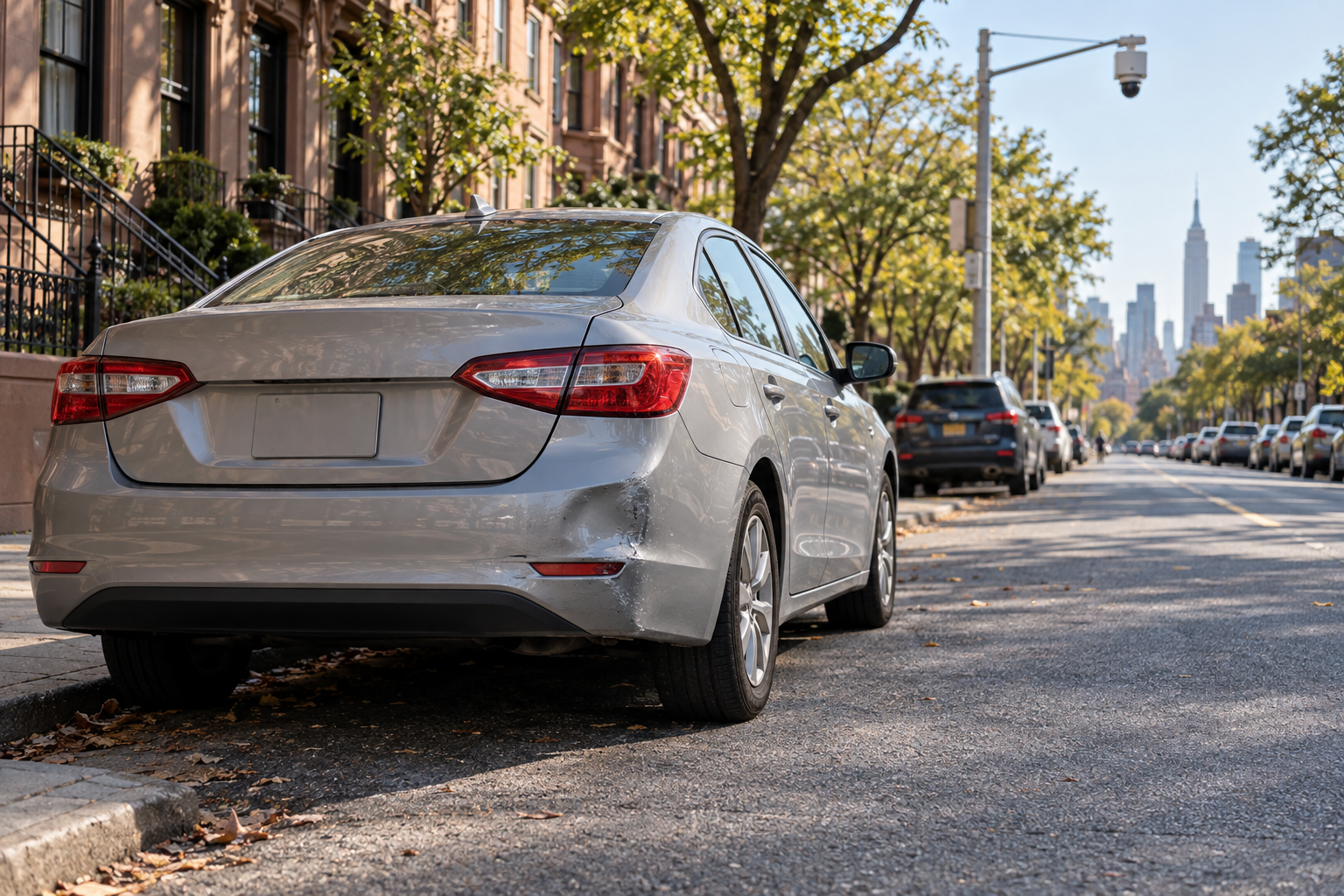
Take safe photographs before repair, including wide views and close-ups of contact areas. Keep towing information, estimates, invoices, and records of where the vehicle or device was stored. A clear possession history helps explain changes in condition.
A damaged part may show where contact occurred without establishing the entire sequence. Avoid technical conclusions from appearance alone. If reconstruction or inspection is needed, a qualified professional should have accurate records and an opportunity to examine relevant evidence where practical.
Practical repair needs should be discussed early. A person may rely on a vehicle for work or medical travel. Preservation planning can consider photographs, inspection, or retained parts without assuming the only option is indefinite storage. Safety and reasonable access remain important.
When a plate does not produce a confirmed driver
Keep the original plate note and any later clarification. An owner, registered address, and actual operator may require separate verification. A vehicle that resembles the one described is not enough to justify a confident accusation.
Document follow-up efforts and responses. Matter of Benalcazar v MVAIC discusses the significance of investigation where reported vehicle information did not lead to confirmed identification. The decision illustrates a procedural issue rather than guaranteeing another claimant's result.
If a lead proves inaccurate, retain the explanation. The record should show what was investigated and why the identity remains unresolved. A vague assertion that the driver could not be found is less informative than a documented sequence of reasonable inquiries.
Injury treatment and everyday limitations
Seek appropriate evaluation and follow professional advice. Keep appointment information, referrals, prescriptions, and receipts. Tell treating professionals about earlier conditions and changes after the collision. This page cannot diagnose an injury or prescribe treatment.
Brooklyn residents may rely on walking, stairs, transit, bicycles, or physically demanding work. Record the specific activity affected and the period of limitation. Help carrying groceries, traveling to appointments, or caring for children should be documented honestly rather than folded into a general statement that everything became impossible.
If treatment is interrupted, record the reason. Transportation, scheduling, coverage disputes, and other circumstances can have different implications. Accurate information helps a professional understand the recovery record without assuming that a missed visit proves a particular medical conclusion.
Earnings and expenses require their own documentation
Preserve schedules, pay records, employer communications, invoices, and relevant business records. Distinguish reduced hours from postponed work and permanently lost assignments. A self-employed person should separate gross receipts from net earnings and identify ordinary expenses.
Keep property damage, replacement transportation, and treatment expenses in separate categories. A receipt may establish a payment without proving that the entire expense resulted from the collision. Add a short factual explanation where the connection is not obvious.
Review releases before accepting a settlement. A payment described casually as covering repairs may come with broader language. Ask what claims and parties the document covers and whether other obligations require attention. Practical urgency should be discussed without guessing at a release's legal effect.

Current injury and fault law matters to the claim
Insurance Law 5102 contains definitions relevant to motor-vehicle injury claims. Its current serious-injury language should be reviewed rather than replaced by an older checklist. Medical evidence and the applicable legal framework must be connected carefully.
The present CPLR 1411 distinguishes Article 51 personal-injury claims from the general comparative-fault rule. A driver's departure does not remove every question about causation or the actions of other road users. Effective dates and claim classification require attention.
Criminal enforcement is also separate from civil recovery. A police investigation or prosecution does not automatically complete insurance notices, establish every civil element, or extend all deadlines. Obtain advice about the civil plan while cooperating appropriately with authorities.
A hypothetical loading-area collision
Imagine a van leaving a loading area strikes a cyclist, then turns onto another street. A worker recognizes the delivery business but did not see the impact. A second witness saw contact but not the plate. A camera farther along the route may show the departure.
A reliable investigation preserves each source for its actual value. The worker supplies a lead, the witness supplies a contact account, and the recording may help identify the vehicle. None independently proves every part of the case, and the business connection must be verified.
This is an illustration, not a reported result. It shows why incomplete evidence can still support specific investigative tasks and why those tasks should remain separate from promises about liability or compensation.
Build a calendar before waiting for answers
Many negligence actions fall within the three-year period in CPLR 214, but notices, insurance procedures, and statutory remedies may have different requirements. The ordinary lawsuit period should not be treated as the only date that matters.
Keep a calendar identifying each task, its source, and the responsible person. A police report, insurer notice, statutory affidavit, and court filing are different steps. A phone conversation does not necessarily extend a written deadline.
If a family member helps organize paperwork, retain originals and identify who supplied each fact. A person who gathered records after the event should not be described as a collision witness. Clear roles help avoid confusion when several people are managing care and communications.
Keep digital evidence understandable
Create a simple index for recordings and photographs, noting the source and date received. Keep that index separate from the originals. A forwarded file may lose useful context, so retain the accompanying message and the sender's contact information where available.
If a camera clock appears inaccurate, record the concern rather than changing the original file. Other time sources may help establish the correct sequence. A discrepancy should be explained openly, not concealed by presenting an edited timestamp as authentic.
When new information changes an earlier understanding, preserve both the original note and the reason for the update. A transparent investigation can accommodate uncertainty. Silently replacing an incomplete account with a more confident version can create confusion about what was actually observed at the time.
Brooklyn hit-and-run FAQs
Should a witness request include the injured person's medical history?
Usually the useful details are the place, time, and information sought. Avoid unnecessary public disclosure of private records. A focused request can seek a vehicle or recording while preserving the person's privacy and avoiding unsupported accusations.
Can a repair shop identify the departing vehicle from damage alone?
Damage may provide useful information, but a definitive identification can require additional evidence and qualified analysis. Preserve photographs, parts where appropriate, and repair records. Do not treat an informal guess as a confirmed vehicle match.
What if another driver remained after a chain collision?
Preserve that driver's information, vehicle condition, witnesses, and any recording. The remaining vehicle may help establish an indirect-contact sequence. Coverage and responsibility still require individual review of the whole event.
Does a delayed report mean there is nothing to discuss?
No. Obtain prompt advice and preserve the reason for delay. Statutory exceptions and other potential remedies are fact-specific. Do not assume either that delay is always fatal or that it has no consequence.
What should an initial consultation cover?
Bring reports, policy documents, images, witness details, medical records, and denial letters. Ask about urgent dates, identification efforts, contact issues, representation scope, and fees. The New York hit-and-run guide and Brooklyn car accident page provide related background. Electric-device questions also appear in the Brooklyn scooter and e-bike guide.