
Bronx Scooter & E-Bike Lawyer
A scooter or electric-bicycle injury in the Bronx deserves an investigation that fits the actual event. A rented scooter near a bus connection, a delivery bicycle at a commercial intersection, and a pedestrian struck by an unidentified rider can involve different evidence and insurance questions. A Bronx scooter and e-bike lawyer should establish those differences before offering conclusions about fault or compensation.
The most useful first steps are practical: obtain appropriate care, identify the device and people involved, preserve available records, and learn which deadlines apply. This page explains those steps with local context for Fordham, Mott Haven, Hunts Point, Parkchester, Pelham Bay, and other Bronx neighborhoods. It does not rank streets by danger or promise a result.

Shared-scooter history provides useful context
The NYC Comptroller's November 2024 micromobility report described nearly four million rides and more than 150,000 unique users in the Bronx shared e-scooter program since its August 2021 launch. NYC Comptroller report.
Those historical program totals measure use, not injuries. They do not establish a crash rate without an appropriate injury numerator, and they should not be presented as current totals. Their practical relevance is that an incident may generate a rental record, a unit identifier, and operator communications that a privately owned device would not generate.
Confirm whether the actual scooter was part of a shared program. A similar color or shape is not enough. If an operator retrieves the device after an incident, the unit number and collection record may become important to any later investigation of condition or maintenance.
Fordham Road: identify the movement through the commercial block
An incident on or near Fordham Road should be described by its precise location and direction. Was the rider continuing along the roadway, approaching a crossing, turning toward a side street, or entering from a driveway? The same street name can describe very different factual situations.
A parked vehicle or bus can affect sight lines. Note its position and whether it moved before photographs were taken. A later unobstructed view may show the street layout while failing to explain why a driver or rider did not see the other person sooner.
For a pedestrian injury, record where the pedestrian was standing or walking and which direction the device approached. A storefront camera may capture movement before the contact even if the impact occurs outside its field of view. Promptly identify potential recordings without entering private property or demanding access to a business's system.
Grand Concourse and Jerome Avenue: crossings and turning disputes
A turning dispute requires more than an allegation that one road user had priority. Preserve the signal observed, lane, approach, and point of contact. If different people describe different signals, identify exactly which signal each person could see.
Near elevated structures or other visual obstructions, photographs can help explain the view, but lighting and traffic conditions may change. Label later photographs accurately. Do not treat a bright daytime image as a complete illustration of an event that occurred under different conditions.
A rider's speed may be disputed. Record observations without assigning a precise speed from impression alone. Reliable footage, timing, measurements, and appropriate expert analysis may be necessary. A claim file should distinguish a witness's estimate from a measured conclusion.
Hunts Point and Mott Haven: commercial vehicles and delivery work
If a truck or van crosses a rider's path near a loading entrance, preserve the vehicle plate, business markings, and direction. Ownership and operation may involve different entities. A name painted on a vehicle does not by itself establish every party's role or insurance.
Identify whether the vehicle was backing, turning, pulling away, or stopped. Those movements call for different evidence. A loading-area camera may show the truck's departure while another recording shows the rider's approach. A complete sequence is more useful than a single photograph of the final positions.
Delivery riders should preserve relevant assignments and messages. The actual work arrangement may affect legal questions, but a branded bag alone does not establish employment or platform responsibility. Keep the rider's activity at the time separate from general assumptions about delivery businesses.
Eastern Bronx rental trips and station connections
A rental trip near Parkchester, Pelham Bay, or a bus stop may include app timestamps, a start location, an end location, and a device identifier. Save those records promptly, including any report of an equipment problem. Do not assume every relevant screen will remain available indefinitely.
A trip may end electronically after the rider has already fallen or moved to safety. Conversely, an interrupted phone connection may create a record that needs explanation. Compare digital times with other evidence rather than treating a single app timestamp as conclusive.
If several people traveled together, identify who used each device. An account holder is not automatically the person operating a scooter at the critical moment. Preserve the truthful arrangement, including any uncertainty, so a later insurance inquiry does not rest on an incorrect assumption.
Device labels are the beginning of classification
Photograph the model, manufacturer information, controls, pedals, and any registration or rental code. Retain purchase and maintenance records. If the device was altered, identify what changed and what is actually known about its specifications.
New York DMV guidance distinguishes electric bicycles, scooters, and other powered vehicles. The classification can affect operating and coverage questions. A seller's broad use of “e-bike” does not resolve the legal issue.
NYC DOT states a 15 mph operating limit for e-bikes and e-scooters. NYC DOT rules. A device's technical capability and its lawful operating speed are different matters. Evaluate the relevant rules for the event date rather than relying on an old advertisement.
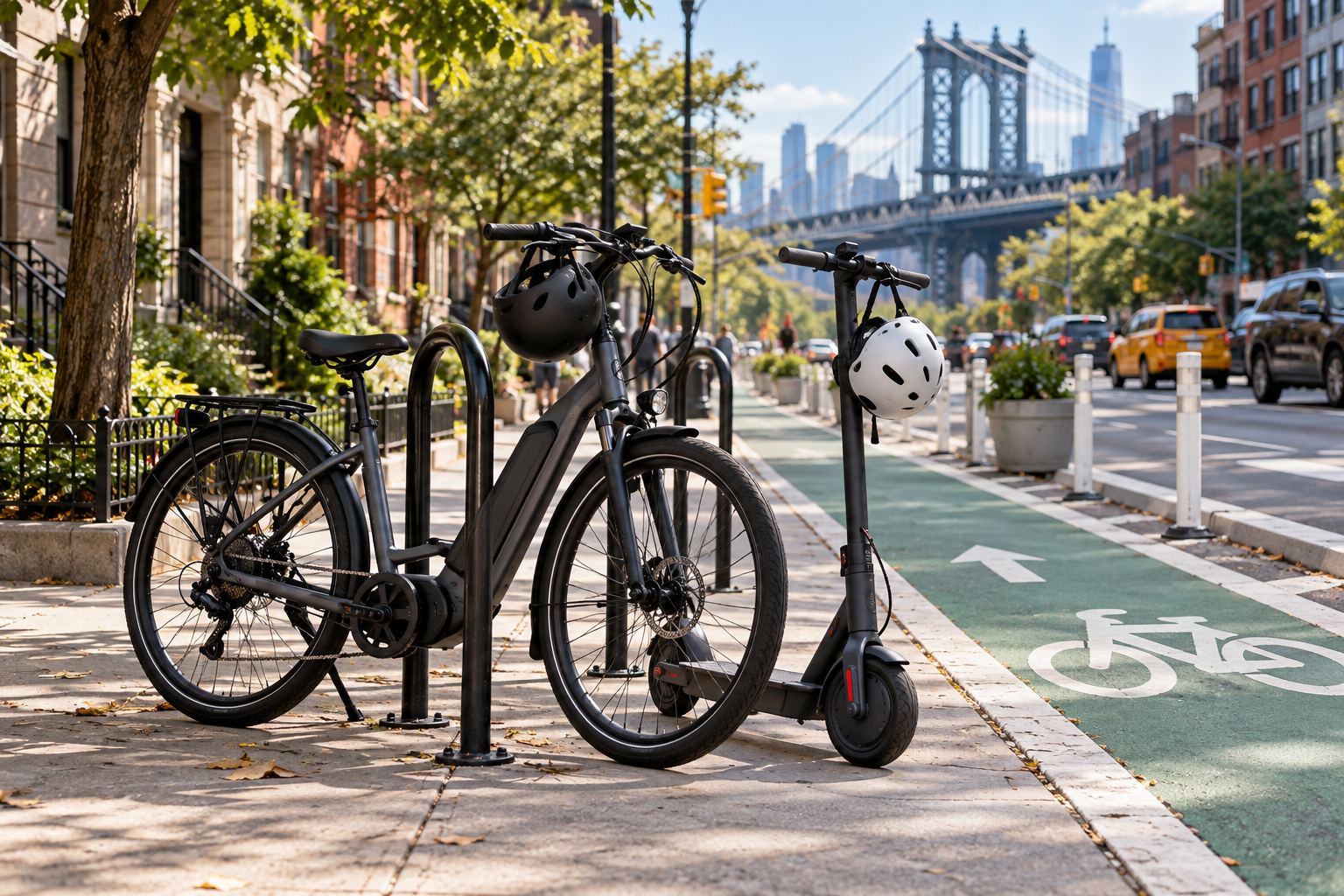
Equipment complaints need a careful timeline
If a rider reports that the brake, steering, or throttle behaved unexpectedly, record the experience in ordinary language. What did the rider do, what response occurred, and when was the issue first noticed? A technical explanation should follow qualified analysis rather than replace the person's direct observations.
Preserve earlier service requests and messages if they exist. A complaint made before the event may answer a different question from a report made afterward. Keep original timestamps and attachments. Do not rewrite an earlier message to make it appear more detailed.
Before repair or disposal, ask whether an inspection is needed. If a rental operator collects the unit, retain the collection details. Evidence preservation must also respect safety: a damaged battery should not be charged, opened, or casually stored when it presents a hazard. Obtain appropriate professional or emergency assistance.
A pedestrian claim can differ from a rider's claim
A pedestrian struck by a stand-alone scooter may have a different insurance inquiry from a rider injured by a registered car. A fall caused by a road condition may require investigation of a property or public entity. The claimant's role and the vehicles involved matter.
The definitions in Insurance Law 5102 are relevant to motor-vehicle injury claims. They should be applied to the actual device and event. Do not assume that all electric devices are motorcycles or that every scooter injury has the same no-fault treatment.
When an insurer responds, identify the coverage being discussed and preserve its written position. A denial under one policy may leave other questions unresolved. Several possible policies also do not guarantee multiple payments for one expense. An organized coverage review should explain both possibilities and limitations.
Leaving the scene does not identify the available remedy
If a rider or motorist leaves, preserve the description, direction, identifying marks, and witnesses. Ask about nearby footage promptly. Do not chase, confront, or attempt to detain someone in a way that creates another injury.
An unidentified electric-device operator may not fall within the same framework as an unidentified motor vehicle. The Bronx hit-and-run guide discusses related reporting and evidence issues, but the actual device category and claimant's eligibility need individual review.
Report the facts accurately, including whether contact occurred and what was observed. A person who only heard an impact should not be described as having seen it. Clear limits in the evidence are preferable to a more dramatic account that cannot be supported.
Document recovery beyond the emergency visit
Medical documentation may continue after the first examination. Keep referrals, appointment information, prescriptions, and receipts. Explain prior conditions and new symptoms accurately to treating professionals. This page cannot diagnose injuries or prescribe treatment.
A Bronx resident may need help using stairs, carrying items, traveling to work, or caring for family. Record the particular tasks affected and the periods of limitation. A short factual diary can help recall changes without turning each day into a legal conclusion.
If transportation or scheduling interferes with treatment, retain the relevant information. A missed visit can have several explanations. Accurate records help a professional understand what occurred rather than infer that the person recovered or abandoned care.
Income evidence should explain why work changed
Save schedules, pay statements, assignments, and employer communications. If hours were reduced, distinguish a medical restriction from an unrelated reduction in available work. If a device was unavailable, separate that equipment problem from physical inability to perform the job.
For delivery or other self-employment, preserve records showing ordinary revenue and expenses. Gross receipts are not necessarily lost net income. A reasonable comparison period should reflect the actual business rather than only its busiest day.
Keep replacement transportation and repair expenses in their own category. A claim for a damaged phone, bicycle, or helmet should have supporting photographs and documents where available. Ask what a proposed payment and release cover before assuming a property settlement leaves every injury issue untouched.

How a local investigation can test competing accounts
Consider a hypothetical scooter rider approaching a bus stop while a car moves away from the curb. The rider falls near a rough surface. The driver disputes contact, and the rider reports an evasive movement. A useful investigation preserves all of those facts instead of selecting one theory before the records are reviewed.
Footage may establish the car's movement. A witness may describe the rider's reaction. Scene photographs may show available space and surface condition. Device inspection may address a separate mechanical allegation. Each item has a limited role, and the final explanation should acknowledge what remains uncertain.
A police report may record statements without resolving their accuracy. If a factual error appears, preserve supporting material and ask about the appropriate correction process. Do not pressure witnesses or alter original records. The goal is a reliable account that another person can evaluate independently.
Fault law and deadlines require current review
The current CPLR 1411 distinguishes Article 51 personal-injury claims from the general comparative-fault framework. The actual device, claim, and effective dates matter. An older general description may not fit a present claim.
Many ordinary negligence actions use the three-year period in CPLR 214, but earlier notices or different periods can apply. Public-entity issues and insurance requirements deserve separate attention. A complaint submitted through a service portal should not be assumed to satisfy a formal legal requirement.
At a consultation, ask which steps are urgent, who will request recordings, and whether device preservation is needed. Clarify the scope of any representation and written fee terms. A useful plan identifies missing evidence and dates rather than promising a settlement before the investigation begins.
A clear record of calls can prevent avoidable confusion
After a collision, several organizations may contact the injured person about different subjects. One may handle device damage, another medical benefits, and another a liability investigation. Keep a log identifying the caller, organization, claim number, date, and requested follow-up. A promise made during a call should be documented accurately rather than remembered only in general terms.
Retain attachments and envelopes when they contain relevant dates or instructions. If a form asks an unclear question about work status or vehicle type, seek clarification before guessing. The goal is not to make the facts fit a preferred category; it is to provide an accurate description that can be evaluated under the correct rules.
Language access can be important when reporting an incident or discussing treatment. Request appropriate assistance when needed. A relative may help organize papers, but should avoid answering factual questions as though they personally witnessed the event. Identify who knows each fact and how they know it.
Preparing the device history before a consultation
Write down when the device was acquired, who usually used it, and any known repairs. Separate firsthand knowledge from information supplied by a seller or previous owner. If the rider does not know whether a component was modified, say so rather than presenting an uncertain assumption as a specification.
For a borrowed bicycle, preserve communications with the owner about condition before and after the event. For a rental, retain reports about earlier attempted units separately from the unit actually used. These distinctions can prevent an unrelated mechanical complaint from being attributed to the wrong device.
Bring this history with the scene records. It helps counsel decide whether the dispute concerns road-user conduct, equipment, or both, and whether a qualified technical review would answer a material question.
Related legal guides
These guides address issues that may overlap with scooter and e-bike matters in Bronx. Review the guide that fits the facts of your situation.
- Bronx Personal Injury Lawyer — evidence, responsibility, and injury claims.
- Bronx Pedestrian Accident Lawyer — injuries involving people on foot.
- Bronx Truck Accident Lawyer — commercial vehicle evidence and liability.
- Bronx Motorcycle Accident Lawyer — motorcycle crashes and rider injuries.
Official resources and further reading
Use these resources to review the underlying rules, locate records, or understand the relevant agency process. Check the requirements and current instructions for the particular document or process you need.
- New York DMV: motorist accident report form MV-104
- DFS auto insurance guide
- DFS no-fault FAQ
- NYSDOT Region 10 traveler advisories
Separate a rental unlock from the scooter that was actually ridden
A rider may attempt to unlock several shared scooters before finding one available for a Bronx trip. A Bronx electric scooter accident lawyer needs to distinguish unsuccessful unlock attempts from the unit actually involved in the collision. An app screenshot showing the first reservation may identify equipment the rider never used.
Keep the full trip history, charge or refund records, and messages reporting an unlock problem. Note whether the rider changed units before leaving or after noticing an issue. If a companion rented a second scooter, keep their account records separate. A photograph showing two devices should identify which one belongs to the injured person’s trip and which details remain uncertain.
For a scooter injury claim, a precise unit history helps direct preservation requests to the right equipment and records. It may also explain an apparent inconsistency between the account’s first timestamp and the start of actual riding. Do not delete failed trips because they seem irrelevant; their context can prevent a reviewer from attributing the incident to the wrong rental unit.
Bronx scooter and e-bike FAQs
What if a shared-scooter unit number is missing?
Preserve the trip receipt, account information, photographs, location, and approximate time. These may help identify the unit, but the connection should be verified. Distinguish attempted rentals from the actual trip and retain communications with the operator.
Does a rule violation automatically resolve fault?
The applicable rule and its connection to the injury require analysis. A disputed violation does not answer every question about another party's conduct or insurance. Preserve the actual device and event details so counsel can evaluate the relevant law.
Can a family member organize records for an injured person?
Yes, practical help can be useful, but the records should remain accurate about who observed each fact. Keep original documents and identify the source of information. Medical decisions and legal authority to act for another person may require separate consideration.
Is a repair estimate enough to prove a defect?
A repair estimate may describe damage without establishing its cause or timing. A component can break because of impact rather than before it. Preserve maintenance history and consider qualified inspection when equipment failure is genuinely disputed.
Where should the legal review begin?
Bring the chronology, device identification, report details, medical information, photographs, and insurer letters. The New York scooter and e-bike guide provides broader background, while the Bronx car accident page addresses related motor-vehicle issues.