
Brooklyn Scooter & E-Bike Lawyer
A Brooklyn electric-bicycle or scooter injury may involve a turning vehicle, a delivery route, a pedestrian crossing, an opening door, or a damaged surface. The phrase used to describe the accident does not determine the legal result. A Brooklyn scooter and e-bike lawyer should begin with the actual device and sequence, then investigate duties, insurance, injury evidence, and deadlines.
Brooklyn's neighborhoods create different practical questions. A collision near Atlantic Terminal may require station-area footage and curb observations. An event beside a Williamsburg loading entrance may require delivery records. A pedestrian injury on a residential block may depend on identifying a rider and the exact travel space. This guide explains how to turn those facts into a useful record without making unsupported assumptions about responsibility.

A real safety figure with clear limits
New York City's fiscal 2025 management report recorded 14 e-bike fatalities citywide, compared with 20 in fiscal 2024. Mayor's Management Report, fiscal 2025.
These are citywide fiscal-year figures, not Brooklyn totals or neighborhood rankings. They show the seriousness of electric-bicycle injuries while leaving the facts of an individual claim to investigation. They also should not be compared casually with calendar-year counts or statistics that combine e-bikes with motorcycles and mopeds.
For an actual Brooklyn injury, the useful questions are narrower: where did contact occur, what movement preceded it, who could see whom, and what evidence remains? A general safety trend cannot answer whether a particular turn, door opening, or defect caused a person's injury.
Atlantic Avenue and Flatbush Avenue: reconstruct the transition
Around Atlantic Terminal, a trip can shift quickly from through travel to a curbside stop, intersection crossing, or station connection. Record the exact block and direction rather than only naming the terminal. A driver pulling toward a curb and a rider continuing along a lane may describe the same event from very different perspectives.
Photographs should identify markings, signals, the curb, and objects affecting visibility. If a bus or truck was present, note where it stood. A clear street photographed later may help explain dimensions but cannot reproduce an obstruction that moved away after the collision.
A witness's location matters. Someone inside a vehicle may have an obstructed view of the rider while seeing the turning car clearly. Someone waiting on a corner may see the rider's approach but miss the first contact. Record those limits rather than treating every witness as if they observed the entire sequence.
Williamsburg and Greenpoint: deliveries, doors, and loading areas
A restaurant pickup or building delivery can generate records beyond the collision report. Preserve relevant assignment messages, pickup timing, and communications about the trip. These records can help establish activity and chronology without proving that an app company controlled the rider or bears legal responsibility.
For a door-opening incident, identify the door and person involved. Was it a passenger door beside a bicycle lane, a driver opening toward moving traffic, or a vehicle that also began to move? Damage patterns and footage may distinguish those possibilities. Do not assume that a stopped vehicle eliminates all questions about how it was positioned or used.
Near a loading entrance, identify whether a commercial vehicle crossed the rider's route. A business name on a truck is a starting point for identifying parties. Ownership, operation, work arrangements, and the particular movement require verification. The presence of a warehouse alone does not establish who directed the driver.
Sunset Park, Bay Ridge, and neighborhood errands
A person using an e-bike for shopping or a local commute may have fewer app records than a delivery rider. That does not make the event impossible to reconstruct. Purchase information, a phone photograph, a witness, or a nearby camera may identify the device and sequence.
Along commercial streets such as Fifth Avenue or Third Avenue, distinguish a crossing movement from travel along the roadway. State the actual location of the rider and pedestrian rather than using a broad phrase such as “in front of the store.” An entrance, driveway, curb extension, and intersection can raise different factual questions.
If a fall allegedly resulted from pavement condition, photograph the defect and surroundings safely. Identify the precise spot, date, and direction of approach. An investigation may need to determine ownership, maintenance duties, and prior notice. A dangerous-looking surface does not by itself establish a legally responsible defendant.
Pedestrian collisions require identification and a precise account
A pedestrian injured by a scooter should preserve the rider's description, device markings, and any rental identifier available without confrontation. If the rider remains, obtain contact information and identify witnesses. If the rider leaves, note the direction and any available recording; do not chase into traffic.
Record the pedestrian's own movement and what was observed before impact. A person may have been crossing, standing near a curb, exiting a building, or walking along a sidewalk. Those circumstances matter. The investigation should assess the applicable operating rules and actions of everyone involved rather than assume liability solely from the pedestrian's status.
An unknown e-bike rider and an unknown car driver do not necessarily lead to the same insurance remedy. The Brooklyn hit-and-run guide addresses related evidence questions, but device classification and benefit eligibility must be evaluated separately.
Establish the device category before discussing coverage
Photograph the model plate, controls, motor information, pedals, and any registration. Save purchase documents and service records. If the device was modified, describe what is known and identify the person or business that performed the work. Do not infer specifications solely from appearance.
New York DMV's electric-device guidance distinguishes electric-assist bicycles and scooters from other powered vehicles. The name used by a seller or rider may not resolve the legal classification.
NYC DOT lists a 15 mph operating limit for e-bikes and e-scooters. NYC DOT rules. An operating limit is different from a device's advertised capability. Counsel should review the rules applicable to the actual device, place, and event date.
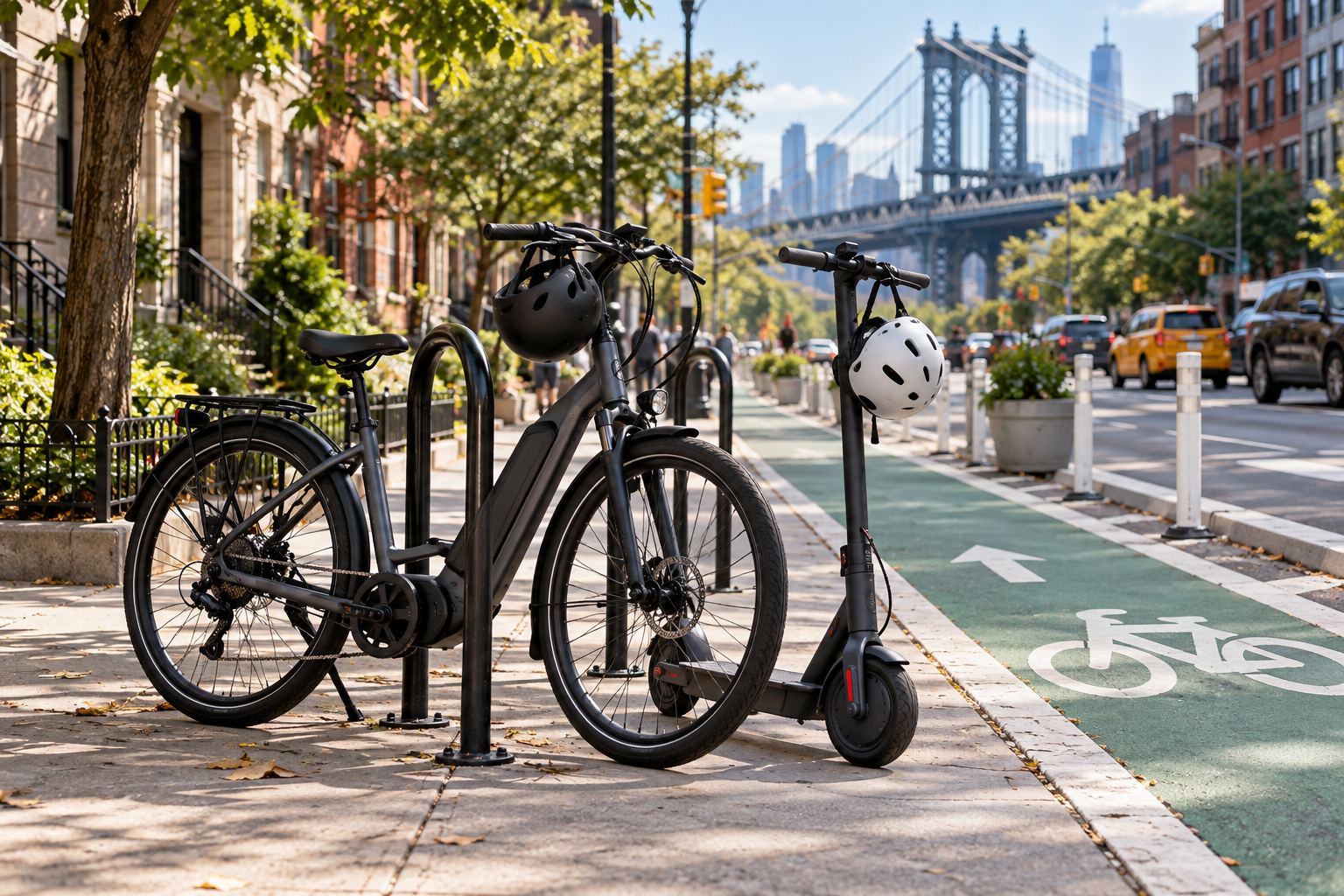
Equipment preservation is a question of both proof and safety
A bent wheel, damaged brake, or broken light may be relevant, but damage after a collision does not necessarily explain the device's condition beforehand. Preserve photographs and discuss inspection before substantial repair or disposal if equipment is disputed. A qualified examiner may need information about maintenance and earlier symptoms as well as the damaged part.
Do not perform experiments to recreate a suspected failure. A rider's description of what a lever felt like is different from a technical conclusion about why it failed. Keep those categories separate so later analysis is based on an accurate history.
If a battery is damaged or shows heat, swelling, smoke, or another concerning condition, seek appropriate emergency or professional assistance. Do not charge or dismantle it to preserve evidence. Professional handling records, photographs, and a documented chain of possession can help retain information while addressing safety.
Work activity does not establish employment status by itself
Delivery riders should save relevant app screens, assignments, earnings records, and communications. An insurer or defendant may ask whether the rider was working at the time, but that question requires more detail than whether a branded bag was present.
Identify the work arrangement and the purpose of the particular trip. Was the rider accepting an order, traveling to a pickup, completing a delivery, or off duty? Preserve the actual record rather than choosing a description based on which insurance seems preferable. Coverage and responsibility should follow the facts.
If an employer supplied the device or required a route, identify those records. If the rider used a personally owned bicycle across several platforms, preserve the relevant assignments without unnecessarily distributing unrelated private information. Counsel can help determine what is responsive to a legitimate request.
Coverage analysis begins with the event, not a promise
A rider hit by a registered vehicle may have different potential benefits from someone injured in a stand-alone fall. A pedestrian struck only by an electric device may face a different policy inquiry again. Review the actual vehicles, claimant's role, rental agreement, employment arrangement, and available policies.
Insurance Law 5102 provides important definitions for motor-vehicle injury claims. It should be applied to the actual facts rather than used to promise that every e-bike injury receives the same benefits. The current statutory text also matters when discussing injury thresholds.
Save claim numbers and all coverage correspondence. When an insurer denies a claim, identify which coverage it considered and the reason given. A denial under one policy does not automatically resolve a potential claim against another party, while overlapping policies do not guarantee duplicate recovery.
A practical way to organize the first week of records
Start with a simple chronology: travel before the event, the event itself, immediate assistance, and subsequent communications. Include uncertainty where memory is incomplete. Avoid filling gaps with assumptions from photographs or another person's account.
Keep originals of images, video, and messages. Make a backup and preserve information about who supplied a recording. If a camera clock appears wrong, note that concern rather than editing the original timestamp. A lawyer or investigator can compare several time sources.
Separately list evidence you do not possess, such as a store recording, rental maintenance file, or vehicle camera. Identifying a likely source promptly can be valuable even before the record is obtained. Do not enter private property or access another person's account to collect it.
Recovery should be documented in everyday terms
Medical records should reflect symptoms, prior conditions, and changes accurately. Follow treating professionals' advice and keep appointment information, referrals, prescriptions, and receipts. This page cannot diagnose an injury or decide what treatment is appropriate.
A Brooklyn resident may normally climb stairs, carry a child, use public transportation, work standing up, or deliver orders by bicycle. Record the activities actually affected and the dates of limitations. If relatives provide help, note the tasks and time rather than inventing a commercial charge for unpaid assistance.
If treatment is interrupted, preserve the reason. Scheduling, transportation, insurance disputes, and personal choices are different explanations. Accurate records help a professional understand the course of recovery and avoid misleading assumptions about a gap in care.
Financial losses and settlement documents
Lost-income analysis should distinguish missed shifts, reduced duties, postponed assignments, and permanently lost work. Keep employer communications or business records that show the difference. For a self-employed delivery rider, gross app receipts may not equal lost net earnings.
Device repair, replacement transportation, and medical expenses should be supported separately. A receipt may show a payment without establishing that the entire expense resulted from the collision. Organize the explanation and supporting document together.
Review settlement documents before signing. A payment described informally as covering a bicycle may come with broader release language. Ask what claims are released, whose rights are affected, and whether other reimbursement obligations need review. An urgent need for transportation is a practical concern to discuss, not a reason to guess about a document's effect.

Related legal guides
These guides address issues that may overlap with scooter and e-bike matters in Brooklyn. Review the guide that fits the facts of your situation.
- Brooklyn Personal Injury Lawyer — evidence, responsibility, and injury claims.
- Brooklyn Pedestrian Accident Lawyer — injuries involving people on foot.
- Brooklyn Truck Accident Lawyer — commercial vehicle evidence and liability.
- Brooklyn Motorcycle Accident Lawyer — motorcycle crashes and rider injuries.
Official resources and further reading
Use these resources to review the underlying rules, locate records, or understand the relevant agency process. Check the requirements and current instructions for the particular document or process you need.
- NYC Comptroller report
- New York DMV: motorist accident report form MV-104
- DFS auto insurance guide
- DFS no-fault FAQ
Keep delivery interruptions distinct from a disabled e-bike
A delivery rider injured in Brooklyn may stop receiving assignments for several different reasons: physical limitations, a damaged device, an account issue, or a combination. An e-bike accident lawyer in Brooklyn can review those causes separately. A blank earnings period does not reveal which condition prevented work, and a repaired bicycle does not establish that the rider was medically ready to return.
Keep repair availability dates, relevant account messages, and medical restrictions with the actual work history. If a replacement device was borrowed, record when it became available and whether it could be used for the same tasks. Distinguish expenses incurred from estimates, and explain whether a missed assignment was canceled or completed later by someone else.
The same distinction can matter after an electric scooter accident involving delivery work. An accurate timeline connects the interruption to its documented causes without assuming every later reduction in income resulted from the collision. Include gradual returns, lighter tasks, and periods of ordinary work so the record reflects the actual course of recovery.
Current law and time-sensitive questions
New York's current CPLR 1411 treats Article 51 personal-injury claims differently from the general comparative-fault rule. Device classification, claim type, and effective dates require careful assessment. A familiar statement from an older article may not describe the present law.
Until a specific claim is reviewed, CPLR 214's three-year period for many negligence actions should not be treated as permission to delay. Insurance notices and claims involving public entities can raise earlier requirements. Evidence preservation often becomes urgent long before the final filing date.
Ask an attorney to identify immediate deadlines and investigation steps in writing where practical. Clarify who will contact witnesses or request recordings, what documents are needed, and whether representation has begun. Discuss written fee terms and scope without assuming a consultation alone creates a full engagement.
When several explanations remain possible
Consider a hypothetical rider approaching a warehouse entrance while a truck begins to turn. The rider falls beside a rough patch of pavement. The investigation should not choose between vehicle movement, surface condition, and device response merely because one explanation appears easiest to describe. Each alleged cause needs evidence and a connection to the injury.
An original recording may show the rider's reaction. Scene measurements may help explain available space. A device inspection may address a claimed brake problem. Maintenance or ownership records may identify the party responsible for a surface. No single document necessarily answers every question, and the absence of one type of evidence should be acknowledged rather than concealed.
This is also why a police report is a starting point rather than a complete legal conclusion. Identify whether the officer observed the event, recorded statements, or arrived afterward. If a factual detail is wrong, preserve material supporting a correction and ask about the appropriate process. Do not pressure a witness to adopt language chosen for a claim.
Keep communications understandable
Use a short log for calls, emails, requested forms, and deadlines. Record the organization and claim number so a request from a property adjuster is not confused with a request about medical benefits. Retain attachments, not only the message introducing them.
When a question is unclear, ask for clarification before guessing. A careful response can distinguish personal knowledge from information received later. If language assistance is needed, request it so the record reflects what the person actually means. Accuracy is more useful than an immediate answer to every question.
Brooklyn scooter and e-bike questions
Is a delivery platform automatically responsible for its rider?
No. Branding alone does not establish employment, control, or liability. Preserve the assignment, actual work arrangement, and conduct relevant to the event. A legal analysis should connect each proposed party to a supported duty and causal role.
What if the rider swerved and fell without touching the car?
Describe exactly what occurred and preserve the vehicle movement, witnesses, and recordings. Noncontact events can present distinct proof and insurance questions. Do not revise the account to fit a perceived requirement; obtain advice based on the actual sequence.
Can a later street photograph still help?
Yes, if its date and limits are clear. It may show road geometry while failing to show the original traffic, parked vehicles, weather, or construction. Preserve contemporaneous material where possible and do not present later conditions as unchanged.
Where can I read related information?
The New York scooter and e-bike page addresses device issues across the region. The Brooklyn car accident guide provides related motor-vehicle background. Individual advice remains necessary for actual coverage, deadlines, and injuries.