
Manhattan Scooter & E-Bike Lawyer
A scooter or electric-bicycle injury in Manhattan can begin with a driver turning across a rider's path, a door opening beside a bike lane, a pedestrian collision, or a problem with the device itself. The label “e-bike accident” does not identify which legal rules or insurance apply. A Manhattan scooter and e-bike lawyer should investigate the actual vehicle, movement, location, and injury before drawing conclusions.
For someone recovering after an event in Midtown, Lower Manhattan, Harlem, the Upper East Side, or the Upper West Side, the first practical challenge is preserving information that may be scattered among a phone, a damaged device, witnesses, and nearby buildings. This page explains how those pieces fit together and which questions deserve prompt individual advice.
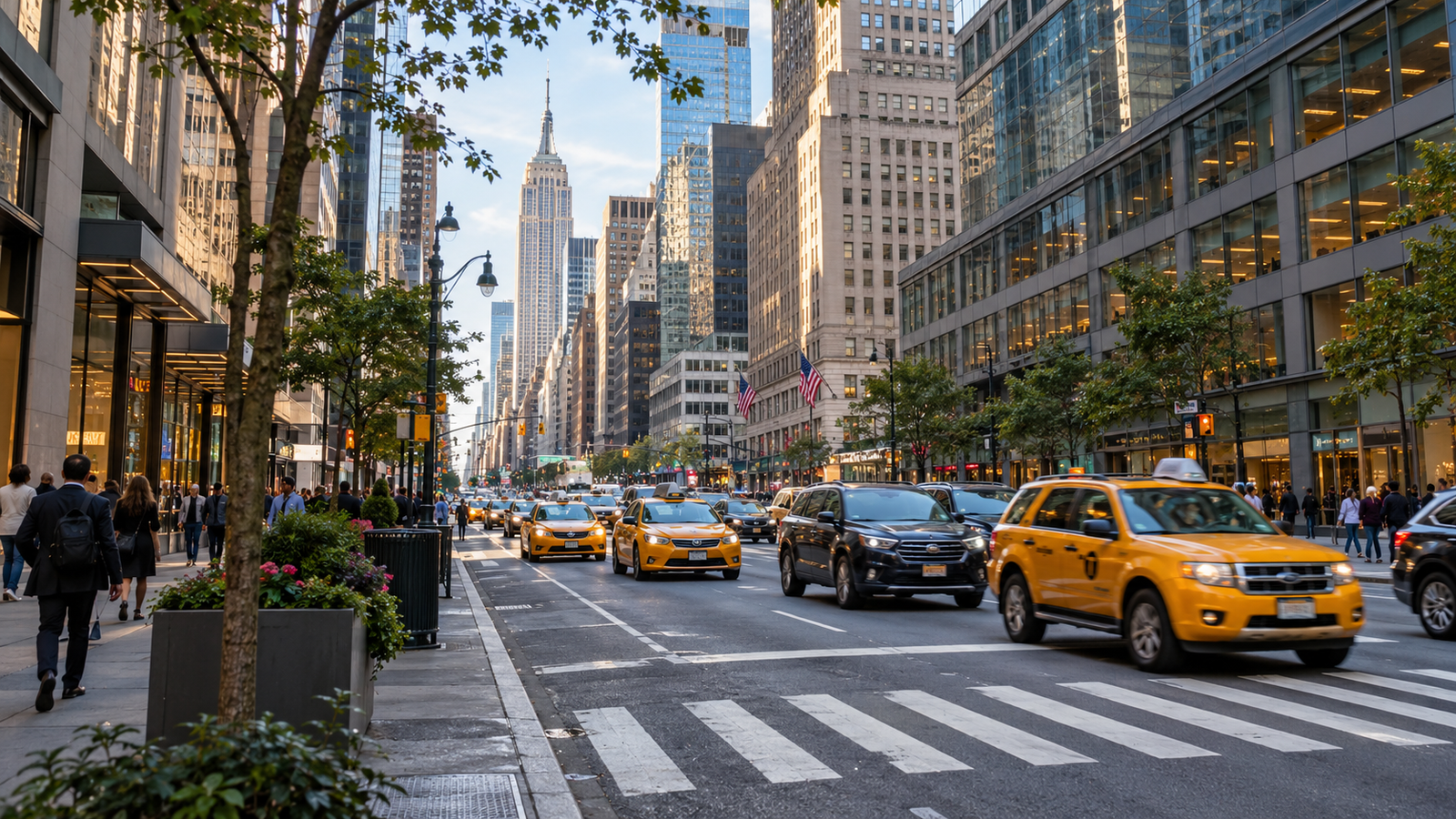
A dated safety measure, used carefully
NYC DOT reported six e-bike rider fatalities citywide in the first half of 2025, compared with nine in the corresponding 2024 period. NYC DOT's July 2025 safety release.
These figures are citywide and cover a defined half-year period. They do not identify Manhattan's most dangerous street or establish that a particular rider caused an injury. Their value is context: electric-device safety deserves attention, while a civil claim still requires evidence of the actual event and responsible conduct.
A location such as Canal Street or Eighth Avenue should therefore be used to locate evidence and explain road geometry, not to imply an unsupported crash ranking. The exact block, lane, direction, and movement are more useful than a dramatic description of a corridor.
Midtown doors, pickups, and delivery activity
Near hotels, offices, and storefronts, a rider may encounter a door opening or a vehicle pulling from the curb. Identify which door, who opened it, and whether the car was stopped or moving. A passenger's action, a driver's positioning, and a cyclist's approach may require separate analysis. Do not assume that everyone connected to the stopped vehicle has the same legal interest.
Record the vehicle plate and any available trip or business information. A rideshare decal can be an investigative lead, but it does not prove an active trip or a particular policy. A delivery logo similarly does not establish who employed a worker or controlled a maneuver. Preserve what was observed and let records establish the relationship.
For an event near Penn Station or the Theater District, identify the actual curb rather than only the landmark. A hotel camera may show a door opening, while another building may show the rider's approach. The best recording may come from farther along the block rather than the camera nearest the impact.
Avenue turns and the moment the rider became visible
A turning vehicle on First, Second, Sixth, or Eighth Avenue may cross a rider's route at an intersection. Preserve the signal observed, lane, direction, and position of any bus, truck, or parked vehicle affecting the view. A driver saying the rider appeared suddenly describes a perception, not a complete account of visibility or fault.
A useful timeline begins before contact. Was the driver already turning? Did the rider pass an obstruction? Was another vehicle stopped in a way that concealed the approach? A still image of the aftermath rarely answers all those questions. Original video and independent witnesses can help test competing accounts.
Do not estimate speed from engine or motor sound alone. Record a witness's location and opportunity to observe. If speed becomes important, reliable footage, measurements, and appropriate technical analysis may be needed. An allegation should be investigated rather than repeated as a fact because it appears in an insurer's letter.
Lower Manhattan crossings and shared space
Around Canal Street, Chambers Street, and the Financial District, short blocks and frequent curb activity can complicate an event. Identify whether the rider was in a travel lane, bike lane, crossing, driveway, or another space. The exact surface and path matter to both operating rules and causation.
For a pedestrian injured by a scooter or e-bike, preserve the rider's description and device identifier if safely available. Record contact points and the pedestrian's own movement. A rental-unit number or a clear image may be more useful than a broad description of an electric scooter. Do not chase a rider or enter traffic to obtain it.
If the event involved several road users, keep their movements separate. A pedestrian stepping aside, a rider braking, and a vehicle turning can occur in quick succession. The investigation should identify which actions contributed rather than assign responsibility solely according to who was injured or who left first.
Device identity can change the legal analysis
Photograph the model, manufacturer label, pedals, throttle, controls, and any registration. Keep purchase, rental, and service records. A product advertised as an e-bike may not fit the legal category, especially after modifications. An electric motor alone does not make every two-wheeler the same type of vehicle.
DMV distinguishes electric-assist bicycle classes, scooters, and other powered devices. New York DMV guidance.
NYC DOT states a 15 mph operating limit for e-bikes and e-scooters. NYC DOT rules. Classification specifications and operating limits are different concepts. Counsel should assess the actual device and collision date instead of relying on an old sales description or a general social-media summary.
Scene records should preserve context as well as damage
After obtaining necessary care and emergency assistance, record the time, cross street, direction, and vehicles involved. Take photographs only from a safe position. Include the approach, traffic controls, curb, and possible obstruction along with close-ups of damage. A detailed damage image can lose value if no one can identify where the event occurred.
Keep a list of witnesses with what each person actually saw. A shop employee may have heard the impact and seen the aftermath without observing the turn. Another person may have seen the approach but not the contact. Both can be useful when their limitations remain clear.
Save original recordings and a backup. Do not overwrite the original with annotations or a shortened clip. Note who supplied the file and whether its clock is accurate. A camera's displayed time may differ from a phone time, and that discrepancy should be explained rather than silently corrected.
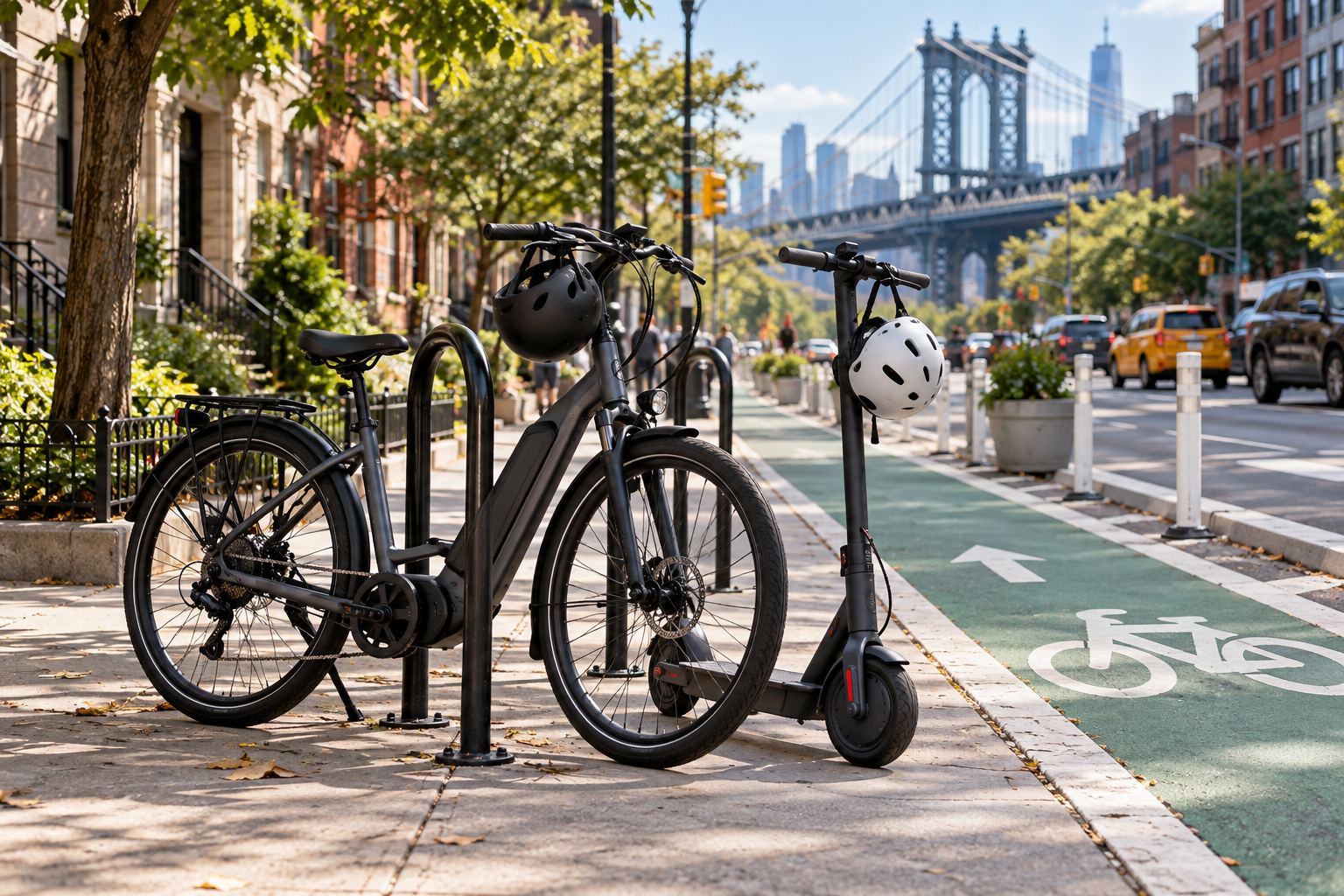
Preserve the scooter or bicycle without creating a safety problem
Before major repair, disposal, or return of a rental device, consider whether an inspection may be needed. Damage to steering, brakes, wheels, or lights can help explain the sequence. A component broken after impact does not automatically prove that it failed before the collision, so technical conclusions should be left to qualified professionals.
Retain the helmet and other damaged equipment, with photographs showing condition. Preservation is separate from a decision about safe reuse. A helmet involved in a crash should not be assumed ready for another ride merely because damage is not obvious.
A damaged battery requires particular caution. Do not charge, dismantle, or casually transport a device showing signs of heat, swelling, smoke, or other danger. Seek appropriate emergency or professional assistance. Evidence can include professional handling records and photographs; maintaining a claim should not create another hazardous situation at home.
Delivery work and rental use need their own records
A delivery rider should preserve app assignments, route information, work communications, and earnings records relevant to the event. A bag displaying a platform name does not by itself establish the rider's status or the platform's responsibility. The actual work arrangement and conduct require review.
If the device was rented, save the unit identifier, start and end times, reported problems, and communications with the operator. A failed earlier rental attempt should be kept separate from the unit involved. The identity of the particular device matters when maintenance or a defect is alleged.
For a borrowed device, identify its owner and known service history. Do not assume the rider knows whether every part was original or modified. A careful investigation should distinguish what the rider observed from what an owner, seller, or repair shop later reported.
Insurance depends on the claimant and the vehicles involved
A rider struck by a car, a pedestrian struck only by an e-bike, and a rider injured in a device-only fall can face different coverage questions. Review the actual policies, device classification, motor-vehicle involvement, rental terms, and any employment-related arrangement. Do not automatically apply motorcycle insurance rules to every electric bicycle.
The statutory definitions provide a starting point, including the current treatment of motor vehicles and covered persons. Insurance Law 5102. Ask an insurer to explain in writing what coverage decision it is making and which facts it relies on. A denial under one policy does not necessarily resolve every potential source, while several possible policies do not guarantee duplicate payment.
If a driver or rider cannot be identified, preserve the description, direction, witnesses, and available video. The remedy may depend on the device and claimant's role. See the Manhattan hit-and-run guide for related investigation questions, without assuming all unidentified-device events qualify for the same benefits.
Current fault rules and early procedural steps
New York's comparative-fault statute now distinguishes Article 51 personal-injury claims from the general rule. CPLR 1411. A lawyer should assess applicability and effective dates using the actual vehicles and facts. An old blanket statement about partial fault can be misleading.
Many ordinary negligence claims have a three-year period, but exceptions and earlier notices matter. CPLR 214. Public-road conditions, insurance requirements, and other parties may require separate analysis. A complaint to a city service or rental app should not be assumed to satisfy a formal legal notice.
Prompt preservation is useful even before every legal issue is settled. Buildings may overwrite video, a device may be repaired, and a witness may become difficult to contact. A consultation should identify urgent evidence and dates rather than simply discuss a possible settlement amount.
Document the recovery Manhattan life actually requires
Tell treating professionals about symptoms, earlier conditions, and changing limitations accurately. Keep referrals, appointment information, prescriptions, and receipts. If transportation or cost interferes with care, record the obstacle. This page cannot diagnose an injury or recommend a treatment plan.
A person who normally walks between work locations may need alternative travel. Someone living in a walk-up may need help carrying groceries or equipment. Record specific tasks and actual expense rather than only writing that life became harder. Medical limitations and practical examples should be consistent and truthful.
For lost work, preserve shifts, assignments, invoices, and employer communications. A delivery rider should distinguish physical inability to work from the device being unavailable. Gross receipts are not necessarily net income, and postponed work should be separated from permanently lost work. A supported financial account is more useful than a rounded estimate based on an unusually busy week.

A useful reconstruction starts with competing explanations
Consider a hypothetical collision near an office loading area: a rider reports a van turned abruptly, while the van driver says the rider crossed from behind a stopped truck. The investigation should test both accounts. Footage from the opposite side of the avenue may establish when the rider became visible. Loading records may establish why the van stopped, but do not establish whether the turn was careful. Each record answers a different question.
Likewise, a bent front wheel could result from hitting a curb during an evasive movement or from direct contact with the van. An investigator should avoid choosing between those possibilities from a photograph alone. Preserve the reported sequence, contact marks, device condition, and witness positions. If technical examination is appropriate, provide the examiner with accurate information rather than an account edited to favor a claim.
This method helps identify gaps early. An unanswered question is a reason to investigate, not a reason to invent certainty. When speaking with counsel, explain both the facts that support your recollection and the parts you could not see. An honest limitation can be more useful than an unsupported estimate that later conflicts with video.
Keep separate tracks for care, property, and liability
A repair estimate concerns the device. A medical bill concerns treatment. Neither independently resolves who caused the collision or which insurer must respond. Maintain separate folders so an offer to address one issue is not mistaken for a complete resolution of the injury claim.
Before agreeing to settlement paperwork, identify what claims the release covers and whose claims it affects. A rider may understandably want a replacement bicycle quickly because it supports daily travel or income. That practical urgency should be discussed openly, while the legal consequences of the proposed document receive independent review.
Keep a short communication log recording the date, sender, claim number, requested information, and promised follow-up. Preserve attachments and envelopes as well as message text. When several adjusters contact a Manhattan rider after the same collision, clear records help distinguish the insurer handling benefits from a party investigating liability.
Manhattan scooter and e-bike questions
What if a car door caused the fall but the rider never struck the car?
Preserve the opening movement, rider's reaction, witnesses, and original footage. Contact and noncontact events can raise different proof and coverage questions. Do not change the account to make it fit an assumed insurance requirement. Counsel should evaluate the actual sequence and potential remedies.
Can a pedestrian claim against a delivery platform automatically?
No platform responsibility should be assumed from a logo alone. Preserve the rider's identification, device, work activity, and any available assignment information. The legal review should connect a party to relevant conduct and duties rather than treat branding as proof of employment or liability.
Is a later photograph of the street enough?
It can help show geometry, but label when it was taken. Parked vehicles, construction, lighting, and traffic may differ from the collision. Keep contemporaneous photographs and witness observations where available. A later scene should not be presented as an unchanged image of the event.
What if the rental company collects the device?
Preserve the unit number, condition photographs, collection information, and communications. Ask counsel promptly about inspection or preservation requests if equipment is disputed. Do not assume routine collection preserves the component needed for a claim, but do not ignore safety or contractual issues either.
What should I bring to an attorney?
Bring the chronology, device identification, report number, photographs, medical information, and insurer letters. Identify records you believe exist but do not possess. Ask about deadlines, investigation, representation scope, and written fee terms. The New York scooter and e-bike guide and Manhattan car accident page provide related background.