
Bronx School Bus Accident Lawyer
A school bus injury can leave a Bronx family dealing with several problems at once: medical care, uncertainty about what happened, transportation for the next school day, and questions about insurance. The incident may involve a collision, a child boarding or leaving the bus, a wheelchair securement issue, or a failure in supervision. The investigation should follow the actual event rather than assume that every school transportation injury has the same legal explanation.
A Bronx school bus accident lawyer can evaluate the responsible parties, preserve records, identify insurance, and review deadlines. This guide explains the information that helps a family prepare for that review. It applies to questions arising around school trips and routes in neighborhoods such as Mott Haven, Fordham, Kingsbridge, Pelham Bay, and Throgs Neck without claiming that any listed location is a proven school-bus crash hotspot.

What official transportation data does—and does not—show
In its December 2025 report, the NYC Comptroller stated that the Office of Pupil Transportation received more than 16,000 complaints related to special education transportation in the 2023–2024 school year. This is a citywide service-complaint measure, not a count of Bronx crashes, injuries, or proven negligence. NYC Comptroller, Routing Our Children's Futures
The distinction matters. A service complaint may help identify a concern that needs investigation, but it does not establish that a particular operator caused an injury. Conversely, a family should not dismiss a serious incident simply because it does not appear in a broad statistical report.
For an individual claim, the useful evidence is specific: the route, bus, driver, attendant if any, location, time, movement of the vehicles, and the child's condition. Accurate records are more valuable than an unsupported statement that an entire neighborhood is dangerous.
Put medical care and immediate safety first
Call emergency services when there is an urgent injury or unsafe scene. Tell responders that a child was involved and explain the mechanism as accurately as possible. Medical professionals should determine the appropriate assessment and follow-up; a parent should not have to decide from vehicle damage alone whether an injury is significant.
If the child has a disability, communication need, or preexisting medical condition, provide that information to the treating team. Explain the child's usual baseline and any change observed after the incident. Avoid assuming that a new symptom is merely part of an existing condition.
Keep discharge instructions, appointment information, and receipts together. Follow medical guidance and document difficulties obtaining care or transportation. If symptoms evolve, report them to the appropriate clinician rather than trying to diagnose the issue through a legal checklist.
For a child who cannot describe the event clearly, record observations carefully without turning them into conclusions. Changes in movement, sleep, mood, or tolerance for travel may be relevant to discuss with clinicians. The goal is an accurate history, not a rehearsed narrative.
Identify the bus and the transportation arrangement
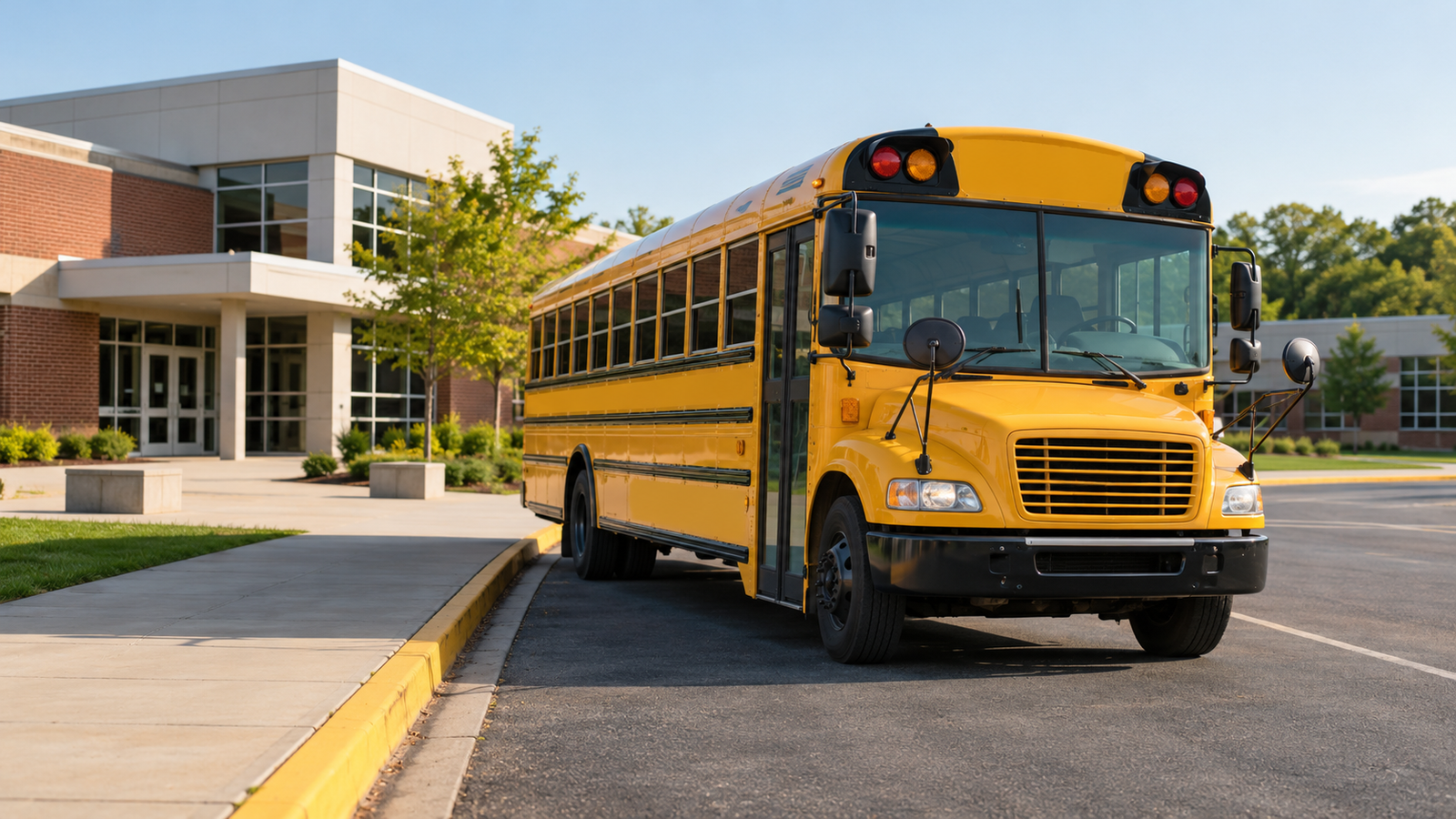
Record the bus number, license plate if safely available, company name, route identifier, school, and approximate pickup or drop-off time. A yellow bus's appearance does not by itself identify its legal owner, employer, insurer, or contracting entity.
Ask the school and transportation provider for the incident-report process and preserve correspondence. Keep the names and roles of people who respond. If different organizations are involved, avoid assuming that notifying one automatically notifies all others for legal purposes.
The arrangement may involve a private contractor, school-related entity, another vehicle's driver, or additional parties. Responsibility depends on conduct, control, duties, and causation. A lawyer should investigate those facts before naming defendants or making promises about liability.
If the child was on a field trip rather than the usual route, preserve the trip notice, transportation details, itinerary, and communications. A different vehicle or operator may mean a different set of records and insurance questions.
Bronx locations: record the exact movements
On an avenue such as Grand Concourse, Jerome Avenue, or Fordham Road, identify the direction of travel, lane, nearest intersection, and where the bus stopped. If another vehicle turned across the bus's path or passed near a stop, describe that movement separately from the child's movement.
Near the Cross Bronx Expressway, Bruckner Expressway, or an access ramp, the relevant question may involve merging, braking, congestion, or the sequence of several vehicles. Preserve the exact location and travel direction. A general reference to the expressway can be too imprecise to locate footage or witnesses.
In residential areas of Pelham Bay or Throgs Neck, curbside conditions, parked vehicles, driveways, and the designated stop may matter. Photograph the setting only when it is safe and lawful to do so. The position of the bus relative to the sidewalk or crossing can be important.
These are location-specific investigation examples, not rankings of dangerous roads. The evidence must establish what occurred at the particular place and time, including whether conditions had changed before photographs were taken.
Boarding, exits, and a child's path of travel
An injury can occur without a collision between vehicles. A child may fall on steps, be caught near a door, or encounter a problem during boarding or discharge. Record where the child was, what movement was taking place, and who was responsible for assistance or supervision at that moment.
If the child crossed a road after leaving the bus, preserve the sequence carefully. Was the bus stopped? Were signals operating? Where were the child, attendant, driver, and other vehicles? New York's school-bus stopping law addresses motorists approaching from either direction when the statutory conditions apply. Vehicle and Traffic Law 1174
Do not reduce the investigation to whether someone received a ticket. Traffic enforcement and a civil injury claim involve different questions. A citation may be relevant, but medical evidence, causation, and the conduct of all responsible parties still require review.
Preserve the child's account in their own words without repeated questioning or suggested answers. A parent's understandable effort to obtain clarity should not become coaching. Counsel can help plan appropriate evidence collection while protecting the child's wellbeing.
Accessible transportation and individual support needs
If the incident involves a wheelchair, mobility aid, restraint, lift, or boarding assistance, identify the equipment and how it was used. Preserve relevant photographs, device information, and reports without altering or testing equipment unsafely.
Existing transportation instructions may be important. Keep the relevant portions of an individualized plan, communications about assistance, and records of prior concerns. These materials can help clarify what support was expected and whether the incident involved a departure from it.
A legal review should distinguish a service problem from an injury-producing failure. A late arrival, an uncomfortable trip, and a securement malfunction are not interchangeable facts. The investigation should connect the specific conduct to the specific harm rather than rely on a broad criticism of the transportation system.
Protect the child's privacy when gathering records. Do not post medical details, other students' names, or bus video publicly. Obtain and share sensitive information through appropriate channels so that useful evidence does not become unnecessary exposure for children.
Preserve video and electronic records promptly
Potential evidence may include interior or exterior bus video, GPS records, dispatch communications, route assignments, driver logs, inspection records, and photographs from nearby properties. Availability varies. Do not assume every bus has every type of recording or that footage will be retained indefinitely.
Give counsel the precise date, time window, route, and location needed for preservation requests. A narrow, accurate description can make it easier to identify the correct material. Keep original files and messages when possible instead of retaining only cropped screenshots.
School communications and incident reports should be preserved in full. Record when a report was made, who received it, and whether a reference number was provided. A complaint about service does not necessarily satisfy an insurance notice or a formal legal notice requirement.
If a witness offers information, record contact details and what the person personally observed. Avoid pressuring children or approaching other families in a way that exposes private information. A lawyer can help determine appropriate follow-up.
No-fault insurance has a special bus-passenger rule
For many bus passengers, New York law looks first to applicable household motor-vehicle no-fault coverage; absent such a policy, the bus insurer provides first-party benefits. Exceptions and the person's role matter. Insurance Law 5103(a)(1)
That means a family should not automatically send every claim only to the bus company. Provide counsel or the insurance professional with household auto-policy information and the child's circumstances so the proper coverage can be identified.
Written no-fault notice is generally due within 30 days, subject to the rule's limited justification provision. Prompt review is important even while the investigation continues. New York Department of Financial Services no-fault FAQs
Keep claim numbers, forms, bills, and correspondence organized by insurer. First-party benefits and a liability claim are separate processes. Receiving medical-expense benefits does not automatically resolve who caused the injury or whether additional damages may be pursued.
Claims against public entities require early attention
A school transportation claim may involve a private operator, a public entity, or both. The correct defendants and applicable procedures should be identified promptly. Do not assume that the school principal, bus dispatcher, and legally responsible entity are interchangeable.
Where required, a municipal tort notice of claim generally must be served within 90 days. School-related claims can involve additional statutory rules. General Municipal Law 50-e, Education Law 3813
The child's age does not justify waiting without advice. Although New York recognizes infancy tolling for certain lawsuit deadlines, it should not be assumed to automatically excuse a required municipal notice. CPLR 208
Give counsel the incident date and every notice or communication already sent. If a deadline may have passed, seek an assessment rather than assuming either that the claim is lost or that an exception necessarily applies. The available options depend on the facts and law.
Document the effect on the child's daily life
Medical records are central, but practical information can help explain the injury's impact. Preserve attendance records, relevant school communications, therapy appointments, and medically supported changes in activity. Distinguish new limitations from preexisting needs.
Keep a simple factual record of assistance required, missed activities, and expenses. Avoid exaggeration or predictions about permanent harm before qualified professionals have assessed the condition. Consistency and accuracy are more useful than dramatic language.
If transportation must change, retain records of the reason and resulting costs. Separate ordinary commuting expenses from additional expenses connected to the incident. Counsel can evaluate which losses are legally relevant and supported.
A motor-vehicle pain-and-suffering claim may involve New York's serious-injury threshold and other requirements. The analysis depends on the injury and circumstances; a diagnosis alone should not be treated as a guaranteed entitlement. Insurance Law 5104
Settlements involving children
A child's claim should not be treated as an ordinary payment that a parent can simply accept and spend. New York provides a court-approval process for settling an infant's claim. CPLR 1207
The proposed resolution should be evaluated with appropriate medical information and an understanding of future needs. Ask how fees, expenses, liens, and the handling of proceeds are addressed. The amount offered is only one part of the decision.
Do not sign a release or broad authorization without understanding its effect. A document may resolve more than one issue or permit access to information beyond what the family expects. Counsel should explain the scope in ordinary language.
No responsible guide can promise a settlement amount from the type of bus or neighborhood. Liability, medical evidence, insurance, causation, and applicable law all affect the outcome.

Bronx school bus accident FAQs
Can there be a claim if no other vehicle hit the bus?
Possibly. Boarding, discharge, equipment, or supervision issues may require investigation. The question is whether a legally responsible party's conduct caused injury, not simply whether two vehicles collided.
Is the school automatically responsible for a contractor's bus?
No automatic conclusion should be drawn. The contract, duties, control, conduct, and applicable law need review. Identify the operator and other relevant entities before assuming who must answer for the event.
Should I wait for the police report before contacting an insurer?
Do not let a pending report cause an unnoticed deadline problem. Seek prompt advice about notice requirements and supplement the claim as records become available. Keep copies of what was submitted and when.
Does a transportation complaint preserve a legal claim?
Not necessarily. A service complaint, insurance notice, and formal notice of claim serve different purposes. Counsel should review which steps are required for the actual parties and incident.
What should I bring to a consultation?
Bring the incident date, route and bus information, photographs, reports, school messages, medical records available so far, household auto-policy information, and expense records. Explain the child's baseline needs and the changes observed after the event.
Returning to transportation after an incident
A family may need to address the next school day while the legal investigation remains open. Keep the practical transportation discussion separate from decisions about releasing claims. Ask the school and appropriate transportation contacts how medically supported needs will be communicated and documented.
If the child already has transportation accommodations, preserve the existing instructions and any proposed changes. Explain concerns accurately, including whether they relate to boarding, travel, supervision, or the child's current medical restrictions. The appropriate school and clinical professionals can evaluate the child's needs; a lawyer's role does not replace that process.
Keep a record of requests and responses. A short chronology can show when the family reported a problem, what information was provided, and what arrangements were discussed. It is more useful than a collection of disconnected messages with no dates or context.
Avoid treating acceptance of a temporary transportation solution as an admission about the cause of the injury. Likewise, do not assume a change in route proves the prior route was negligent. The operational decision and the legal investigation may address different questions.
If the family must arrange an alternative, retain receipts and explain why it was necessary. Counsel can assess the relevance of the expense. The immediate goal is a safe, workable arrangement for the child while preserving accurate information about the incident and its consequences.
## Related information
The New York school bus accident guide, Bronx car accident guide and car accident FAQs provide related motor-vehicle background. A school-bus injury requires its own review of passenger coverage, child-specific procedures, and the transportation arrangement.