
Manhattan School Bus Accident Lawyer
A school bus injury in Manhattan can involve a child riding to school, a pedestrian near a pickup point, a parent accompanying a student, or an occupant of another vehicle. The phrase “school bus accident” does not identify one standard claim. A Manhattan school bus accident lawyer should first understand who was injured, what the bus was doing, and which organizations controlled the relevant activity.
This guide explains how families can preserve information, report an incident, and prepare for an individual legal review. It covers collisions, boarding and unloading events, specialized transportation, insurance questions, and claims involving children. Immediate medical and safety needs come first; the paperwork should support the child’s care rather than become a reason to delay it.

Real transportation data without overstating what it proves
NYC Public Schools’ funding overview, checked October 26, 2026, describes roughly 9,500 bus routes serving 151,000 students citywide and beyond. Those are service figures, not Manhattan crash totals.
Nationally, NHTSA reports 1,069 deaths in school-transportation-related crashes during 2015–2024. The category includes people outside school vehicles and is broader than children riding yellow buses. See the federal statistical report.
Neither figure establishes fault in an individual incident. A large transportation network can generate many different operational questions, and a national fatality category cannot be presented as a local injury rate. A useful legal investigation begins with the route, vehicle, location, and event rather than a generalized claim about school buses.
First establish where the child is and what care is needed
If an emergency is underway, obtain emergency assistance and follow responders’ directions. Confirm the child’s location and the adult or institution responsible for their immediate care. Do not go into traffic or enter a restricted scene to collect photographs while the safety situation remains unresolved.
Tell the treating professional what is known about the event. If the parent did not witness it, say so. A child’s report, a driver’s statement, and a school notification should be identified as separate sources. Avoid turning an uncertain account into a definite medical history simply because a form asks for a short description.
Keep discharge instructions, provider information, and follow-up recommendations together. Report later symptoms or changes to the appropriate clinician rather than trying to diagnose the injury from a website. A child who initially appears calm may still need professional assessment based on the actual circumstances.
After urgent needs are addressed, create a brief chronology of notifications and care. Include who called, what they said, when the child was examined, and where records may be held. That chronology can be updated as reliable information becomes available.
Reporting the incident through the correct channels
NYC Public Schools’ Transportation Guide directs families to OPT for school bus accidents and safety concerns, and to the school for route and student-service issues. Preserve the report reference.
A school report, police report, insurance notice, and legal notice are different documents. Completing one should not be assumed to satisfy all others. Ask for copies or identifying numbers and keep a record of the information supplied.
If the account changes as new facts emerge, explain the correction. Do not delete the earlier message or ask staff to rewrite the record to hide an honest mistake. A transparent chronology is more useful than a file that appears artificially consistent.
For a child using specialized transportation, preserve the applicable transportation plan and communications about equipment, assistance, or authorized handoff arrangements. The relevant requirements should be reviewed from the actual documents, not assumed from another student’s service.
Manhattan pickup and drop-off locations require precision
Midtown curbside activity
Near Midtown schools, a bus may share curb space with deliveries, taxis, construction, and other vehicles. Identify the actual loading point, side of the street, direction of travel, and nearby entrance. A school’s mailing address may not identify the place where the child boarded.
If another vehicle passed or turned near the bus, describe the movement and the bus’s position. Record what is known about lights, doors, and the child’s location without guessing. A photograph taken later can document the layout, but it should be labeled with its actual date.
Upper East Side and Upper West Side routes
On residential avenues and side streets, an incident may involve a temporary change in the stop, a blocked curb, or movement between the bus and school entrance. Preserve notices about route or stop changes and identify whether the actual stop differed from the assigned one.
The fact of a change does not establish negligence. The investigation should ask why it occurred, who authorized it, what instructions were given, and how it relates to the injury. Those questions are more useful than assuming every deviation caused the event.
Harlem, Washington Heights, and Inwood
For routes involving hills, busy avenues, or longer travel within Manhattan, record the precise street segment and sequence. An injury on the bus may involve a turn or braking event far from the school. The route number and approximate time can help identify the correct vehicle movement.
If the child was transferred between vehicles or adults, preserve the details of each handoff. Do not assume the person who first notified the family witnessed the event. Identify who was actually present and what each person knows.
New York’s stopped-school-bus rule
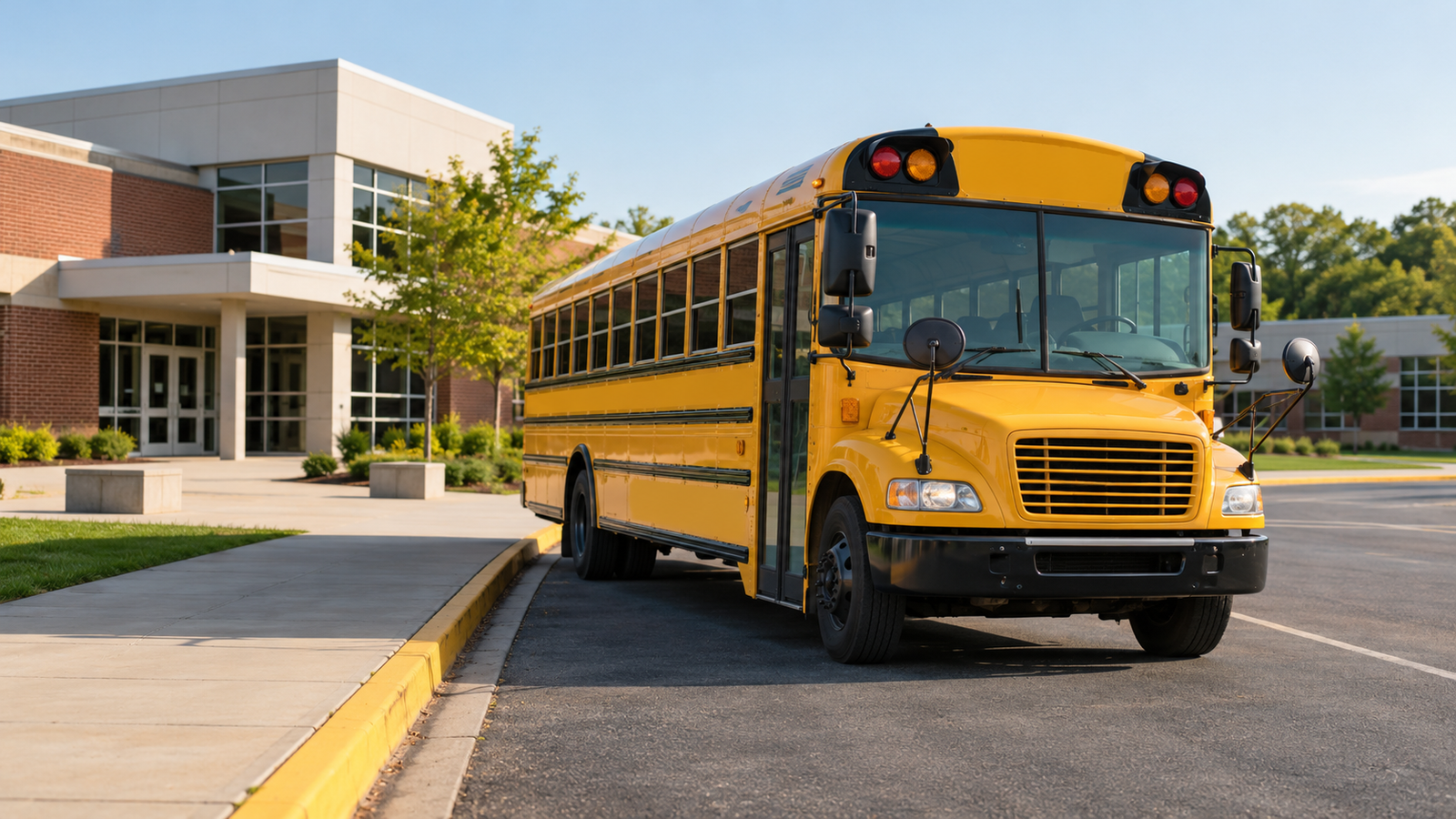
Vehicle and Traffic Law §1174 requires stopping for a properly equipped school bus receiving or discharging passengers with red signals operating. The DMV manual confirms the rule applies even across a divided highway.
For an individual claim, the evidence must still establish what happened. Was the bus stopped? Which signals were operating? Where was the child or other injured person? What did the approaching driver do? A legal rule is not a substitute for proving the event and its connection to the injury.
Do not rely on a photograph of the bus taken after the incident to establish the exact signal sequence. Video, witness accounts, vehicle records, and other evidence may be needed. Preserve any original material and identify its timing.
Identifying potentially responsible parties
The bus driver, bus company, another motorist, a property operator, or another participant may require investigation. A school district or public entity is not automatically liable because the trip involved school transportation. The actual duty, conduct, contractual arrangements, and causation must be evaluated.
Record the bus number, route number, company name, plate if safely available, and the driver or attendant information known to the family. A substitute vehicle can complicate identification, so preserve messages about changes. The company normally assigned to a route may not answer every question about the vehicle used that day.
An injury during boarding may raise different issues from a road collision. A wheelchair securement event, a fall on bus steps, or an incident involving another vehicle needs its own factual description. Avoid labeling every event a “crash” if no collision occurred.
Counsel should explain which possible parties are being investigated and why. Naming every organization associated with the route is not the same as establishing responsibility. A focused investigation identifies the conduct and evidence relevant to each potential claim.
Evidence that may be available only briefly
Ask counsel promptly about preserving bus video, GPS information, route records, dispatch communications, maintenance material, and incident reports. Availability and retention vary; the family should not assume every bus has every recording system or that all data will remain indefinitely.
Nearby building cameras may show a pickup, approach, or departure without showing the injury itself. That limited footage can still help establish timing. Identify possible sources from a safe public location and avoid unauthorized access to private systems.
Keep the child’s account in their own words. Avoid repeated leading questions or asking the child to rehearse a version of events. Note when the statement was made and who was present. Medical and legal professionals can determine how further information should be obtained appropriately.
Preserve damaged items where relevant, such as a mobility device or personal equipment, without repairing or discarding them before advice when feasible. Safety and medical needs may require immediate action; document what was changed and why rather than allowing the evidence history to become unclear.
Insurance and the difference between benefits and liability
Insurance Law §5103 contains special bus-passenger benefit priority rules involving applicable household coverage and, absent it, the bus insurer. Do not assume the bus company’s policy is always the first source.
Provide counsel with household auto policy information and the child’s passenger status, as well as details of any other vehicle. Coverage analysis can differ for a passenger, pedestrian, driver, or employee. A general online answer cannot identify the correct insurer for every event.
The Department of Financial Services generally requires no-fault notice within 30 days, subject to a documented reasonable justification exception. Obtain prompt advice about the applicable coverage and notice.
A benefits claim does not resolve liability or every possible category of loss. Insurance Law §5104 limits certain motor-vehicle non-economic claims to serious injury. Counsel must assess whether that framework applies to the particular incident.
Children’s claims and public-entity deadlines
CPLR §208 can extend some lawsuit periods for minors. It should not be treated as an automatic extension of every notice, insurance, or parent-related deadline.
For applicable public-entity tort claims, General Municipal Law §50-e generally requires notice within 90 days. Late-notice relief is a legal question, not a reason to wait.
Ask counsel to identify the actual entities and provide a deadline assessment for the child’s claim and any separate parental claim. An OPT complaint or school incident report should not be assumed to serve as the required legal notice.
The rules about fault also need current review. CPLR §1411 now contains a special bar for certain Article 51 personal-injury claims when claimant fault exceeds defendants’ combined fault. Do not rely on outdated blanket statements.

Documenting recovery and school effects
Keep medical recommendations, attendance records, and communications about temporary accommodations. Describe what changed after the event and distinguish medical restrictions from a parent’s understandable concern. The treating professional should guide health decisions and return-to-activity questions.
If a child needs help with transportation, schoolwork, or daily tasks, record the actual assistance and duration. Include improvement as well as difficulty. A balanced account is more useful than a diary that describes every day in the same absolute terms.
Preserve receipts and records of expenses, but do not assume every cost is recoverable. Counsel can distinguish insurance benefits, possible damages, and other support processes. The practical goal is accurate documentation, not maximizing a number through unsupported estimates.
For a proposed settlement involving a child, CPLR §1207 provides a court approval process. A parent should not assume a private signature alone completes the legal settlement.
Questions for a Manhattan school bus accident attorney
Ask who will identify the bus and operator, what evidence needs preservation, and which deadlines apply. Discuss the difference between an administrative transportation complaint and a personal-injury claim. A useful consultation should explain the next steps even when a final liability opinion is premature.
Review the written engagement terms, fees, expenses, communication arrangements, and any need for separate assistance with school services. For background, see the New York school bus accident guide, car accident FAQs, and Manhattan car accident page.
A practical record of the curb-to-classroom sequence
A Manhattan school day can involve several handoffs: home to bus, bus to school staff, and the reverse in the afternoon. If the injury occurred near a handoff, describe each stage separately. Identify where the bus stopped, where the receiving adult stood, and when the child moved between them.
The person responsible for notifying the family may not have witnessed the event. Ask what information is firsthand and what came from someone else. A school nurse may know the child’s condition after arrival while a bus attendant knows what occurred during the ride. Both records can help when their roles are clear.
Preserve the assigned pickup instructions and any temporary changes. A road closure, building work, or altered entrance may explain why a route changed, but explanation is not the same as proof that the change was appropriate or caused an injury. The investigation should examine the actual decision and sequence.
If the child traveled on a field trip rather than the regular route, retain the trip notice and transportation information. The usual route number may not identify the vehicle or operator. Give counsel the actual arrangement instead of assuming the school’s everyday transportation records cover the trip.
Keeping educational decisions separate from claim decisions
A family may need an immediate transportation adjustment even while liability is uncertain. Communicate current needs to the school and appropriate transportation staff, preserving the request and response. Seeking a safer or more workable arrangement does not require the parent to solve the legal case first.
At the same time, an administrative resolution does not necessarily resolve an injury claim. A new stop, replacement vehicle, or service adjustment may address the future without compensating past harm. Counsel can explain the difference and review any document that includes release language.
Keep the child’s educational information private and share only through appropriate channels. If a record contains sensitive details unrelated to the incident, ask how it should be handled rather than publishing it or sending it broadly. A focused, secure file supports both the child’s interests and an accurate legal review.
The aim is a workable plan for care, school attendance, and evidence preservation. Those tasks can proceed together without turning the child’s daily routine into repeated discussion of litigation.
Manhattan school bus accident FAQs
Does the school automatically owe compensation?
No. The responsible parties and legal duties depend on the facts. The school, transportation contractor, driver, another motorist, or a property operator may have different roles. A claim requires evidence connecting relevant conduct to the injury.
What if there was no collision?
Describe the event accurately. Boarding, unloading, securement, or other transportation injuries can raise different legal and insurance questions. Do not force the account into a crash narrative merely because a bus was involved.
Should a parent question every child on the bus?
Avoid leading or repeated questioning. Preserve known witness contacts and the child’s spontaneous account, then discuss appropriate information gathering with counsel. Children’s privacy and the reliability of their recollections both matter.
Does a minor have unlimited time to bring a claim?
No. Different deadlines can apply to notices, insurance, public entities, and separate claims. Seek an early individualized review rather than assuming the child’s age protects every right automatically.
Where can questions about this page be sent?
Use the contact page for website content questions. A specific injury or deadline should be reviewed promptly by an independent licensed attorney.