
Brooklyn Personal Injury Lawyer
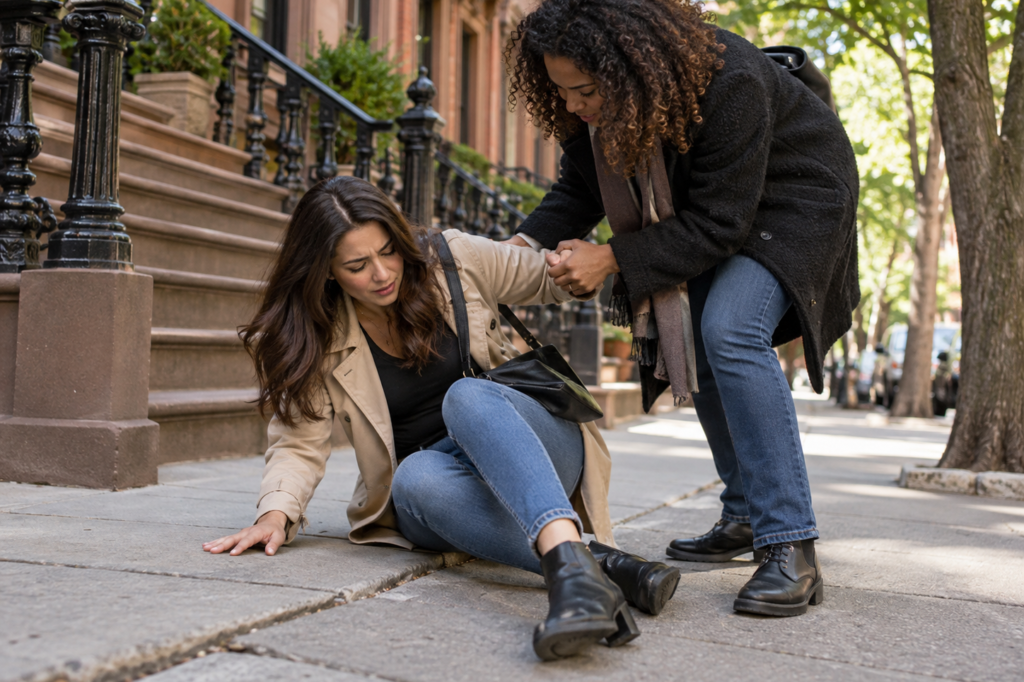
When an unexpected accident leaves you injured, the physical, emotional, and financial consequences can affect nearly every part of your life. Medical expenses accumulate, missed work creates financial uncertainty, and insurance companies may begin asking questions before you fully understand the extent of your injuries.
If someone else’s negligence caused your injuries, a Brooklyn personal injury lawyer can help you understand your legal options, determine who may be responsible, and pursue compensation available under New York law.
At Tokov Law, the goal of a personal injury case evaluation is to understand what happened, identify potentially responsible parties, and determine what evidence may support a claim. Whether your accident involved a vehicle collision, dangerous property condition, construction site, or another preventable incident, the details matter.
Brooklyn presents unique accident risks. Heavily traveled roads such as Atlantic Avenue and Flatbush Avenue, busy pedestrian areas near Downtown Brooklyn, and active construction projects throughout the borough can create complicated liability questions.
Injured individuals may be entitled to seek compensation for medical bills, lost wages, pain and suffering, and other legally recoverable damages. However, obtaining compensation requires establishing liability, documenting losses, and complying with applicable legal deadlines.
Contact Tokov Law to request a personal injury case evaluation and discuss your legal options following an accident in Brooklyn, New York.
Why Choose Tokov Law for a Brooklyn Personal Injury Claim?
Choosing a personal injury attorney is an important decision. The right legal approach depends on the circumstances of the accident, the available evidence, the injuries involved, and the parties who may be legally responsible.
A personal injury claim should begin with a careful evaluation rather than assumptions about fault or promises of a particular financial outcome.
A Case-Specific Approach to Personal Injury Claims
Every accident is different. A pedestrian struck near Barclays Center may have different legal concerns than a construction worker injured in Williamsburg or someone who slips on a damaged staircase in Bay Ridge.
A thorough case assessment considers:
- How and where the accident occurred
- Whether another party breached a legal duty
- The nature and severity of the injuries
- Available accident reports and witness statements
- Potential insurance coverage
- Medical expenses and lost income
- Applicable New York personal injury laws
- Filing deadlines and evidence preservation requirements
Understanding these details is essential before determining whether a claim can proceed.
Clear Communication Throughout the Legal Process
Personal injury cases can involve unfamiliar legal terminology, insurance requirements, medical documentation, negotiations, and court procedures.
Individuals considering representation should understand what their attorney will investigate, how fees and expenses work, whether litigation may be necessary, and what information they need to provide.
Clear communication helps injured people make informed decisions as their cases progress.
Understanding Brooklyn Accident Claims
Brooklyn includes densely populated residential neighborhoods, industrial areas, major highways, commercial districts, waterfront developments, and numerous active construction sites.
An effective investigation considers the conditions surrounding the specific accident.
For example, a collision on the Brooklyn-Queens Expressway may require reviewing lane movements and vehicle positioning. A pedestrian accident near a Downtown Brooklyn intersection may involve traffic signals, turning vehicles, and nearby surveillance footage.
Local circumstances help determine which evidence is relevant, although an accident’s location alone does not establish negligence.
Types of Personal Injury Cases in Brooklyn
Personal injury law covers different incidents in which another party’s negligent or wrongful conduct may cause compensable harm.
The following are among the principal accident categories relevant to Brooklyn injury claims.
Brooklyn Car Accidents
Car accidents can happen on residential streets, commercial corridors, major intersections, and highways throughout Kings County.
Common causes include distracted driving, unsafe lane changes, speeding, failure to yield, following too closely, and violations of traffic signals.
A Brooklyn car accident lawyer may investigate driver negligence, vehicle ownership, insurance coverage, crash reports, surveillance recordings, and eyewitness accounts.
Accident-related legal questions can differ depending on whether the crash involved two privately owned vehicles, several drivers, a commercial vehicle, or a pedestrian.
Truck and Commercial Vehicle Accidents
Commercial trucks, delivery vans, and other business vehicles regularly travel through Brooklyn.
Truck accidents may involve additional issues, including employer responsibility, vehicle maintenance, loading practices, and commercial insurance.
Depending on the facts, an injured person may have claims involving a driver, vehicle owner, employer, or another responsible party.
Motorcycle Accidents
Motorcyclists face significant risks when other drivers fail to notice them, turn across their path, or make unsafe lane changes.
Motorcycle accident injuries can be particularly severe because riders have less physical protection than occupants of passenger vehicles.
New York’s no-fault rules also treat motorcycles differently from many other motor vehicles, making it important to identify the applicable insurance and legal framework.
Pedestrian Accidents
Brooklyn’s busy intersections bring pedestrians into close proximity with turning cars, taxis, buses, and commercial delivery vehicles.
Pedestrian collisions may involve drivers who fail to yield at crosswalks, disregard traffic signals, or do not exercise reasonable care.
A Brooklyn pedestrian accident lawyer may examine traffic signal information, vehicle movements, witness statements, and recordings from nearby businesses or buildings.
Bicycle Accidents
Bicyclists frequently travel through Brooklyn’s street network, including designated bicycle lanes, neighborhood routes, and major avenues.
Potential causes of bicycle accidents include unsafe vehicle turns, dooring incidents, failure to yield, and dangerous passing maneuvers.
Determining responsibility may require reviewing roadway design, traffic laws, vehicle movement, and the cyclist’s position at the time of impact.
Uber, Lyft, and Taxi Accidents
Rideshare and for-hire vehicle collisions can present complex insurance questions.
Available coverage may depend on whether the driver was operating a personal vehicle, transporting a passenger, waiting for a ride request, or otherwise using the vehicle in a covered commercial capacity.
Identifying the vehicle type, trip status, and applicable insurance policies is an important part of evaluating these accidents.
Slip-and-Fall Accidents
A Brooklyn slip and fall lawyer may evaluate claims involving unsafe flooring, defective stairs, spills, ice, inadequate lighting, damaged walkways, and other hazardous property conditions.
These incidents can occur in apartment buildings, supermarkets, restaurants, retail businesses, office buildings, and other properties.
To establish a negligence claim, it is generally necessary to identify the applicable duty of care and show how the defendant’s conduct or failure to act contributed to the injuries.
Construction and Workplace Accidents
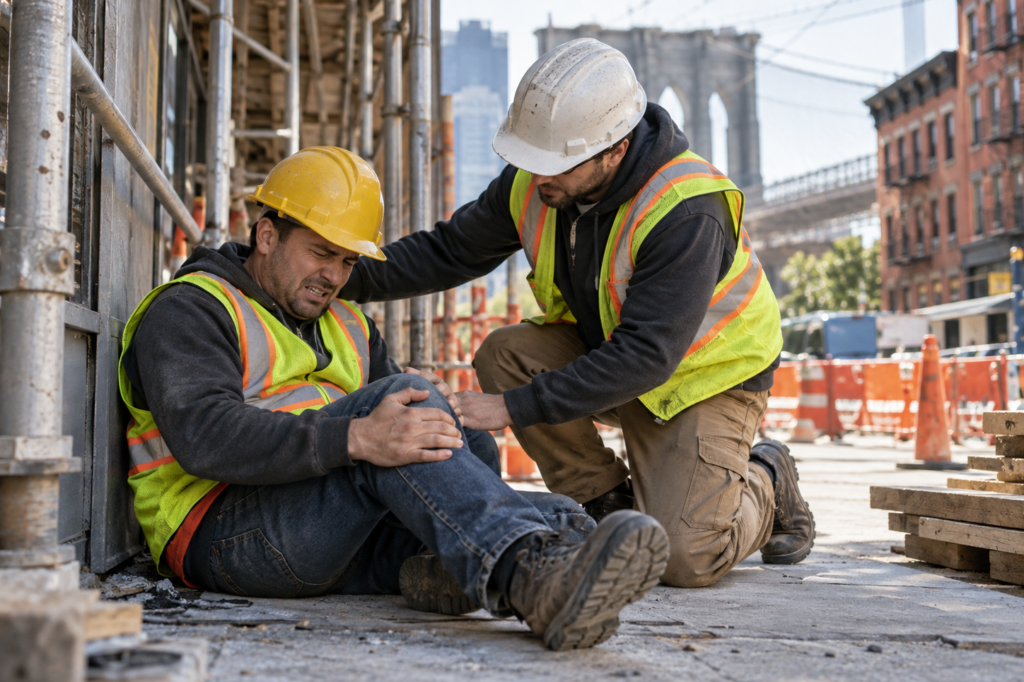
Brooklyn construction projects involve elevated work areas, scaffolds, ladders, heavy equipment, electrical hazards, and multiple contractors working within the same location.
Construction accident claims may involve unsafe equipment, falling objects, inadequate fall protection, or dangerous worksite conditions.
New York Labor Law Sections 200, 240, and 241 may provide important protections depending on the worker’s activity and the circumstances.
Bus and Public Transportation Accidents
Bus collisions, transit-related falls, and injuries involving station or transportation property can raise questions about driver conduct, maintenance, and the identity of the responsible entity.
Claims involving government agencies and public authorities may be subject to specialized notice and filing deadlines.
Wrongful Death Claims
The unexpected death of a loved one can leave a family facing profound personal and financial consequences.
New York wrongful death law may allow an authorized personal representative to pursue certain damages when another party’s legally actionable conduct caused a death.
Wrongful death claims have separate procedural requirements and should be evaluated promptly.
Common Injuries in Brooklyn Personal Injury Cases
The severity and consequences of an accident may not be immediately apparent.
Some injuries require emergency treatment, while others become more noticeable over the following days or weeks.
Personal injury claims may involve:
- Traumatic brain injuries and concussions
- Spinal cord injuries
- Herniated discs and other back injuries
- Neck injuries and whiplash
- Broken bones and fractures
- Knee, shoulder, and joint injuries
- Torn ligaments and soft tissue damage
- Nerve injuries
- Internal injuries and organ damage
- Burns and permanent scarring
- Facial injuries and disfigurement
- Permanent disability or reduced mobility
- Amputation and loss of limb function
Serious injuries can affect an individual’s ability to work, care for family members, participate in ordinary activities, or maintain the same quality of life.
Even when an injury initially appears minor, proper medical evaluation is important. Symptoms, treatment needs, and long-term limitations should be documented accurately rather than assumed.
Traumatic Brain and Spinal Cord Injuries
Brain and spinal cord injuries may cause long-lasting physical, cognitive, or functional impairments.
A serious injury claim may require medical records, imaging, specialist evaluations, rehabilitation information, and evidence of how the condition affects daily activities.
Broken Bones and Orthopedic Injuries
Fractures, torn ligaments, and other orthopedic injuries may require surgery, physical therapy, immobilization, or an extended period away from work.
Compensation considerations can include both immediate treatment needs and reasonably supported future limitations.
Permanent Disabilities and Catastrophic Injuries
Certain injuries result in permanent impairments that change a person’s employment opportunities, independence, or need for ongoing assistance.
Evaluating long-term damages may require medical, vocational, and financial evidence.
Brooklyn Accident Locations and Neighborhoods Served
Brooklyn is one of New York City’s largest and most varied boroughs. Its neighborhoods differ significantly in roadway design, pedestrian activity, construction patterns, and property conditions.
Tokov Law’s Brooklyn personal injury content addresses legal issues that may arise throughout Kings County, including the following communities.
Downtown Brooklyn and Fort Greene
Downtown Brooklyn includes the Fulton Street commercial corridor, Atlantic Terminal, the Barclays Center area, office buildings, and heavily traveled intersections.
Accidents in this area may involve pedestrians, taxis, buses, delivery vehicles, or hazards inside commercial properties.
Locations such as Flatbush Avenue, Atlantic Avenue, Fourth Avenue, and nearby streets may be relevant when investigating collisions or injuries.
Williamsburg and Greenpoint
Williamsburg and Greenpoint include residential developments, restaurants, industrial properties, waterfront areas, and construction projects.
Potential claims may involve construction site injuries, commercial vehicle collisions, pedestrian accidents, and dangerous property conditions.
The Williamsburg Bridge approaches and streets connecting to the Brooklyn-Queens Expressway present different traffic considerations from quieter residential blocks.
Park Slope and Gowanus
Park Slope contains residential buildings, commercial storefronts, schools, and busy avenues surrounding Prospect Park.
Gowanus has a combination of industrial properties, warehouses, construction activity, and changing residential developments.
A pedestrian collision near Grand Army Plaza may involve different evidence than an injury at a construction site or industrial property in Gowanus.
Bedford-Stuyvesant and Crown Heights
Bedford-Stuyvesant and Crown Heights include residential buildings, commercial corridors, delivery activity, and frequently traveled intersections.
Accidents may occur along streets such as Fulton Street, Bedford Avenue, Nostrand Avenue, and Eastern Parkway.
Property injuries may involve building maintenance, stairways, sidewalks, or other hazardous conditions.
Flatbush and East Flatbush
Flatbush Avenue is one of Brooklyn’s major transportation corridors.
In April 2026, the New York City Department of Transportation announced construction on a significant Flatbush Avenue redesign between Livingston Street and Grand Army Plaza, including changes intended to improve bus operations and street safety.
A collision occurring in or near a street redesign area may require reviewing the traffic controls, roadway configuration, and conditions that existed at the time of the incident.
Flatbush and East Flatbush also contain residential properties, busy shopping streets, and pedestrian crossings where different types of injury claims may arise.
Bushwick, Brownsville, and East New York
These Brooklyn neighborhoods include residential streets, commercial activity, and connections to major transportation routes.
Injury claims may arise from vehicle collisions, pedestrian accidents, unsafe building conditions, or workplace incidents.
Sunset Park and Bay Ridge
Sunset Park includes industrial and commercial activity near parts of the waterfront and Third Avenue corridor.
Bay Ridge includes residential communities and roads connecting to the Verrazzano-Narrows Bridge and Belt Parkway.
Vehicle accidents, workplace injuries, and premises liability matters may involve different defendants depending on the location and cause.
Additional Brooklyn Communities
Other Brooklyn neighborhoods include:
- Bensonhurst
- Borough Park
- Brooklyn Heights
- Boerum Hill
- Carroll Gardens
- Cobble Hill
- Clinton Hill
- Coney Island
- Sheepshead Bay
- Brighton Beach
- Canarsie
- Red Hook
- Prospect Heights
- Dyker Heights
- Marine Park
A Brooklyn address can help identify where evidence may be found, but it does not independently prove that an accident was caused by negligence.
Dangerous Road Conditions and Major Brooklyn Traffic Corridors
Brooklyn’s transportation network includes high-volume roads, bridges, expressways, commercial loading areas, bicycle lanes, and pedestrian crossings.
Roadway conditions that may become relevant to an accident investigation include:
Atlantic Avenue: An important east-west corridor with commercial activity, intersections, and connections to Downtown Brooklyn.
Flatbush Avenue: A major route connecting neighborhoods, commercial areas, and transit facilities.
Fourth Avenue: A heavily used corridor with intersections, pedestrian crossings, and nearby commercial and residential activity.
Brooklyn-Queens Expressway (BQE): An expressway where collisions may involve merging vehicles, commercial trucks, congestion, and multiple lanes of traffic.
Belt Parkway: A significant Brooklyn roadway where higher-speed collisions, merging movements, and roadway conditions may become relevant.
Eastern Parkway: A major corridor serving multiple Brooklyn neighborhoods.
Kings Highway and Ocean Parkway: Important routes where intersections, driver conduct, and pedestrian movement may require investigation.
A road’s traffic volume or history of safety improvements does not establish that a particular driver, municipality, or property owner caused an accident.
The actual circumstances must be evaluated using evidence.
What Should You Do After an Accident in Brooklyn?
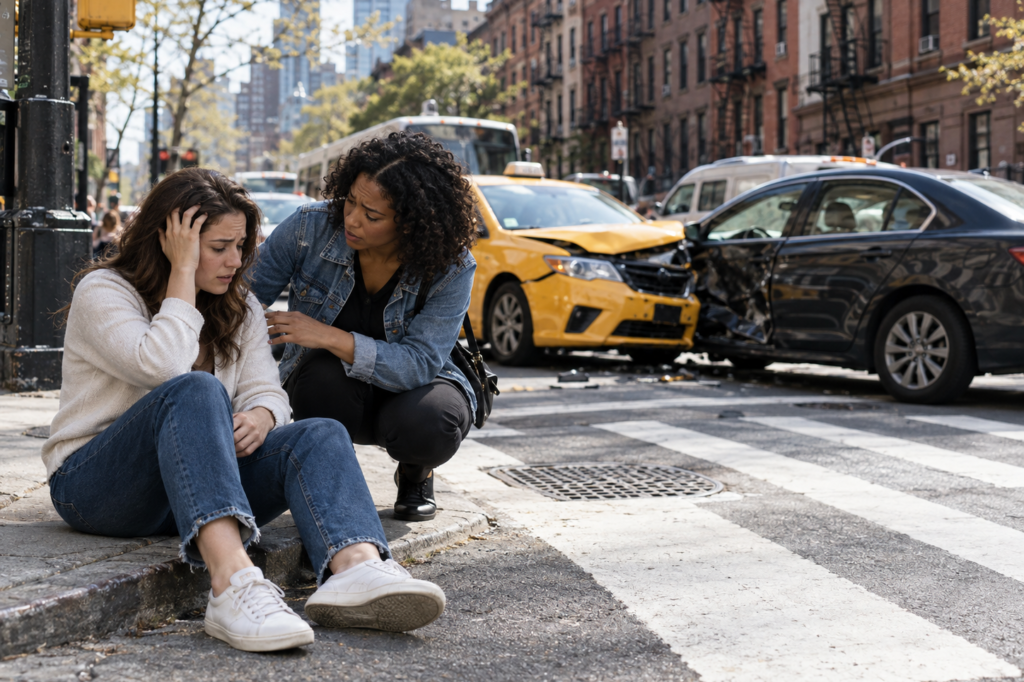
The actions taken after an accident may affect both your health and the availability of evidence.
1. Obtain Appropriate Medical Care
Seek medical attention promptly, particularly if you experience significant pain, dizziness, confusion, head injuries, difficulty walking, or other concerning symptoms.
Follow medical recommendations and keep accurate treatment records.
2. Report the Accident
Depending on the situation, the accident may need to be reported to police, an employer, a business, a property manager, or an insurance company.
Obtain available report numbers and contact information.
3. Document the Scene
When safe, take photographs or videos showing:
- Where the incident occurred
- Vehicle damage
- Traffic signals or roadway conditions
- Dangerous flooring or sidewalk conditions
- Construction equipment or barriers
- Visible injuries
- Relevant surrounding features
4. Obtain Witness Information
Witnesses may provide important independent evidence.
Record names and contact information where possible.
5. Preserve Records
Keep copies of medical bills, treatment instructions, insurance communications, missed-work documentation, receipts, and photographs.
6. Be Careful With Insurance Statements
Provide required information accurately, but avoid speculating about facts you do not know.
Do not assume that an early settlement offer reflects the full value of a potential claim.
7. Review Deadlines Promptly
Certain legal and insurance deadlines may begin immediately after an accident.
Waiting until medical treatment is complete can create unnecessary legal risks.
What Is a Personal Injury Claim Under New York Law?
A personal injury claim is a civil legal matter in which an injured person seeks compensation for harm allegedly caused by another party’s legally actionable conduct.
Many personal injury claims are based on negligence.
To establish a negligence claim, four general elements must ordinarily be proven.
Duty of care: The defendant owed the injured person an applicable legal duty.
Breach of duty: The defendant failed to satisfy that duty.
Causation: The defendant’s conduct was a factual and legally sufficient cause of the injury.
Damages: The injured person suffered compensable harm.
For example, if a driver fails to yield to a pedestrian who lawfully enters a crosswalk, that conduct may support a negligence claim if the required legal elements can be established.
However, the final determination depends on the circumstances and evidence.
What Compensation Can You Recover in a Brooklyn Personal Injury Case?
One of the most common questions following an accident is whether the injured person can recover financial compensation.
The answer depends on the type of claim, the legally responsible parties, the injuries, and the available evidence.
Potential damages may include the following categories.
Medical Expenses
Recoverable medical damages may include qualifying emergency care, hospital treatment, diagnostic testing, surgery, medication, rehabilitation, and future medical expenses.
Future expenses generally require appropriate supporting evidence.
Lost Wages and Reduced Earning Capacity
An accident may prevent an injured person from returning to work temporarily or permanently.
Depending on the circumstances, damages may include past lost income and reasonably established future earning losses.
Pain and Suffering
Physical pain, emotional consequences, and loss of enjoyment of life may be compensable in qualifying personal injury claims.
However, some motor vehicle cases are subject to statutory restrictions on recovery for noneconomic losses.
Permanent Injuries and Future Care
Serious injuries may require ongoing rehabilitation, assistive devices, home modifications, or long-term medical treatment.
A damages analysis may consider these needs where legally recoverable and supported by the evidence.
Wrongful Death Damages
Different rules govern damages arising from a wrongful death claim.
The categories available depend on New York law and the circumstances of the death.
No attorney can determine the value of a claim solely from the type of accident or injury. Liability, medical evidence, comparative fault, and legal limitations must be considered.
How Much Is a Brooklyn Personal Injury Case Worth?
There is no standard settlement amount for every accident in Brooklyn.
Two individuals involved in similar types of incidents may have very different claims.
Several factors can influence case value:
- The seriousness of the injuries
- Whether the injuries cause lasting impairment
- Medical expenses already incurred
- Reasonably anticipated future treatment
- Lost wages and reduced earning capacity
- Available insurance coverage
- The strength of the liability evidence
- The injured person’s share of fault, if any
- Statutory restrictions on damages
- The effects of the injuries on daily life
For example, an accident causing a temporary injury requiring limited treatment may present different damage considerations from an accident causing permanent mobility restrictions and an inability to return to work.
A fair evaluation should account for both economic losses and legally recoverable noneconomic harm without promising a particular settlement.
Understanding New York No-Fault Insurance
New York maintains a no-fault insurance framework for many motor vehicle accidents.
Qualifying first-party no-fault benefits may cover certain medical expenses, lost earnings, and other eligible costs regardless of who caused the collision.
No-fault insurance is not the same as a personal injury liability lawsuit against a negligent driver.
The 30-Day No-Fault Notice Requirement
New York generally requires eligible injured people to provide written notice to the appropriate no-fault insurer as soon as reasonably practicable and ordinarily within 30 days of the accident.
Recognized exceptions may apply when there is an adequate justification for late notice.
Serious Injury Requirements
For certain motor vehicle lawsuits, recovering noneconomic damages requires meeting New York’s statutory serious-injury requirements.
Qualifying categories may include fractures, significant disfigurement, certain permanent consequential limitations, and significant limitations of bodily functions or systems.
Important Changes to New York Law in 2026
New York amended Insurance Law Sections 5102 and 5104 in May 2026.
For actions commenced on or after May 26, 2026, the former serious-injury category involving a qualifying nonpermanent impairment for at least 90 of the first 180 days following an accident was removed.
The new framework also affects how certain motor vehicle injury claims are evaluated.
Because these changes can materially affect compensation, the relevant law should be reviewed based on the specific claim and commencement date.
Can You Recover Compensation if You Were Partially at Fault?
More than one person may contribute to an accident.
New York’s comparative negligence law addresses how responsibility affects compensation.
Under the general rule in CPLR Section 1411(a), a claimant’s comparative fault ordinarily reduces recoverable damages in proportion to the claimant’s share of fault.
For example, in a case governed by that general rule, a $100,000 damages award with 20% comparative fault attributed to the claimant would ordinarily be reduced to $80,000.
The 2026 Comparative Fault Amendment
New York introduced CPLR Section 1411(b), changing the rules for certain motor vehicle personal injury actions subject to Insurance Law Article 51.
For actions commenced on or after May 26, 2026, recovery is barred under that provision when the claimant’s culpable conduct exceeds the culpable conduct of the defendant or the combined culpable conduct of the defendants.
This modified rule does not apply identically to every type of personal injury claim.
Whether comparative negligence reduces recovery or prevents recovery must be evaluated under the law governing the particular action.
Brooklyn Construction Accident Claims and New York Labor Law
Construction workers may have additional legal protections under New York law.
Labor Law Section 200 addresses certain workplace safety obligations.
Labor Law Section 240(1) provides specific protections against qualifying elevation-related hazards, including certain scaffold, ladder, and falling-object accidents.
Labor Law Section 241(6) concerns construction, excavation, and demolition safety and may support liability where its requirements are satisfied.
These statutes do not automatically apply to every construction accident.
The analysis depends on the work being performed, statutory requirements, the cause of injury, and the roles of owners, contractors, and other parties.
Can You File a Personal Injury Lawsuit While Receiving Workers’ Compensation?
Potentially.
Workers’ compensation may provide benefits for qualifying work-related injuries.
A separate lawsuit against an eligible third party may also be available depending on the facts.
Such claims require examining the employment relationship, responsible parties, and applicable legal limitations.
How Long Do You Have to File a Personal Injury Lawsuit in Brooklyn?
New York law establishes strict deadlines for filing personal injury lawsuits.
Missing an applicable deadline may prevent an injured person from pursuing otherwise valid claims.
General Personal Injury Lawsuits
Under CPLR Section 214(5), many negligence-based personal injury lawsuits against private defendants generally must be commenced within three years of the injury.
Wrongful Death Claims
New York wrongful death lawsuits generally must be commenced within two years of the date of death, subject to applicable statutory rules.
Medical Malpractice Claims
Medical malpractice actions generally have a two-year-and-six-month limitations period, with specific rules and exceptions governing accrual and certain circumstances.
Claims Against New York City
Certain injury claims against New York City or other covered municipal entities generally require a notice of claim within 90 days.
General Municipal Law Section 50-i also generally establishes a one-year-and-90-day lawsuit deadline for covered municipal negligence claims.
Public Transportation Claims
Transportation-related injury claims may involve different public authorities or entities with specialized notice and filing requirements.
It is important to identify the correct defendant before calculating a deadline.
Why Filing Deadlines Matter
An insurance claim does not necessarily preserve the legal right to file a lawsuit.
Similarly, negotiating with an insurance company does not automatically extend the statute of limitations.
Injury claims should be reviewed promptly rather than assuming that the same deadline applies to every accident.
Where Are Brooklyn Personal Injury Lawsuits Filed?
Brooklyn is located in Kings County, New York.
Many higher-value civil injury lawsuits involving proper jurisdiction and venue are heard in the Supreme Court of the State of New York, Kings County.
The Kings County Supreme Court, Civil Term, is located at:
360 Adams Street, Brooklyn, NY 11201
The appropriate court depends on the nature of the lawsuit, amount sought, parties, jurisdictional rules, and proper venue.
Not every Brooklyn accident case must be filed in Kings County Supreme Court.
Civil cases may involve electronic filing, document exchange, depositions, motion practice, settlement discussions, and other pretrial procedures.
The applicable process depends on the circumstances of the case.
How Does the Personal Injury Claim Process Work?
Understanding the stages of a personal injury matter can help injured individuals know what to expect.
Step 1: Initial Consultation
The accident, injuries, potential defendants, and available documents are reviewed to determine which legal questions require investigation.
Step 2: Evidence Collection
Relevant materials may include police reports, medical records, photographs, witness accounts, insurance information, maintenance records, and surveillance footage.
Step 3: Liability Investigation
An attorney may evaluate whether another party breached a legal duty and whether that conduct caused compensable injuries.
Step 4: Damages Evaluation
Medical expenses, lost income, future care needs, and other potentially recoverable losses are assessed.
Step 5: Insurance Negotiations
Where appropriate, settlement discussions may occur with an insurer or other responsible party.
Step 6: Filing a Lawsuit
If the matter cannot be resolved or litigation is otherwise necessary, a lawsuit may be commenced before the applicable deadline.
Step 7: Discovery and Case Preparation
The parties may exchange records, conduct depositions, obtain expert opinions, and present legal arguments.
Step 8: Settlement or Trial
A case may resolve through a negotiated settlement or proceed to a court determination.
Not every personal injury case follows exactly the same path, and settlement is never guaranteed.
How Much Does It Cost to Hire a Brooklyn Personal Injury Lawyer?
Many New York personal injury attorneys represent clients using contingency-fee arrangements.
Under a contingency-fee agreement, the attorney’s compensation generally depends on obtaining a qualifying recovery.
The fee percentage, treatment of litigation expenses, and other responsibilities should be clearly explained in a written agreement.
A prospective client should ask:
- What percentage of the recovery is charged?
- Are litigation expenses deducted before or after calculating the legal fee?
- Who is responsible for expenses if the claim is unsuccessful?
- Are there different terms if the case proceeds to trial?
- Who will handle the case and communicate with the client?
Understanding these terms before entering into an agreement is important.
What Happens During a Personal Injury Consultation?
A legal consultation provides an opportunity to discuss the accident and evaluate whether further investigation is appropriate.
Topics commonly reviewed include:
The accident: When, where, and how the incident occurred.
The injuries: Medical treatment received, ongoing symptoms, and expected follow-up care.
Possible liability: Who may be responsible and which facts remain disputed.
Available evidence: Photographs, incident reports, witness information, surveillance footage, and other records.
Insurance: Known insurance policies, claims already filed, and communications received.
Deadlines: Time-sensitive requirements, including no-fault notices and potential government claims.
Legal options: Whether the circumstances may support a claim and what the next steps could involve.
The purpose of an initial consultation is to identify the relevant legal issues, not to guarantee compensation.
Frequently Asked Questions About Brooklyn Personal Injury Cases
Do I Need a Brooklyn Personal Injury Lawyer After an Accident?
Not every accident requires legal representation. However, legal advice may be particularly useful when injuries are significant, fault is disputed, insurance coverage is complicated, multiple parties are involved, or a government entity may be responsible.
How Soon Should I Contact an Injury Lawyer?
It is generally advisable to seek legal guidance promptly. Evidence can disappear, surveillance footage may be overwritten, and certain filing requirements arise shortly after an accident.
Can I File a Personal Injury Claim Without a Police Report?
Possibly. A police report may be useful, but a claim can also depend on other forms of evidence, including medical records, photographs, witnesses, and surveillance recordings.
Can I Sue if I Was Injured on a Brooklyn Sidewalk?
Potentially. Responsibility for sidewalk injuries depends on the property, applicable maintenance obligations, defect, notice requirements, and other circumstances.
Under New York City Administrative Code Section 7-210, many adjoining property owners have sidewalk maintenance responsibilities, subject to statutory exceptions.
What if I Was Injured in a Brooklyn Apartment Building?
A claim may depend on whether a landlord, property owner, management company, or another responsible party breached an applicable duty involving stairs, flooring, lighting, handrails, or other building conditions.
Can I Recover Compensation for Pain and Suffering?
Potentially. Pain and suffering may be recoverable in qualifying personal injury claims. However, certain motor vehicle actions are subject to New York’s serious-injury threshold and other statutory restrictions.
What if the Insurance Company Says I Was at Fault?
An insurer’s assessment does not necessarily determine legal responsibility. Comparative negligence depends on the applicable law and available evidence.
Can I File a Claim After a Construction Accident?
A construction injury may support workers’ compensation benefits, a qualifying third-party personal injury claim, or both, depending on the circumstances.
How Long Does a Brooklyn Personal Injury Settlement Take?
There is no standard timeline. The duration depends on injury severity, medical treatment, evidence, insurance negotiations, legal disputes, and whether litigation is required.
What Is the Average Personal Injury Settlement in Brooklyn?
There is no meaningful settlement figure that accurately represents every case. Damages depend on individual circumstances, including the injuries, losses, liability evidence, and applicable legal rules.
What if My Accident Happened While I Was Visiting Brooklyn?
Living outside Brooklyn does not automatically prevent someone from pursuing a personal injury claim arising from an accident there.
Jurisdiction, applicable law, and venue requirements must be reviewed.
Can I Pursue Compensation if the Responsible Driver Was Uninsured?
Depending on the circumstances, uninsured motorist coverage or other legal and insurance options may be available. The specific policies, vehicle types, and applicable rules must be reviewed.
What if My Injuries Become Worse After the Accident?
Seek appropriate medical assessment and document changes in symptoms or treatment needs. The relationship between the accident and later-developing symptoms may become an important legal issue.
Will My Personal Injury Case Go to Trial?
Not necessarily. Some claims resolve through settlement, while others require litigation. Whether a case proceeds to trial depends on the issues in dispute and the course of the proceedings.
Do I Have to Accept the Insurance Company’s First Settlement Offer?
Generally, a claimant is not required to accept an initial offer merely because it has been presented. Before signing a release, it is important to understand its consequences and whether the proposed resolution accounts for the claim’s legally recoverable damages.
Contact Tokov Law About a Brooklyn Personal Injury Claim
A serious accident can interrupt your work, family responsibilities, financial stability, and everyday routine. Understanding your legal rights can help you make informed decisions while focusing on your health and recovery.
Whether an injury occurred in Downtown Brooklyn, Williamsburg, Flatbush, Park Slope, Bedford-Stuyvesant, Bay Ridge, Sunset Park, or another Kings County neighborhood, the important questions remain the same:
What caused the accident? Who may be legally responsible? What evidence supports the claim? What losses are recoverable? And how much time remains to take action?
Tokov Law’s Brooklyn personal injury information is intended to help individuals understand these questions and the steps involved in evaluating a potential claim.
Request a Brooklyn personal injury consultation with Tokov Law to discuss your circumstances and the legal options that may be available.
This page is for general informational purposes only. It does not create an attorney-client relationship, constitute individualized legal advice, or guarantee a particular outcome.