

New York Trust and Asset Protection Lawyer:
New York asset protection trusts shield property from civil liability, commercial risks, and nursing home costs. The practice focuses on personal injury, construction and workplace accidents, real estate transactions, and property tax grievances. Proper trust formation requires precise drafting, any error jeopardizes the intended protection. As a New York asset protection lawyer practice, Tokov Law provides clear, results-driven legal solutions for individuals, families, and property owners across New York.
Key Takeaways
New York asset protection trusts shield property from civil liability, commercial risks, and nursing home costs.
A revocable living trust provides no asset protection for the grantor in New York.
Assets moved into trust before a claim arises receive the strongest shield under New York law.
New York’s Labor Law places absolute liability on property owners for many construction-related injuries.
What Is Trust and Asset Protection in NY?
Trust and asset protection NY strategies combine legal structures with forward-looking planning to shield wealth from creditors, lawsuits, and long-term care costs. An asset protection trust is a legal arrangement designed to hold assets in a way that shields them from creditors, lawsuits, or other claims. These instruments serve as a firewall between personal wealth and the unpredictable liabilities that threaten New York homeowners, real estate investors, and families.
Asset protection trusts are flexible tools. They serve many purposes, from shielding assets against creditor claims to protecting Medicaid benefits. A properly structured trust preserves what clients have built while maintaining compliance with New York’s specific statutory framework.
How Does an Asset Protection Trust Work in New York?
The structure typically involves three parties. The Grantor creates and funds the trust. The Trustee manages the trust property. The Beneficiary ultimately receives the benefits. This separation of legal ownership from beneficial interest creates the protective barrier that creditors find difficult to penetrate.
What Types of Assets Can a Trust Protect?
Real estate holdings, investment accounts, business interests, and personal property all qualify for trust protection. The key lies in proper titling and timely transfers. The firm evaluates each client’s exposure points and designs trust structures that align with specific asset profiles. No confusion. No pressure. Every recommendation follows a disciplined analysis of what the client owns and what risks those holdings face.
Timing matters critically. Trusts established after a lawsuit is filed or a creditor claim emerges offer little protection. Proactive planning ensures the legal arrangement withstands scrutiny. Your Fight Is Our Fight before vulnerabilities become liabilities.
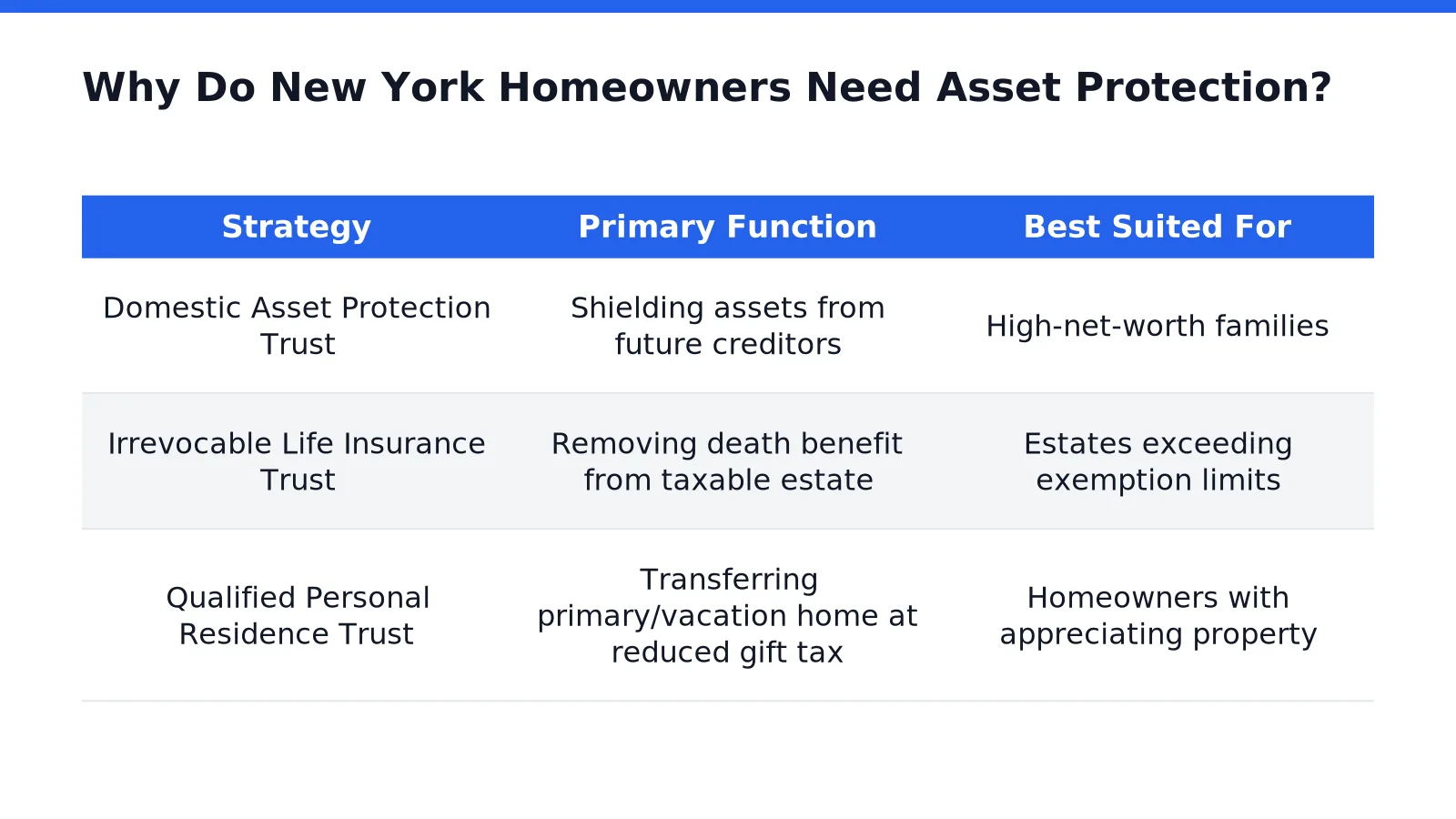
Why Do New York Homeowners Need Asset Protection?
New York homeowners face growing financial exposure in a litigious society. Protecting and preserving assets for the future is an increasing concern. Without strong safeguards, years of careful planning can be undermined by unexpected liabilities. Asset preservation is no longer optional. It is essential.
Tokov Law understands the risks inherent in New York property ownership. While anyone can be sued, higher risk follows certain professions and property-related activities. Landlords, real estate investors, and homeowners who host frequent gatherings face elevated liability compared to the general population. A single lawsuit can devastate unprotected equity.
Trust and asset protection NY strategies offer a shield. These legal structures place ownership beyond the easy reach of future creditors. An effective plan separates personal wealth from the assets at risk. It does not hide assets. It restructures them lawfully and proactively.
What Makes New York Liability Unique?
New York’s legal environment creates specific dangers for property owners. The state’s Labor Law places absolute liability on property owners and general contractors for many construction-related injuries. This often bypasses traditional negligence standards. An injured worker on a residential property can hold the owner strictly liable, even if the owner was not at fault.
Doing nothing carries a steep price. Financial exposure can erase home equity. Judgments can attach to bank accounts and other investments. Litigation costs mount quickly, even before a verdict.
What Options Exist for New York Families?
Several legal instruments form the core of asset protection planning. Each serves a distinct purpose.
Tokov Law serves injured individuals, homeowners pursuing fair property tax assessments, and parties to real estate transactions. The firm’s disciplined approach identifies the right protective structure for a client’s specific exposure. Its process delivers No confusion. No pressure.
Every unprotected asset remains vulnerable. The time to act is before a claim arises. Personal injury settlements often reach substantial sums. Real estate holdings attract litigation like few other assets. The firm’s core focus reflects this reality. Your Case Deserves Attention involves building the barrier before the storm, not during it. For a broader look at the firm’s protective strategies, review its full scope of legal services.

How Does a Revocable Living Trust Compare?
The grantor retains full control and access to trust assets, which means creditors can reach those assets just as if no trust existed. This fundamental limitation distinguishes the revocable trust from true trust and asset protection NY strategies that shield wealth from civil liability and long-term care costs.
Estate planning asset protection involves potent strategies to safeguard assets built over a lifetime. However, effective protection requires action taken in advance and a clear understanding of how each tool interacts with the others. A revocable trust serves important purposes. Asset shielding is not one of them.
What Does a Revocable Trust Actually Accomplish?
A revocable living trust helps families avoid probate and maintain privacy after death. Assets titled in the trust pass directly to beneficiaries without court involvement. The arrangement also provides incapacity planning, allowing a successor trustee to manage property without a guardianship proceeding.
Major reasons to seek asset protection include planning to avoid probate and to qualify for long-term care benefits. The revocable trust addresses the first goal but fails entirely on the second. For New York homeowners facing nursing home costs, this gap carries severe financial consequences.
Which Trust Structures Offer Real Protection in New York?
An irrevocable creditor protection trust NY families rely on delivers the shielding that revocable trusts cannot. Depending on a client’s goals, a trust can be customized to protect property, financial assets, and even business holdings. An irrevocable Medicaid Asset Protection Trust, for example, removes the home from the grantor’s estate after a five-year lookback period. Creditors cannot reach assets the grantor no longer legally owns.
Tokov Law evaluates each client’s exposure and designs structures aligned with their complete estate plan. The firm’s approach ensures no single document undermines another. No confusion. No pressure. Every recommendation follows a disciplined analysis of liability risks, tax implications, and family objectives. Your Case Deserves Attention from attorneys who understand that a revocable trust. Useful, leaves New York assets fully exposed when protection is the priority.
What Is a Medicaid Asset Protection Trust?
A Medicaid asset protection trust NY arrangement is an irrevocable legal arrangement that transfers ownership of assets out of an individual’s name while preserving eligibility for New York’s long-term care benefits. The trust shields bank accounts, real properties, and personal possessions from being counted as available resources during a Medicaid application. Without this structure, a lifetime of savings faces rapid depletion under nursing home costs.
The mechanics are straightforward but unforgiving. An asset protection trust in New York removes assets from the grantor’s direct control. Those assets no longer appear on financial disclosures required by the Nassau County Department of Social Services or other local Medicaid offices. However, these trusts are complex, and any mistake, no matter how minor, could cost whatever protection the grantor hoped to gain. Timing is critical. New York imposes a five-year lookback period on all transfers. Assets moved into the trust fewer than 60 months before a Medicaid application triggers a penalty period of ineligibility.
How Does the Trust Protect a Home and Savings?
The trust holds title to the residence and designated financial accounts. The grantor retains the right to live in the home and receive income from trust assets. The principal itself remains insulated from third parties who may have claims against the grantor. Creditors, lawsuit judgments, and even certain marital claims cannot reach property legally titled to an irrevocable trust.
Tokov Law structures each trust to align with New York’s specific Medicaid rules. The firm’s mission is to deliver strategic advocacy with honest guidance and responsive communication so clients understand their options and feel supported at every step. A poorly drafted trust fails the five-year rule. A properly executed trust preserves the family home, rental properties, and liquid savings for the next generation.
What Assets Can the Trust Hold?
Primary residences located in New York counties
Rental and investment real estate
Bank and brokerage accounts
Personal property of significant value
The trust does not accept retirement accounts or assets requiring active management by the grantor. Transfers must be complete and irrevocable. Partial transfers or retained revocation powers void the protection entirely. Tokov Law reviews each asset class before funding the trust to confirm compliance with New York’s Medicaid Reference Guide standards. No confusion. No pressure. The process moves methodically from asset inventory to trust execution, with every deadline documented and every consequence explained before a single document is signed.
How Do Irrevocable Life Insurance Trusts Work?
An irrevocable life insurance trust New York families rely on removes a life insurance policy from the insured’s taxable estate. The trust owns the policy and receives the death benefit. This structure shields the proceeds from estate taxes and creditor claims. For New York families, the strategy preserves wealth that would otherwise erode under federal and state estate tax thresholds.
Trust and asset protection NY planning demands precision. The grantor creates the trust and names a trustee other than themselves. The trustee purchases a new policy or accepts an existing one. Once transferred, the grantor relinquishes all control. That loss of control is the mechanism that delivers the protection. Without it, the IRS includes the death benefit in the grantor’s gross estate.
What assets can an irrevocable life insurance trust protect?
The trust protects the policy’s cash value and the full death benefit. Creditors, estranged spouses, and lawsuit claimants cannot reach these funds. The protection extends both during the grantor’s lifetime and when wealth transfers to the next generation. Tokov Law designs and implements solutions that help clients protect assets from these threats.
How does the trust distribute funds to beneficiaries?
The trustee follows the trust’s written instructions. Proceeds can pay estate taxes directly, preserving other assets for heirs. Alternatively, the trustee distributes funds to beneficiaries over time. The experienced attorneys at Tokov Law create customized plans to hold or preserve assets during a client’s lifetime. These plans serve the client’s personal benefit or the benefit of future heirs.
What happens if the grantor needs the cash value?
The grantor cannot access the policy’s cash value after the transfer. That permanent separation is the trade-off for the tax and creditor shield. Tokov Law emphasizes transparency about process and fees. Clients understand every consequence before signing. No confusion. No pressure. The firm’s disciplined approach ensures the trust aligns with the client’s broader estate plan. Your Case Deserves Attention. Tokov Law provides the clear guidance New York homeowners and investors need to make an informed, irrevocable decision.
When Should You Use an LLC Holding Structure?
An LLC holding structure separates ownership from operations. This legal arrangement places income-producing assets inside a limited liability company while insulating the operating business from direct exposure to liability claims.
The structure proves most valuable when a New York property owner or investor holds multiple assets that generate independent risk. A single lawsuit against one property threatens every asset held under the same entity. Without separation, a slip-and-fall judgment against a rental property in Nassau County could reach a commercial building in Suffolk County or a personal residence in Queens. The loss compounds quickly. Asset protection demands structural barriers before a claim arises.
How does an LLC holding company protect real estate investments?
Each property sits inside its own LLC. The holding company owns the membership interests. A creditor pursuing one property cannot access the others because the legal separation between entities blocks the claim. Pierro, Connor & Strauss notes that a trust can be customized to protect property, financial assets, and even business holdings. The same principle applies to LLC structures: customization determines the scope of protection.
What types of assets belong in a holding LLC?
Real estate holdings benefit most from this structure. Rental properties, commercial buildings, and investment land each warrant separate treatment. Financial accounts and intellectual property also fit within a holding company framework. The key factor is risk isolation. Any asset that could generate liability belongs behind its own entity wall.
Tokov Law advises buyers, sellers, and investors in residential and commercial real estate from contract review through closing. The firm’s attorney-led representation spans personal injury, construction and workplace accidents, real estate transactions, and Nassau and Suffolk County property tax grievances. Structuring ownership correctly at acquisition prevents costly reorganization later. A holding LLC established before closing locks in protection from day one. Delaying the structure leaves assets exposed during the gap period. That exposure carries real financial consequences for New York property owners who face litigation without entity-level safeguards in place.
What Mistakes Undermine an Asset Protection Plan?
Asset protection plans fail most often from small, avoidable errors. Even a minor drafting mistake can destroy the legal shield a New York family spent years constructing. The attorneys at Tokov Law see this pattern repeatedly: clients who delayed action or misunderstood how their planning tools interact, only to face exposure when a liability emerged.
Why does timing matter so much for asset protection?
Timing is everything. Asset protection must be structured well in advance of any claim or threat. A trust created after a lawsuit is filed or a creditor appears offers no defense. New York courts scrutinize transfers closely. Any conveyance that looks like a reaction to a known risk gets set aside. Proactive planning is the only path that holds up.
What happens when a trust conflicts with other estate documents?
The entire strategy collapses. A trust does not operate in isolation. It must work in concert with a will, powers of attorney, and beneficiary designations. A common error involves funding a trust with assets that a will or a retirement account already directs elsewhere. The conflict creates ambiguity, and ambiguity invites litigation. Every instrument in the estate plan needs a unified, coherent purpose.
Trust and asset protection NY strategies demand precision. No confusion. No pressure. Tokov Law provides attorney-led service that reviews every document for internal consistency. The firm’s clear communication ensures clients understand how each piece fits together. Without this coordination, a family risks losing the very protection the trust was built to deliver.
Consulting an experienced lawyer is not optional. The complexity of New York’s debtor-creditor laws and Medicaid eligibility rules makes self-directed planning dangerous. A professional identifies gaps that a layperson overlooks. Tokov Law dedicates its practice to guiding homeowners and investors through this exact process, building plans that withstand scrutiny. Your Case Deserves Attention. The cost of a mistake is the full exposure of assets that were meant to be untouchable.
How Do You Start an Asset Protection Plan?
Starting an asset protection plan in New York begins with a structured legal review of current holdings and exposure points. Tokov Law initiates every engagement with a free consultation, allowing property owners and families to evaluate their risks without financial commitment. The firm’s approach identifies vulnerabilities before they become liabilities.
What Documents Are Needed for an Asset Protection Review?
A complete review requires deeds, mortgage statements, business operating agreements, and existing insurance policies. Tax assessment records prove especially critical for Nassau and Suffolk County homeowners. Tokov Law examines these materials to map where assets face creditor reach or litigation exposure.
The firm’s attorneys then design a protection framework aligned with New York’s specific legal landscape. Trust and asset protection NY strategies demand precise structuring because state law imposes strict rules on fraudulent conveyance and Medicaid lookback periods. A poorly timed transfer forfeits the very shield the client sought.
How Long Does Setting Up Asset Protection Take?
Timelines vary by complexity. A straightforward real estate holding structure may finalize within weeks. Multi-entity business protections or multi-generational trust planning often require months. Tokov Law provides timely updates through phone, email, and online channels so clients track progress and retain decision control throughout the case lifecycle.
The firm’s disciplined process moves from audit to implementation without unnecessary delay. Over 100 resolved cases and millions recovered demonstrate a practice that blends practical problem-solving with courtroom readiness when litigation becomes necessary. That experience informs every protection plan.
No confusion. No pressure. The firm’s focused representation spans personal injury claims, workplace and construction accident matters, real estate transactions, and property tax grievances. Each practice area feeds insight into the others. A client restructuring real estate holdings gains counsel informed by the liability patterns Tokov Law sees in its injury and accident caseload. Your Case Deserves Attention. The firm’s contingency model in select matters means clients pay no legal fees unless Tokov Law secures a successful outcome. To begin the process, contact the firm through its contact page.
FAQ
What is the difference between a revocable living trust and an asset protection trust in New York?
An asset protection trust shields property from creditors, lawsuits, and long-term care costs.
Does Tokov Law handle asset protection trust formation?
The firm evaluates each client’s exposure points and designs trust structures aligned with specific asset profiles.
Conclusion
Asset protection in New York succeeds or fails on precision, timing, and coordination, elements that demand professional oversight from the first consultation through final implementation. A structured review of deeds, operating agreements, and insurance policies reveals exposure points before they become liabilities, while unified estate documents prevent the conflicts that invite litigation. Property owners who act proactively, before any claim emerges, secure the strongest shield available under state law. The decision to begin that review today determines whether assets remain protected or exposed tomorrow.