
Understanding NY No-Fault Insurance Claims in New York
New York law requires drivers to carry No-Fault insurance with minimum coverage of $50,000 per person, paying medical bills and lost wages regardless of who caused the crash. Pain and suffering claims require a “serious injury” under New York law. Tokov Law guides accident victims through filing deadlines, claim disputes, and lawsuits exceeding No-Fault limits.
Key Takeaways
New York requires all vehicle owners to carry no-fault insurance as proof of financial responsibility before registration.
No-fault coverage pays your medical expenses, lost income, and miscellaneous accident costs regardless of who caused the collision.
You must file written notice with your insurer within 30 days of an accident, detailing the injured person’s information.
New York is one of twelve U.S. states operating under a no-fault insurance system for car accident claims.
Is New York Really a No-Fault State?
Yes. New York confirms its status as a no-fault insurance state for car accidents, meaning medical costs often get paid regardless of who caused the crash. That single fact shapes how every car accident claim in the state begins. It carries real financial weight for drivers who skip the fine print.
Understanding NY No-Fault Insurance starts with a registration requirement most drivers never read closely. Every New York car owner must carry No-Fault coverage, often called personal injury protection or PIP, before a license plate gets issued. State law sets the minimum at $50,000 in coverage per injured person. Fall short of that threshold, and a driver risks more than a traffic ticket; medical bills from a serious crash can exceed that figure fast, leaving a gap no one wants to discover after an injury.
What does No-Fault insurance actually pay for?
PIP coverage reimburses medical expenses and lost wages after a crash, without requiring proof of fault. Passengers and the policyholder alike qualify for this protection. The system exists to get injury victims paid quickly, rather than forcing them to wait through a lengthy fault investigation.
Does No-Fault mean a victim can’t sue for pain and suffering?
No-Fault insurance covers economic losses, not pain and suffering. Victims who suffer a serious injury, as defined under New York law, retain the right to pursue additional compensation outside the No-Fault system.
Navigating these claims alone often leads to denied bills or incomplete payouts. Tokov Law, a New York-based firm, provides clear, results-driven representation for individuals and families working through injury claims. Accident victims can start with a free consultation, and in select matters pay no legal fees unless the case succeeds. Your Case Deserves Attention, and understanding these coverage rules early prevents costly surprises later.

What Does PIP Actually Cover for You?
New York no-fault insurance pays medical bills, lost wages, and other accident-related expenses for drivers and passengers, no matter who caused the crash. This protection, known formally as personal injury protection, applies the moment a covered vehicle is involved in an accident. Fault never enters the equation during the claims process.
Three categories make up the bulk of PIP benefits:
Medical expenses: hospital visits, surgery, physical therapy, and related treatment
Lost income: wages missed while recovering from injury
Miscellaneous costs: expenses tied directly to the accident, such as transportation to medical appointments
Each category operates independently of fault determination, which speeds up payment compared to a traditional liability claim.
Who does PIP coverage protect after an accident?
PIP coverage follows the vehicle, not the individual driver. A passenger injured in someone else’s car, a pedestrian struck by a covered vehicle, or the driver’s own household members can all qualify for benefits through that vehicle’s policy. Ownership of the car, rather than who sits behind the wheel, determines which policy responds first.
Does PIP cover pain and suffering?
No. PIP strictly covers economic losses: medical bills and lost wages. Pain and suffering falls outside no-fault protection entirely. Accident victims pursuing compensation for pain and suffering must look beyond PIP and into a liability claim against the at-fault driver, which requires proving negligence rather than simply filing paperwork.
Navigating where no-fault coverage ends and a liability claim begins trips up many accident victims. Tokov Law manages insurance negotiations and litigation on behalf of injured clients, pursuing full compensation for medical expenses and lost income once PIP limits fall short of actual losses.
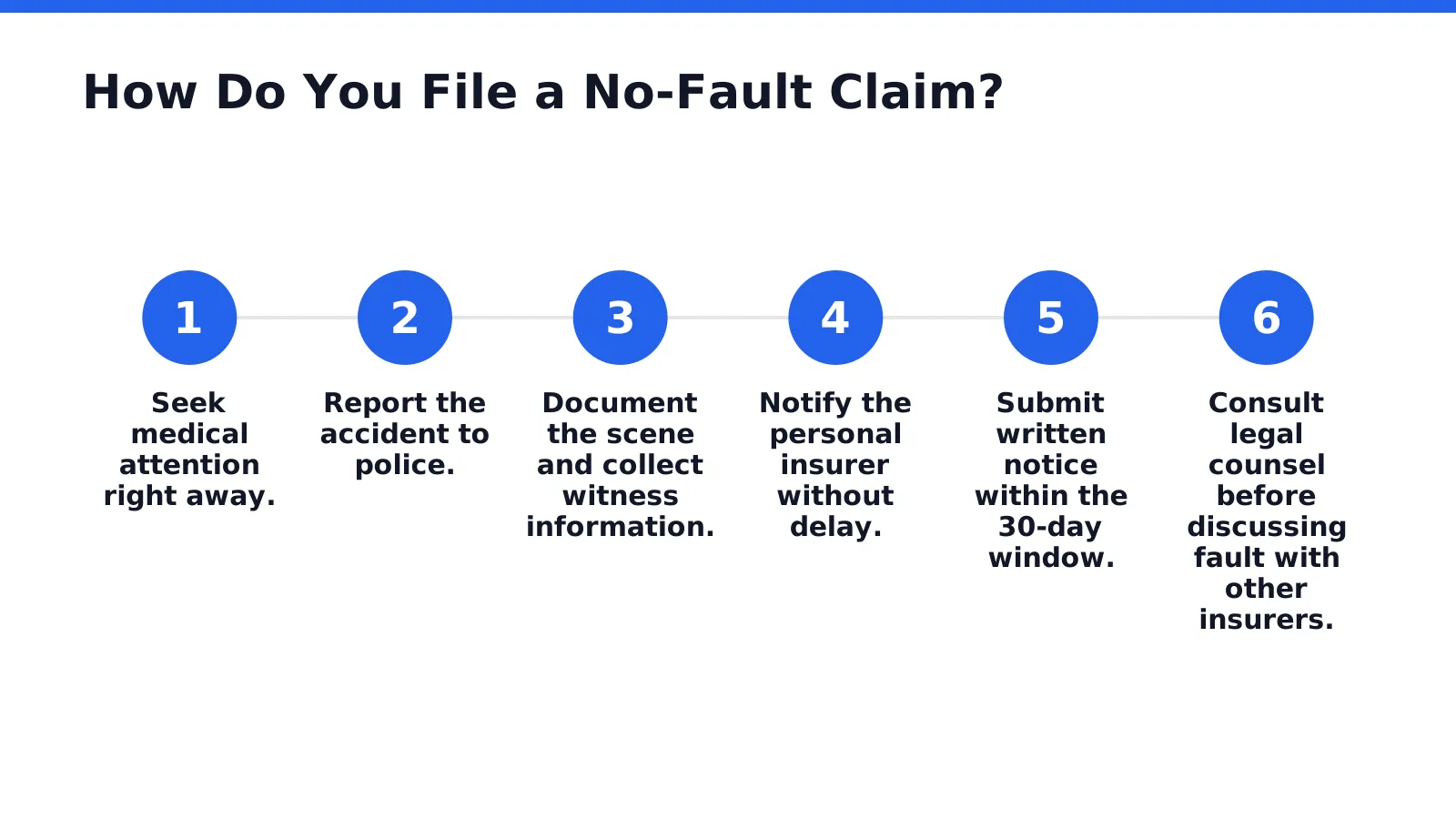
How Do You File a No-Fault Claim?
Filing starts with written notice to the insurer, and New York law puts a strict clock on that step. State regulation generally requires notice within 30 days of the accident, unless a driver has a reasonable justification for the delay. Missing that window creates unnecessary risk for an otherwise valid claim.
Before the paperwork begins, the actions taken at the scene and in the days after matter just as much. Accident victims should seek medical attention immediately, report the crash to police, and gather evidence along with witness contact information whenever possible. These steps build the foundation that supports a New York no-fault insurance claim later on.
What Should Drivers Do Immediately After a Crash?
Medical care comes first, even for injuries that seem minor at the time. A police report creates an official record, and photos, witness names, and contact details preserve facts that fade from memory. Drivers should also notify their own insurance company promptly, since delayed reporting can complicate the claims process.
Should Drivers Speak to the Other Driver’s Insurance Company?
Caution matters here. Recorded statements given to another party’s insurer can be used against an injured driver later, often in ways that reduce a payout. Accident victims should contact Tokov Law for legal advice before engaging with any outside insurance company.
A clear sequence helps avoid costly mistakes:
Seek medical attention right away.
Report the accident to police.
Document the scene and collect witness information.
Notify the personal insurer without delay.
Submit written notice within the 30-day window.
Consult legal counsel before discussing fault with other insurers.
Your Case Deserves Attention, and getting the filing sequence right protects both medical coverage and lost wage reimbursement. No confusion. No pressure. Just a clear path through the claims process.

When Can You Pursue Pain and Suffering?
Pain and suffering damages become available once an injury crosses the threshold set by New York’s no-fault system, meaning medical bills and lost wages alone no longer cover the loss. Understanding NY No-Fault Insurance matters here because personal injury protection pays for medical treatment and wage replacement regardless of fault. It does not compensate for the physical pain or emotional toll an accident causes. A claimant must show a “serious injury” under New York law before stepping outside PIP and into a liability claim against the at-fault driver.
How long do accident victims have to file a claim?
Most personal injury cases in New York, including serious car accident injury claims, carry a filing deadline of three years from the date of the crash. That window is not universal, though. The deadline can shift depending on the type of case, so acting early protects the claim rather than risking a missed filing date.
Once a case exceeds no-fault thresholds, New York’s liability insurance minimums come into play. Registered vehicles must carry coverage for several categories:
Bodily injury per person
Death-related claims
Property damage per accident
These minimums determine what a liable driver’s policy can pay toward a pain and suffering claim.
Tokov Law applies a disciplined, evidence-driven strategy built around maximizing recovery once a case moves beyond basic no-fault benefits. Gathering medical records, documentation, and timeline evidence early strengthens the path toward a liability claim and protects against deadline pressure later.
Why Partner With an Attorney for Your Claim?
An attorney protects an injured driver’s right to full compensation when understanding NY No-Fault Insurance rules becomes overwhelming. New York’s no-fault system covers medical bills and lost wages, but it does not cover pain and suffering automatically. Pursuing those damages requires proof the injury meets the state’s serious injury threshold. That proof often demands legal skill insurance adjusters do not volunteer to explain.
Tokov Law serves accident victims throughout New York, with attorneys licensed in New York and New Jersey. Clients reach the firm by phone, email, or online form, a straightforward process built around one promise: No confusion. No pressure.
Does hiring a lawyer cost money upfront?
No. Tokov Law works on a contingency fee basis, meaning clients pay nothing upfront to pursue a no-fault or injury claim. Attorneys are compensated only if the case succeeds, typically through a percentage of the settlement or court award. That structure removes financial risk at the exact moment accident victims can least afford it.
What does experience actually change in a claim outcome?
Experience shapes how insurers respond. Tokov Law’s record includes more than 100 resolved cases and millions recovered for injured clients across New York. That track record signals to insurance companies that a claim will be pursued seriously, not settled quietly. Your Case Deserves Attention, and skilled representation gives it that weight from day one.
FAQ
Is New York a no-fault insurance state?
Yes, New York operates under a no-fault insurance system, one of twelve states doing so. Medical costs get paid regardless of who caused the crash, shaping how every car accident claim begins.
What does No-Fault insurance cover?
The system covers the policyholder and passengers, getting injury victims paid quickly instead of waiting through a fault investigation.
Can accident victims sue for pain and suffering under No-Fault?
Conclusion
In closing, understanding New York’s no-fault insurance framework empowers you to navigate the claims process with clarity and confidence. Whether you pursue a straightforward settlement or require litigation to secure full compensation for medical expenses. Lost income, the strategic guidance of an experienced personal injury attorney ensures your rights remain protected. When complexity or insurer resistance emerges, attorney-led representation transforms uncertainty into actionable outcomes, allowing you to focus on recovery while your case receives the disciplined, evidence-driven advocacy it demands.